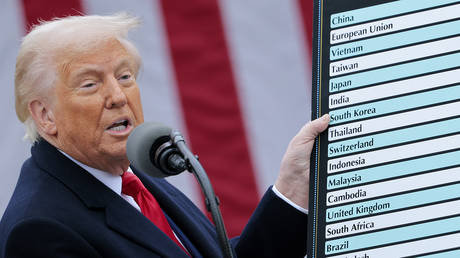
Washington’s decision to slap a 10 percent Section 301 tariff on Indian imports under the banner of forced-labor enforcement sounds like a uniform blow across developing nations. It is not. The real damage to India’s $11 billion textile export pipeline lies in a hidden mechanism buried in the federal notice: custom tariff-rate quota exemptions handed to regional rivals Bangladesh, Cambodia, Indonesia, and Malaysia. By tying duty relief to the consumption of American raw cotton, the United States has engineered a supply chain trap that threatens to strip Indian mills of foreign buyers while undercutting their price competitiveness at home and abroad.
The headline figures initially offered Indian policymakers a false sense of relief. At 10 percent, India’s tariff rate sits below the 12.5 percent duty levied on China, Vietnam, and Thailand. Trade bodies rushed to point out that against Beijing or Hanoi, Indian exporters retain a slim 2.5 percent margin. Read more on a similar subject: this related article.
That math collapses the moment you examine how garment manufacturing actually works across South Asia.
The Quota Wedge Breaking South Asian Supply Chains
Under the new USTR framework, apparel producers in Dhaka, Phnom Penh, Jakarta, and Kuala Lumpur can ship finished garments to the American market completely free of the new Section 301 duties. The condition is straightforward. They must manufacture those goods using U.S.-grown cotton and fiber. Further analysis by The Motley Fool delves into related perspectives on the subject.
India received no such quota.
This selective carve-out instantly reshapes the sourcing decisions of global fashion brands. A retail giant in New York ordering one million denim jackets faces a stark financial calculation. Buying from a supplier in Tiruppur or Ahmedabad guarantees a 10 percent tariff penalty at the port of entry. Sourcing the same order from a factory in Gazipur that uses American raw cotton eliminates that tax entirely.
+------------------+------------------+-----------------------+
| Country          | Section 301 Rate | Special Cotton Quota? |
+------------------+------------------+-----------------------+
| India            | 10%              | No                    |
| Bangladesh       | 10%              | Yes (0% via US Cotton)|
| Cambodia         | 10%              | Yes (0% via US Cotton)|
| Indonesia        | 10%              | Yes (0% via US Cotton)|
| China / Vietnam  | 12.5%            | No                    |
+------------------+------------------+-----------------------+
The secondary shock wave hits India’s upstream spinners. For decades, Indian cotton farmers and yarn manufacturers supplied the raw materials that fueled Bangladesh’s massive garment export machinery. Bangladesh relies heavily on imported fiber to run its apparel assembly lines, making it one of India’s biggest customers for raw cotton and intermediate yarn.
Now, Bangladeshi factory owners are financially incentivized to cancel contracts with Indian spinning mills. To qualify for zero-tariff entry into America, they must buy American cotton instead.
Indian yarn mills face a double blow. They lose direct finished-garment sales to U.S. buyers, and they lose raw material export orders to neighbor states racing to satisfy American sourcing requirements.
Forced Labor Allegations as Trade Policy
Washington framed these tariffs as an enforcement action against illicit labor practices. New Delhi responded by introducing stricter import checks under its Foreign Trade Policy and enacting modernized labor laws to head off punitive measures.
Yet the imposition of open-ended tariffs without a clear path toward compliance or sunset provisions suggests a different motive. Geopolitical alignment and bilateral agricultural trade are driving the narrative.
By making tariff exemptions contingent on consuming American cotton, Washington achieves two policy goals simultaneously. It secures a guaranteed export outlet for domestic cotton farmers in the American South while penalizing trading partners that rely on sovereign raw material supply chains.
Indian garment hubs in Ludhiana, Surat, and Coimbatore operate on razor-thin operating margins. They cannot absorb a 10 percent margin squeeze, nor can they easily switch to importing American cotton just to qualify for complex international loopholes that were never extended to them in the first place.
How Indian Manufacturers Must Respond
Relying on diplomatic appeals or waiting for Washington to grant retroactive tariff-rate quotas is a failing strategy. Exporters must pivot immediately to limit structural damage.
Shift Sourcing Focus to Non-U.S. Markets
European and Middle Eastern buyers operate without this specific tariff structure. Diverting production capacity toward countries under free trade agreements provides an immediate buffer against American margin erosion.
Upgrade Supply Chain Traceability
The USTR’s explicit focus on labor standards means buyers require proof of origin at every tier. Indian exporters must audit their sub-contractors and implement verifiable digital tracking for every bale of cotton entering their facilities. Proving immaculate supply chain ethics eliminates the foundation of U.S. regulatory scrutiny.
Value-Add Beyond Commodity Apparel
Basic cotton T-shirts and basic denim are highly sensitive to small price shifts. High-end technical textiles, specialized synthetic blends, and high-value fashion garments offer higher gross margins capable of swallowing a 10 percent tariff hike without destroying profitability.
The border tax is merely a symptom. The structural realignment of global fiber trade is the real crisis, and Indian textile houses that fail to adjust their raw material strategies will find themselves priced out of the Western hemisphere entirely.