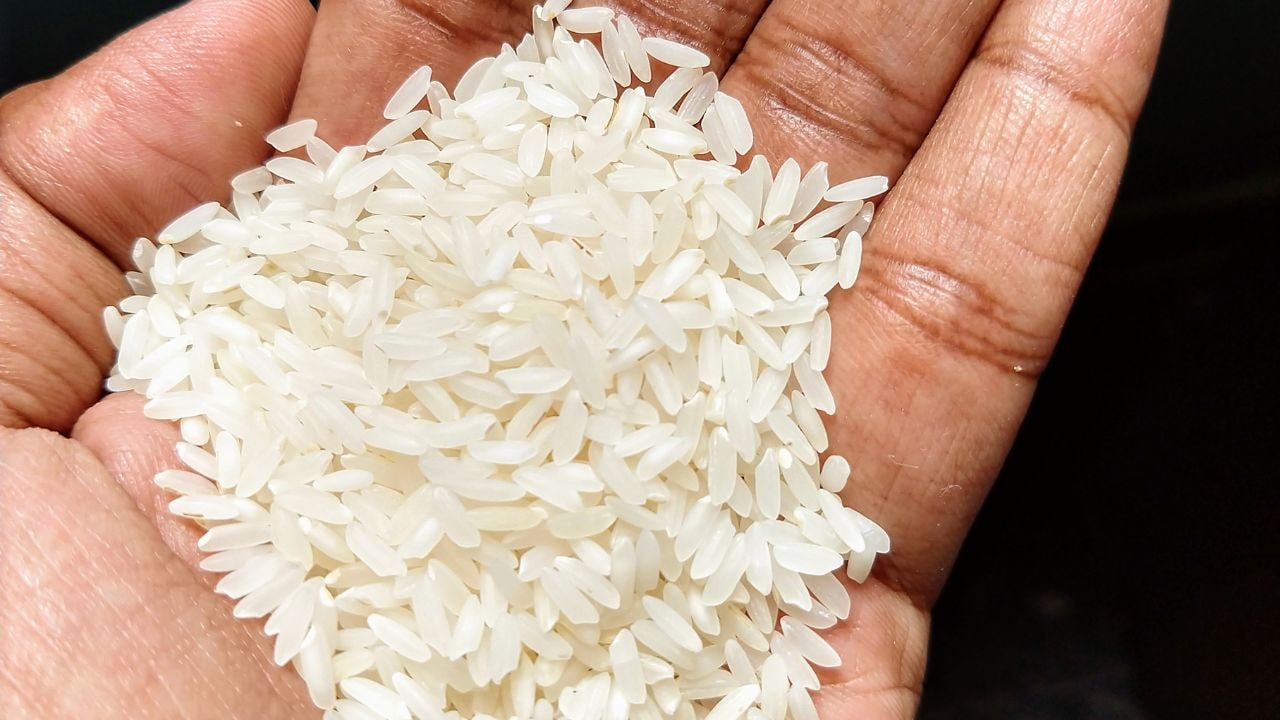
Global agricultural trade corridors are highly sensitive to sudden maritime bottlenecks, a reality now defining the containerized shipping lanes between the Indian subcontinent and West Asia. India accounts for more than 40 percent of the global rice trade, giving domestic production shifts immense leverage over worldwide food security. Yet, between January and April 2026, India's total rice exports contracted by 1.3 percent year-on-year, down to 8.39 million metric tons. This drop represents a deeper structural bifurcation within the commodity market: while non-basmati varieties ticked up slightly to 6.09 million tons, premium long-grain basmati shipments plummeted by 7 percent to 2.3 million metric tons.
This divergence is driven by localized conflict involving Iran, which has severely restricted access to the Strait of Hormuz and escalated war-risk variables along traditional maritime paths. The underlying issue is not an absolute drop in global demand or an internal crop failure. Instead, it is an asymmetric supply chain compression where high-value, geographically concentrated export items are paralyzed by structural logistics shocks, while lower-value bulk grains route through safer corridors unhindered.
The Three Pillars of Basmati Trade Vulnerability
To diagnose why India's premium grain sector suffers disproportionate losses while broader agricultural portfolios remain stable, the trade structure must be broken down into three distinct operating points: geographic concentration, margin elasticity, and infrastructure asset matching.
Geographic Concentration Risk
Unlike non-basmati rice, which distributes broadly across diverse macroeconomic zones including Bangladesh, Benin, Ivory Coast, and Guinea, basmati rice relies on a highly concentrated buyer profile. West Asian markets—specifically Saudi Arabia, Iran, Iraq, and the United Arab Emirates—absorb approximately 70 percent of India’s total basmati output. Iran alone frequently demands between 15 and 20 percent of annual shipments, valuing up to $1.2 billion in steady fiscal years. When a military conflict immobilizes the primary geographic destination, the entire premium sub-sector loses its demand anchor. No alternative global market possess the cultural preference or purchasing power parity required to absorb an overnight surplus of this scale.
Asymmetric Margin Elasticity
The pricing mechanics of premium commodities exacerbate shipping friction. Non-basmati rice moves via low-cost bulk cargo, operating on narrow absolute margins where volume drives profitability. Basmati rice, conversely, relies on containerized freight (Twenty-Foot Equivalent Units or FEUs) to preserve grain quality, aroma, and prevent breakage. The escalation of conflict through the Strait of Hormuz has forced ocean carriers to levy steep war-risk surcharges and bunker fuel premiums.
- Pre-Conflict Container Freight Cost: $500 to $1,800 per 25-ton container
- Post-Conflict Container Freight Cost: $3,500 to $5,000 per container
This tenfold escalation in specific trade lanes eliminates the exporter's margin entirely. For bulk commodities, a minor increase in transportation cost can sometimes be absorbed by volume adjustments or marginal price hikes to price-insensitive African buyers. For basmati, the extreme spike in logistics costs makes fulfilling existing fixed-price Forward Contracts economically unviable, triggering widespread force majeure declarations and structural holdbacks on new order bookings.
Infrastructure Asset Matching and Port Delays
The physics of agricultural logistics dictate that supply chains are only as resilient as their terminal velocity. Roughly 400,000 metric tons of basmati rice are currently trapped mid-transit or sitting stagnant at domestic Indian exit ports like Kandla and Mundra. This inventory gridlock stems from a compounding asset mismatch:
- Vessel Omission: Global shipping lines are actively altering schedules to omit port calls in high-risk zones throughout West Asia, creating an acute shortage of available empty containers in India.
- Transit Route Extension: Ships attempting to bypass immediate kinetic zones are rerouting away from direct Persian Gulf corridors into costly, multi-modal paths. Shipments that previously required 25 days are regularly logging 45-day transit times.
- Neutral Port Offloading: Exporters are increasingly forced to drop cargo at neutral trans-shipment hubs—such as Sohar, Muscat, or Jebel Ali—and rely on secondary land feeder networks or long-haul trucking to reach terminal buyers in inland Iraq or Saudi Arabia. This multi-modal handling adds severe demurrage fees, double-handling damage risks, and administrative friction.
The Domestically Deflationary Cost Function
When international trade pipelines freeze, the economic pressure reflects backward onto the domestic production system. India entered 2026 on the heels of a record-breaking domestic harvest. Under normal market conditions, a bumper crop yields high export revenues and capital reinvestment. In a closed or restricted system, however, that excess supply triggers immediate domestic price deflation.
[Record Harvest Supply Surplus] + [Restricted Export Outlets]
                     │
                     ▼
       [Domestic Market Flooding]
                     │
                     ▼
 [Wholesale Price Compression (7-10% Drop)]
                     │
                     ▼
   [Upstream Capital Starvation for Farmers]
Over the first half of 2026, wholesale basmati prices in major regional agricultural hubs (mandis) across Punjab, Haryana, and western Uttar Pradesh softened by 7 to 10 percent. This represents a drop of roughly ₹600 to ₹800 per quintal.
The financial damage is felt unevenly across the supply chain hierarchy. Large, vertically integrated export houses possess the balance sheet liquidity to pause shipments, hold grain in climate-controlled silos, and wait out cyclical geopolitical friction. The operational bottleneck hits the small and mid-tier rice millers. These entities operate on short-term working capital loans, purchasing raw paddy directly from farmers, milling it continuously to cover fixed operational overhead, and relying on immediate cash conversion cycles. Because their storage infrastructure is constrained, small millers are forced to liquidate their premium stock into the domestic market at a loss, often losing up to ₹8 per kilogram. This deprives upstream farmers of fair capital returns just as input costs for the next planting cycle begin to mount.
Competitor Border Arbitrage: The Pakistan Factor
Geopolitical disruptions rarely occur in a macroeconomic vacuum. As India’s maritime basmati pipeline contracts, regional competitors are leveraging geographical assets to capture displaced market share. Pakistan, India’s primary competitor in the global aromatic rice market, shares a direct 900-kilometer land border with Iran.
While Indian exports face maritime blockades, high insurance premiums, and naval friction at the Strait of Hormuz, Pakistani trade combines land-rail transport networks and formal barter trade agreements to bypass maritime vulnerabilities entirely. By executing direct cross-border trucking and rail transfers through Balochistan into southeastern Iran, Pakistani exporters escape the $5,000-per-container ocean freight function. This logistical arbitrage enables them to deliver premium grain into Iranian markets with lower transit times and no exposure to maritime war-risk premiums.
Furthermore, Pakistan’s recent policy adjustments to facilitate institutionalized barter trade clear the banking hurdles that frequently stall Indian transactions under international sanctions regimes. This structural pivot allows Pakistan to chip away at India's historic 45 percent global rice trade dominance, shifting the competitive baseline long after physical trade lanes reopen.
Strategic Mitigations and Institutional Remediation
Navigating this asset-trapping crisis requires moving beyond short-term subsidies toward hard operational shifts. The Indian Rice Exporters’ Federation (IREF) and state entities have initiated a ₹497 crore financial cushion, but capital injections only mask systemic bottlenecks. True resilience demands structural adaptation across three core operating lines.
Legal and Contractual Immunization
Exporters must shift from standard commercial templates to rigid, geopolitically insulated legal instruments. This means embedding explicit, multi-tiered force majeure provisions into all future Forward Contracts. These clauses must automatically trigger when regional freight indices cross predefined volatility thresholds or when war-risk insurance premiums rise beyond commercial viability. Defining these parameters clearly prevents international buyers from levying contractual default penalties or performance bonds when shipments are delayed by state-level conflicts.
Logistics Diversification and Safe-Port Routing
Relying entirely on single-destination maritime delivery to the inner Gulf is a structural failure. Trade houses must build standing relationships with multi-modal operators capable of routing cargo through the International North-South Transport Corridor (INSTC) or utilizing specialized overland transit networks from neutral hubs. By securing fixed space allocations at secondary trans-shipment points outside the direct kinetic theater, exporters can establish predictable lead times, even if those times are longer than legacy routes.
Capital Allocation Dynamics
The state and commercial banks must coordinate to convert short-term working capital stress into manageable, long-term credit. Implementing immediate waivers on port-related demurrage and storage fees for verified war-stalled cargo prevents immediate cash-flow insolvency among small and mid-tier millers. Simultaneously, introducing export credit extension facilities allows smaller operations to maintain production velocity and hold inventory rather than being forced into catastrophic domestic liquidations that depress the wider agricultural economy.
Crop Acreage Calibration
Upstream agricultural planners must factor these transport constraints into upcoming planting cycles. The United States Department of Agriculture (USDA) indicates a projected 5 million metric ton dip in global rice production for the 2026/27 season, driven by soaring fertilizer inputs and volatile returns. Indian producers must use this window to normalize acreage, adjusting total basmati output downward to match realistic export absorption limits while preserving capital. Diversifying acreage into less logistics-heavy domestic staples secures regional farmer revenue, shields the internal market from artificial supply gluts, and defends macro pricing power until the West Asian maritime gridlock clears.
India rice exports hit by Middle East conflict as shipments stall and prices fall
This video provides a detailed on-the-ground report from international trade analysts confirming how hundreds of thousands of tonnes of Indian rice shipments have been stranded due to the conflict, illustrating the direct operational impact on ports and domestic wholesale pricing dynamics.