Epidemic containment is a race between transmission velocity and operational deployment. When the pathogenic agent is the Bundibugyo ebolavirus strain—a rare variant lacking authorized therapeutic protocols or vaccine counter-measures—the containment strategy relies exclusively on non-pharmaceutical interventions: early detection, rapid isolation, stringent contact tracing, and safe burial practices.
The current outbreak in the Democratic Republic of the Congo (DRC), centered in the northeastern Ituri province, demonstrates the systemic collapse of this operational model. With over 1,000 suspected cases and 220 deaths reported within weeks of official declaration, the outbreak is rapidly outstripping local and international intervention capabilities. This structural analysis maps the compounding variables driving this containment failure, dissecting the friction points across logistics, security, finance, and community mechanics.
The Operational Bottleneck: Supply Chain Degradation
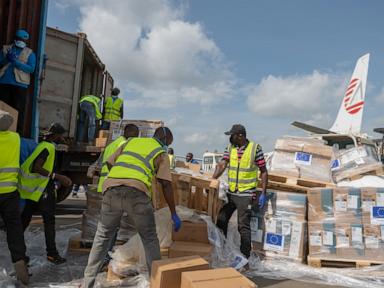
The arrival of a European Union cargo aircraft in Bunia carrying personal protective equipment (PPE) and medical supplies addresses a symptoms-level scarcity but highlights a structural logistics bottleneck. International aid distribution in eastern DRC functions under severe infrastructure deficits that introduce critical latency into the supply chain.
The Logistics Cost Function
The delivery efficiency of critical medical cargo from the point of entry to the clinical front line is governed by a sequence of compounding friction points:
- Administrative Friction: Complex customs clearance protocols delay specialized diagnostic equipment and reagents at international transit nodes.
- Storage Deficits: The lack of cold-chain infrastructure and climate-controlled warehousing in Ituri province limits the shelf-life and buffer capacity of medical counter-measures.
- Transit Degradation: Deplorable road networks, compounded by seasonal weather patterns, lengthen transit times from regional hubs to rural epicenters like Bambu or Mongbwalu from hours to weeks.
- Aviation Gridlocks: The closure of Goma’s regional airport—historically a primary logistical staging ground for eastern DRC—restricts heavy cargo options, forcing reliance on secondary airfields with lower throughput capacity.
The direct consequence of this degradation is visible at the clinical level: front-line medical personnel in peripheral clinics have resorted to utilizing expired medical masks while treating suspected patients. This compromises worker safety and turns health facilities into amplification points for nosocomial transmission.
The Geometry of Disruption: Geopolitical and Security Friction
Epidemiological models assume an open, permissive environment where contact tracers can map networks and isolation teams can operate without existential threat. Eastern DRC invalidates this assumption through a dense network of active conflicts.
[Active Conflict / M23 & CODECO]
       │
       ▼
[Mass Population Displacement (7M+)] ──► [Overcrowded Camps (e.g., ISP Camp)]
       │                                         │
       ▼                                         ▼
[Geographic Containment Failure]         [Hyper-Accelerated Transmission]
The Conflict-Displacement Vector
The presence of armed groups, including the Cooperative for the Development of Congo (CODECO) in Ituri and the Rwanda-backed M23 rebel group in North and South Kivu, creates a dual-threat environment.
First, active hostilities trigger mass civilian displacement. Over 7 million people are displaced across eastern DRC. In overcrowded settlements like the ISP camp in Bunia—housing 10,000 individuals—basic hygiene infrastructure is non-existent. A single infrared thermometer and an empty water tap serve an entire population, forcing residents to use sand or oatmeal as dry-rub alternatives for hand hygiene. These camps function as high-density kinetic environments where a single introduction of the virus can yield exponential transmission rates.
Second, the balkanization of territory prevents unified public health surveillance. The detection of Ebola cases within M23-controlled enclaves near Goma and Bukavu presents an epidemiological blind spot. The absence of formal communication channels between the Congolese Ministry of Health and rebel command structures prevents synchronized contact tracing, data sharing, and resource allocation across the front lines, establishing permanent unmonitored reservoirs of infection.
The Epidemiology of Distrust: Cultural Divergence and Risk Communication
Public health interventions fail when their execution mechanisms violate deep-seated anthropological frameworks. The enforcement of standard Ebola containment protocols directly intersects with local traditions, generating active community resistance.
The Structural Collision of Protocols
| Standard Public Health Protocol | Cultural/Local Imperative | Systemic Outcome |
|---|---|---|
| Secure, Immediate Burial: Deceased bodies are highly contagious; specialist teams conduct rapid, non-contact interments. | Ancestral Funeral Rites: Traditional wakes involve physical preparation of the body, prolonged community viewing, and hands-on farewells. | Deep community grief, perception of medical body-snatching, and hidden community burials that accelerate transmission. |
| Biomedical Isolation: Patients are placed in high-barrier units with restricted family access to halt transmission vectors. | Kinship Care Framework: Families are responsible for feeding, comforting, and holding sick relatives during severe illness. | Avoidance of formal health centers, delayed presentation of symptoms, and hostile actions against clinics. |
This misalignment converts grief into defensive kinetic action. The recorded attacks on health facilities in Ituri province—including the arson of the Rwampara treatment center—are predictable systemic responses to perceived institutional violations of sacred communal norms. When the state or international actors mandate containment measures without adapting them to local realities, communities withdraw from the formal surveillance apparatus, hiding symptomatic individuals and escalating the undetected spread of the virus.
The Financial Fragility of Global Health Governance
The structural response to a Public Health Emergency of International Concern (PHEIC) requires immediate, liquid capital allocation. The current financial architecture exhibits extreme volatility, preventing long-term operational planning.
The Africa Centres for Disease Control and Prevention reported that initial funding pledges of approximately $500 million shrank to $290 million within days due to donor retrenchment and shifting commitments. While specific bilateral injections, such as the $80 million surge from the United States, provide localized relief for diagnostic kits and airport screening, the overall volatility in international funding disables programmatic consistency.
Epidemic containment requires predictable capital deployment to sustain human resources, build regional laboratories, and maintain supply pipelines. When funding structures are unstable, international agencies cannot execute multi-month contracts for logistics or personnel, forcing a reactive, piecemeal posture that lags behind the virus's reproductive rate.
Strategic Forecast and Mandatory Interventions
The Bundibugyo outbreak cannot be contained through traditional medical deployments. If operations proceed on the current trajectory, the disease will establish permanent endemicity within displaced populations and rebel-held zones, threatening broader regional security across Uganda and South Sudan. Containment requires an immediate shift toward a high-density operational strategy built on three steps:
1. Execute Localized Humanitarian Ceasefires
The World Health Organization must negotiate localized, strictly monitored humanitarian corridors and health ceasefires with M23 and CODECO leadership. Public health teams must treat the entire geographic region as a single epidemiological unit, decoupling medical surveillance from political legitimacy.
2. Standardize Co-Designed Medical Protocols
Ebola response teams must immediately halt the unilateral enforcement of clinical burials. Response frameworks must pivot to co-designed protocols, such as using transparent body bags and allowing family-led, non-contact blessings at designated safe distances. This satisfies ancestral requirements while preserving bio-security boundaries.
3. Decentralize Diagnostic Networks
Given the high failure rate of standard testing regimes in detecting the Bundibugyo strain, capital must be diverted from centralized regional laboratories directly to mobile, field-ready molecular diagnostic units deployed at transit chokepoints and displacement camps. Reducing the time to confirm a case from days to hours is the only way to lower the reproduction number ($R_0$) below the critical threshold of 1.0.