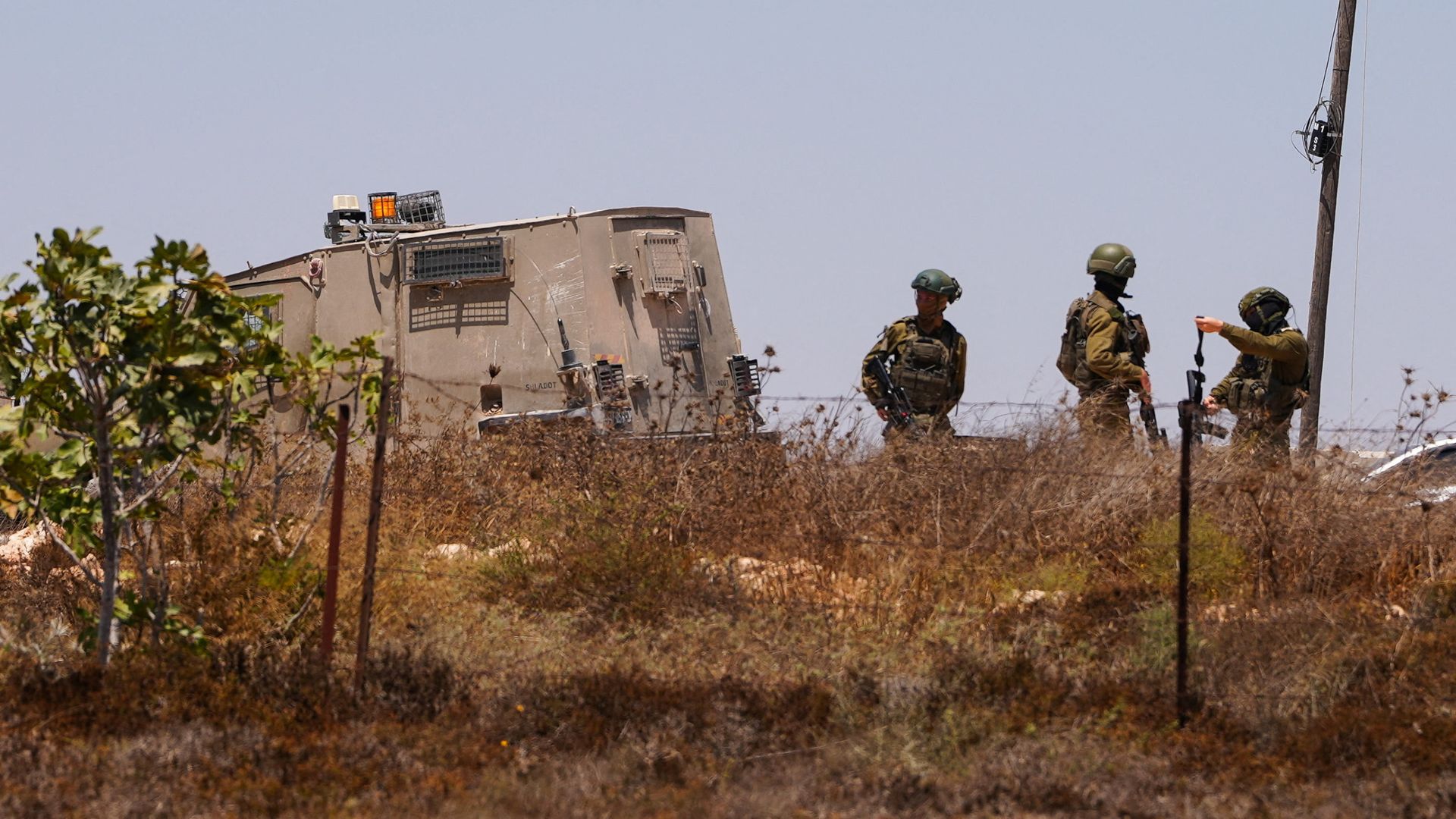
Diplomatic nomenclature rarely matches operational reality. When senior state officials label localized escalations as acts of terror, the terminology functions as a signaling mechanism rather than an analytical framework. To understand why systemic violence persists across disputed territories, one must deconstruct the underlying incentive structures, security architectures, and jurisdictional vacuums that govern daily administration in the West Bank. Strategic analysis requires moving past rhetorical condemnation to examine the exact mechanics of state and non-state coercion.
The Dual-Key Security Architecture
The operational environment of the West Bank is governed by administrative zones established under historical agreements. This segmentation creates jurisdictional friction that directly dictates escalation patterns. Discover more on a similar topic: this related article.
- Area A: Under nominal Palestinian administrative and security control.
- Area B: Under Palestinian civil control and joint security control.
- Area C: Under exclusive administrative and security control by the occupying authority.
This fragmentation creates a structural vulnerability. When enforcement agencies possess disjointed mandates, perpetrators of localized violence operate within predictable blind spots. The friction between overlapping authorities prevents rapid tactical response, effectively lowering the cost of disruption for radicalized actors. Security cannot be maintained when the administrative framework itself incentivizes non-cooperation between policing entities.
The Economic Cost Function of Territorial Contests
Territory is not merely a political asset; it functions as a finite economic resource subject to competitive exclusion. The expansion of localized settlements and the corresponding displacement of indigenous agrarian communities operate on a clear supply-demand curve regarding arable land, water access, and infrastructure nodes. Additional reporting by NPR explores comparable views on this issue.
When state-backed or condoned non-state groups target civilian infrastructure, the primary objective is rarely chaotic destruction. It is systematic value destruction designed to alter the reservation price of the defending population. By increasing the transaction costs of daily survival—such as farming, commerce, and transit—the aggressor forces a rational calculation of displacement.
The economic equation follows a predictable trajectory:
- Asset Degradation: Systematic targeting of water cisterns, agricultural machinery, and olive groves reduces immediate yields.
- Risk Premium Inflation: Insurance, transport, and security overheads spike for local residents, making subsistence economically unviable.
- Induced Migration: Property values collapse locally, clearing the path for administrative or physical annexation.
Diplomatic statements criticizing these events isolate the symptom while ignoring the structural mechanics. Condemnations do not alter the risk-reward ratio for actors operating with tacit impunity. Without imposing direct economic or operational penalties on the infrastructure of displacement, diplomatic interventions remain rhetorical noise.
The Diplomatic Signaling Loop
Why do high-level officials issue stark warnings without altering outcomes? The answer lies in the domestic audience cost model of international relations.
When a state ambassador labels an incident a horrific act of terror, the target audience is rarely the perpetrators on the ground. The statement functions to satisfy domestic constituencies, maintain nominal adherence to international legal frameworks, and signal moral posture without triggering military or economic entanglements.
This creates a self-perating feedback loop:
- Incidents of localized violence occur.
- International representatives issue moral condemnations.
- Local actors measure the distance between rhetoric and operational consequence.
- Recognizing the absence of concrete punitive mechanisms, actors discount future warnings, leading to further escalation.
The utility of a diplomatic warning approaches zero when the enforcement threat is hollow. To break this cycle, analysts must evaluate state behavior through revealed preferences rather than public statements. If a state is unwilling to condition bilateral aid, restrict military cooperation, or impose targeted asset freezes on instigators, its diplomatic warnings function as tacit permission structures.
Systemic Vulnerabilities and the Rule of Law Vacuum
The breakdown of protective mechanisms for vulnerable populations stems from a profound accountability deficit. Legal pluralism in the region means that two distinct populations within the same geographic perimeter answer to entirely different judicial systems.
When one group is subject to military tribunals with indefinite detention protocols while another enjoys civilian jurisdictional protections, the baseline for civil order shatters. A functional rule of law requires a monopoly on legitimate violence and equal application of statute. When the policing apparatus protects or mirrors the aggressor class, victims are stripped of institutional recourse.
This legal asymmetry generates three distinct systemic failures:
- Reporting Friction: Victims face high retaliation costs when filing grievances with hostile or indifferent authorities.
- Investigation Atrophy: Law enforcement agencies exhibit low clearance rates for offenses committed against the protected population.
- Deterrence Collapse: With near-zero prosecution rates, the expected utility of committing acts of intimidation or displacement remains overwhelmingly positive for the perpetrators.
Strategic Interventions and Operational Realities
Addressing West Bank violence through conventional diplomatic channels fails because it mistakes a structural design problem for a communication failure. Standard international engagement strategies rely on dialogue tables, yet the parties operate under zero-sum optimization rules where territorial acquisition is treated as an existential necessity.
True systemic shifts require altering the underlying variables of the conflict rather than pleading for behavioral modification. International actors serious about halting forced displacement must pivot from descriptive rhetoric to coercive leverage.
Tie military and financial assistance directly to measurable compliance benchmarks regarding civilian protection and property rights. Implement independent, third-party monitoring of jurisdictional enforcement to bypass biased local chains of command. Establish automatic, non-negotiable economic sanctions against entities funding or executing extrajudicial displacement operations.