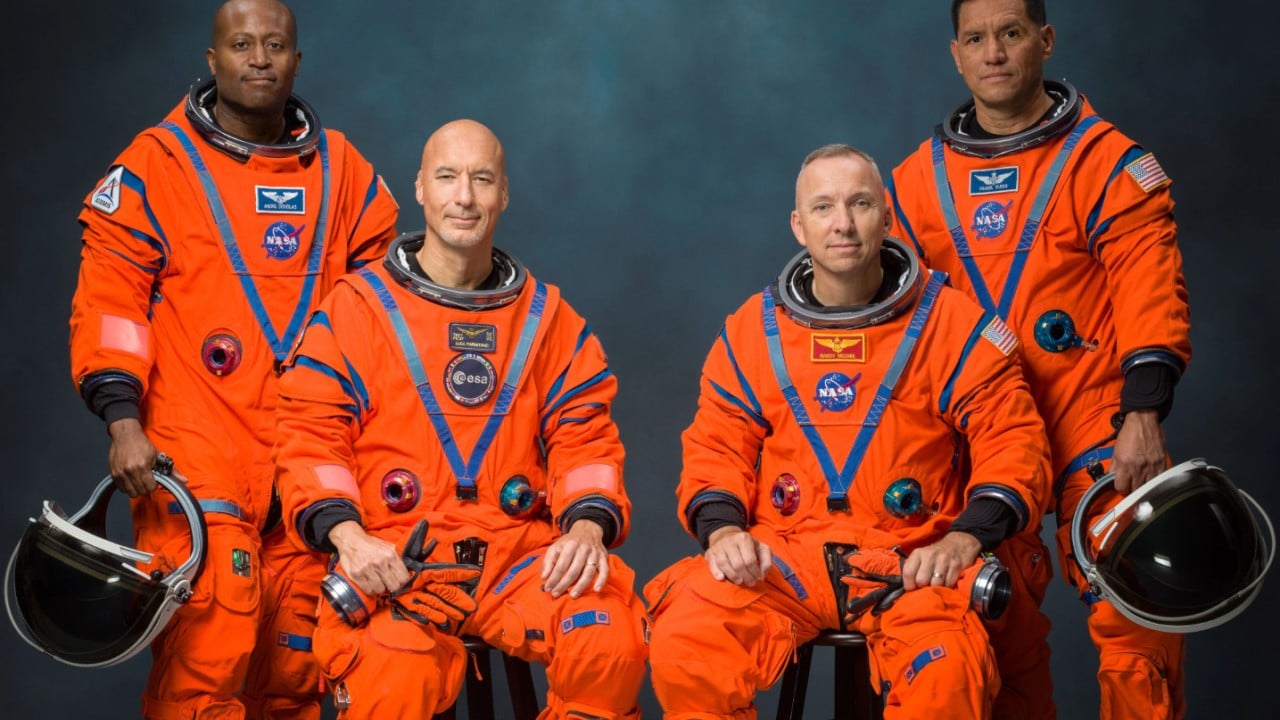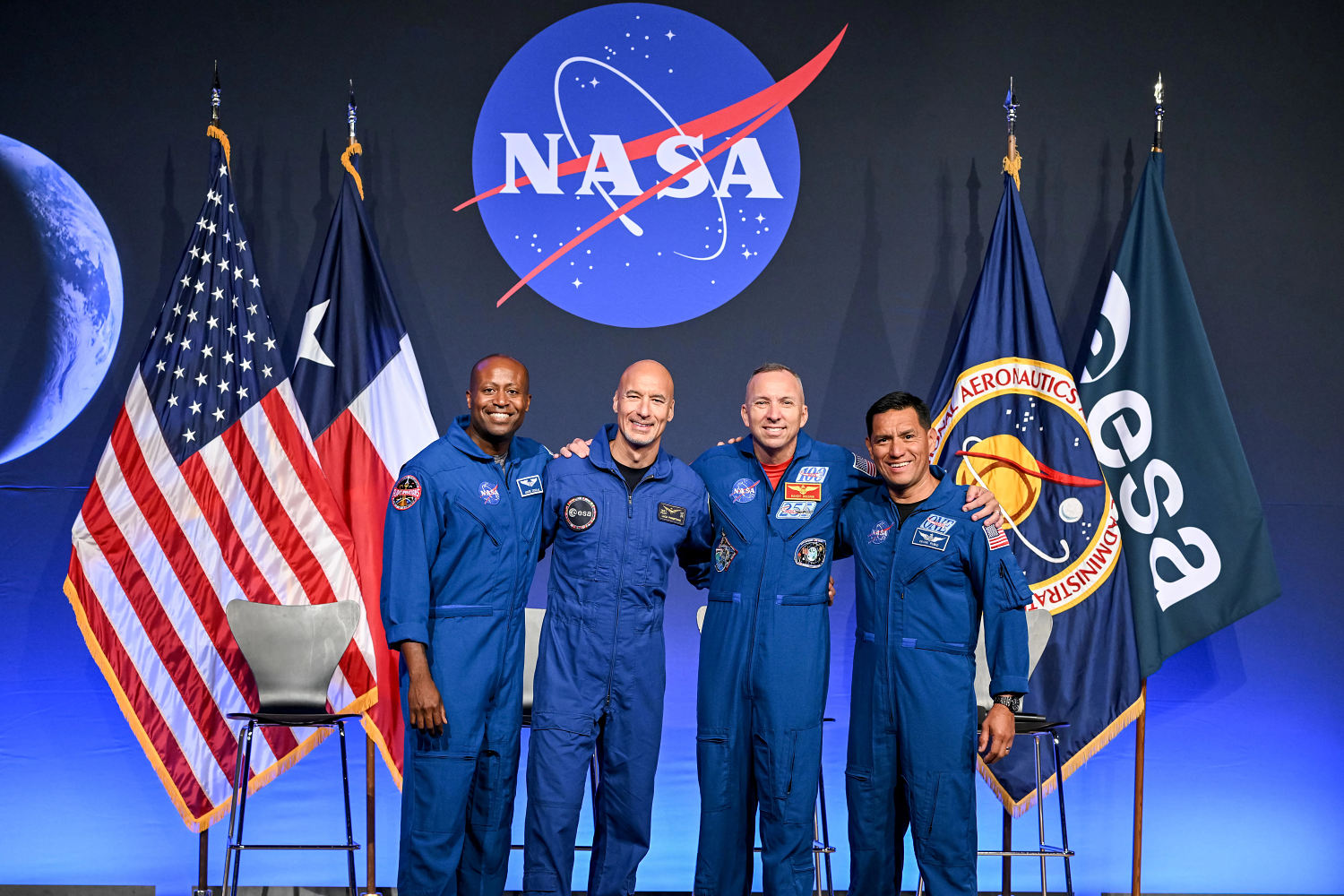
Public facing organizations frequently suffer from a misalignment between operational mechanics and symbolic expectations. The recent backlash regarding NASA’s selection of an all-male crew for the Artemis III test mission illustrates this friction. While external observers evaluate crew selection through the lens of representation, an internal analysis reveals that flight assignments are governed by a rigid optimization problem constrained by availability, hardware-specific competencies, and sequential training pipelines.
To evaluate the validity of the selection, the process must be stripped of narrative and analyzed as an engineering management problem.
The Crew Selection Matrix: A Constrained Optimization Problem
The choice of Randy Bresnik, Luca Parmitano, Frank Rubio, and Andre Douglas is not a statistical anomaly when evaluated against NASA's active astronaut corps constraints. The selection process can be modeled as a multi-variable filter where the available talent pool must satisfy strict technical requirements.
[Active Astronaut Corps: 35 Active Duty]
                   │
                   ▼
       [Constraint 1: Availability]
 (Excludes: Management roles, active ISS deployments, active training pipelines)
                   │
                   ▼
      [Constraint 2: Flight Experience]
 (Requires: High-performance jet/test pilot backgrounds & long-duration orbital flight records)
                   │
                   ▼
     [Constraint 3: System Specialization]
 (Requires: Direct hardware development for Orion, SpaceX Starship, & Blue Origin HLS)
                   │
                   ▼
         [Artemis III Selected Crew]
The Availability Bottleneck
The active-duty NASA astronaut corps is remarkably small, hovering at approximately 35 personnel. Out of this pool, 15 are women. However, nominal availability is distinct from operational readiness. At any given time, a significant percentage of the corps is removed from the selection matrix due to:
- Active Deployments: Astronauts currently aboard the International Space Station (ISS) or undergoing immediate pre-launch integration. For instance, Jessica Meir and Jessica Watkins are locked into commanding current and subsequent ISS increments (Crew-12 and Crew-13).
- Post-Flight Rehabilitation: Personnel recovering from the physiological degradation of long-duration spaceflight.
- Concurrent Training Pipelines: Astronauts already routed into specific future mission tracks, such as lunar surface operations for Artemis IV or deep technical management roles within the Flight Operations Directorate.
When these filters are applied, the actual pool of unassigned, eligible astronauts shrinks from 35 to a single-digit figure.
The Competency Vector: Test Pilots and Long-Duration Assets
Artemis III is explicitly a flight test mission conducted in low-Earth orbit (LEO). It does not involve a lunar landing; its primary objectives are the validation of rendezvous, proximity operations, and docking maneuvers with prototype Human Landing Systems (HLS) built by SpaceX and Blue Origin.
The profile demands specific operational skill sets:
- Commander and Pilot Tracks: Traditionally drawn from military test pilot pipelines due to the high-risk nature of operating uncrewed, unproven docking systems. Randy Bresnik (TOPGUN graduate, military test pilot) and Luca Parmitano (Italian Air Force experimental test pilot) satisfy the strict flight-test command requirements. The historical deficit of women in military test pilot schools creates a structural bottleneck that reflects in the senior ranks of the astronaut corps.
- Extreme Endurance Profiles: Frank Rubio’s inclusion leverages a highly specific data set: his U.S. record-setting 371-day continuous orbital flight. Testing multiple complex spacecraft profiles over a multi-week mission requires crew members with proven physiological and psychological resilience to unexpected orbital extension.
- System Specificity: Andre Douglas served as the backup crew member for Artemis II. His immediate, deep-level integration with the Orion spacecraft’s technical architecture reduces the training lead time necessary to execute the complex dual-docking profile of Artemis III.
The Pipeline Friction: Surface Training vs. Test Operations
A common analytical error made by external critics is treating the astronaut corps as a homogenous asset pool where any individual can be swapped into any mission slot. In practice, training pipelines are highly specialized and sequential.
NASA Administrator Jared Isaacman noted that critics are largely unaware of the asynchronous nature of the crew pipeline. The personnel best suited for an orbital technology demonstration (Artemis III) are distinct from those undergoing long-term, lunar-surface-specific training architectures aimed at subsequent surface missions.
The Opportunity Cost of Reassignment
Forcing demographic representation into a mid-stage test flight like Artemis III carries severe operational costs:
$$C_{\text{reassign}} = T_{\text{delay}} + R_{\text{technical}}$$
Where $T_{\text{delay}}$ represents the schedule slip introduced by restarting a multi-month vehicle training curriculum for a new crew member, and $R_{\text{technical}}$ represents the elevated mission risk of displacing an astronaut who has spent years embedded in the engineering development of the specific hardware being tested.
Displacing a specialized asset like Douglas—who already possesses systemic familiarity with the Orion-to-HLS interface—in favor of an unaligned asset would introduce unacceptable margins of human-error risk into a flight designed to validate foundational infrastructure.
Demographic Realities of the Pipeline
While the Artemis III crew is entirely male, the underlying organizational metrics indicate that the long-term trend line is shifting. The issue is one of lag time: the systemic changes implemented in recruitment and training take upwards of a decade to manifest at the flight assignment level.
| Metrics Vector | Historical Apollo Era | Modern Astronaut Corps (2026) | Recent Candidate Classes |
|---|---|---|---|
| Female Representation | 0% | ~43% (15 of 37 Active) | >50% |
| Recruitment Funnel | Exclusively Military Test Pilots | Diversified (M.D., Ph.D., Engineering) | Majority Female |
| Mission Alignment | Homogenous Flight Profiles | Bifurcated (LEO/ISS vs. Lunar Campaign) | Integrated System Specialists |
The high percentage of women in the most recent candidate classes ensures that as the Artemis campaign transitions from infrastructure testing (Artemis III) to sustained surface operations (Artemis IV and beyond), the qualified, available pool will structurally dictate diverse crew compositions.
Tactical Playbook for High-Stakes Resource Allocation
For aerospace executives, project managers, and agency directors, the Artemis III selection controversy offers distinct operational lessons on managing talent allocation under intense public scrutiny:
- Prioritize Mission Architecture Over Public Relations: When the risk profile involves unproven hardware or complex orbital maneuvers, selection matrices must weight technical competency vectors and immediate availability above narrative management.
- Define and Disseminate Selection Parameters Early: Mitigate external friction by clearly publishing the baseline requirements (e.g., specific test pilot hours, hardware development tenure) before announcing individual assignments. This establishes the objective framework before subjective critique can materialize.
- Optimize the Long-Term Pipeline: Address representation discrepancies at the source funnel rather than forcing arbitrary allocations at the execution phase. True systemic balance is achieved by managing the candidate class demographics, allowing specialized competencies to mature naturally into senior flight roles.