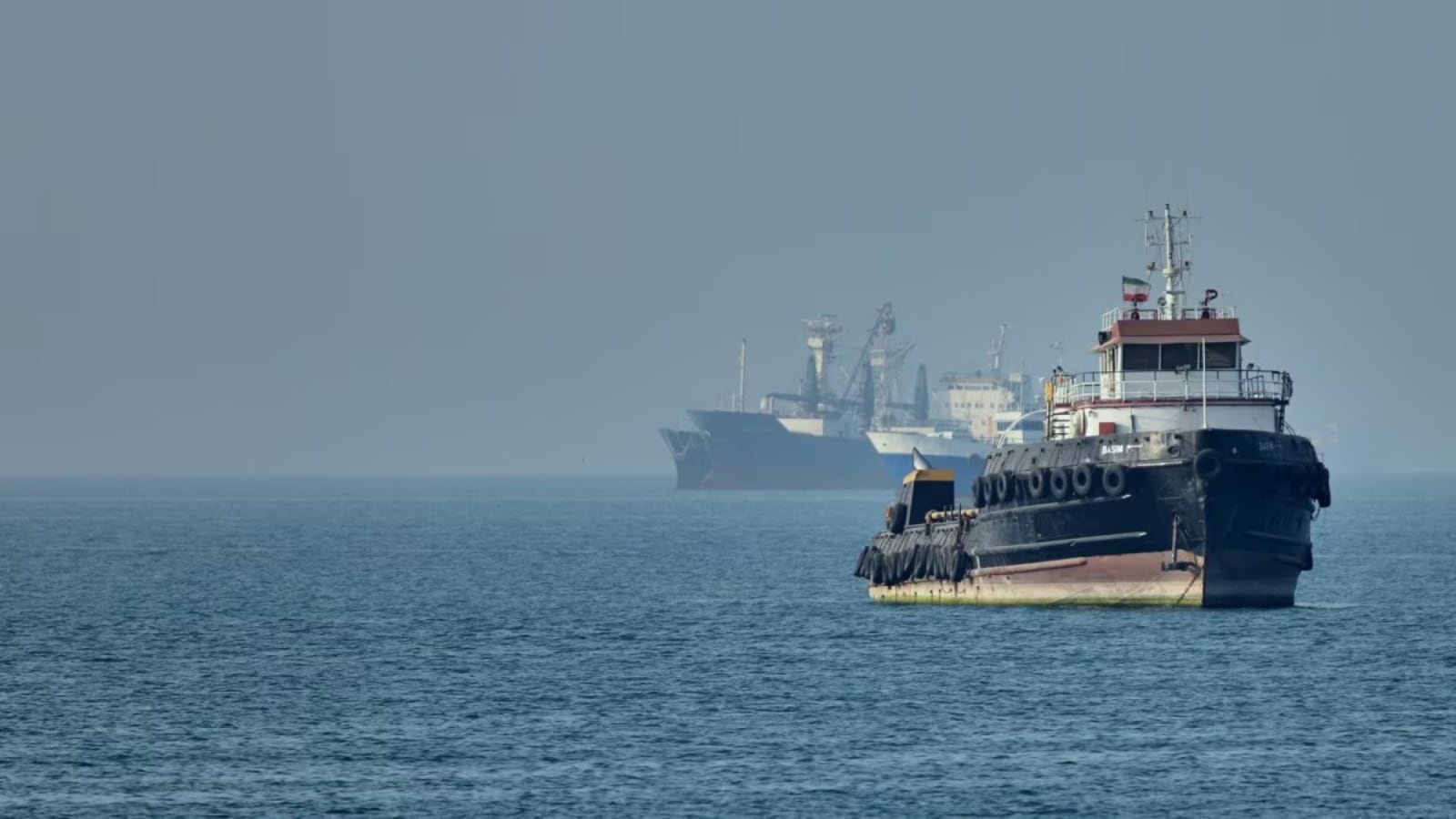
The physical disabling of the Palau-flagged merchant vessel M/T Marivex in the Gulf of Oman by a US Navy F/A-18 Super Hornet establishes a new operational precedent for maritime interdiction. Rather than relying on traditional financial restrictions or passive legal deterrents, the execution of this strike demonstrates the kinetic enforcement mechanics of the American naval blockade initiated on April 13. Understanding this shift requires moving past sensationalized diplomatic rhetoric and breaking down the precise operational, legal, and structural variables driving modern maritime warfare.
The incident highlights a core friction point in global shipping economics: the intersection of high-risk sanctions evasion strategies and the physical enforcement of sovereign blockades. When US Central Command (CENTCOM) targeted the unladen tanker's engineering and steering spaces, the tactical objective was not the destruction of civilian life, but the structural neutralization of a non-compliant asset. This specific operational calculus explains why the vessel—manned by a crew of 24 Indian seafarers—became a kinetic target.
The Three Pillars of Kinetic Sanctions Enforcement
The maritime interdiction of the M/T Marivex did not occur in a vacuum; it was the direct outcome of a systematic escalation ladder. When a state transitions from diplomatic trade restrictions to a hard naval blockade, enforcement relies on three interdependent structural pillars.
- Pillar 1: Persistent Intelligence Tracking and Bureaucratic Blacklisting The targeted tanker was already heavily compromised within international regulatory databases. Prior to the kinetic engagement, the vessel was blacklisted by the US Treasury Department’s Office of Foreign Assets Control (OFAC) for transporting Iranian fuel oil and bitumen. This bureaucratic designation strips a vessel of legitimate corporate insurance, clean flagging options, and access to tier-one ports, effectively forcing its operators into illicit logistics networks.
- Pillar 2: The Tactical Escalation Protocol Data compiled by CENTCOM confirms that maritime interdiction follows a strict, non-negotiable step-function. The blockade's operational mechanics rely on verbal warning, physical interception, and finally, targeted disablement. The M/T Marivex had attempted to breach the blockade line on three separate occasions over the preceding days, turning back each time after receiving explicit warnings from US warships. The fourth attempt triggered the final step of the protocol.
- Pillar 3: Kinetic Disablement via Precision Targeting When a vessel enters a designated exclusion zone and refuses to comply with naval instructions, the cost function shifts from regulatory penalties to physical neutralization. The F/A-18 Super Hornet deployed from the USS Abraham Lincoln fired precision munitions specifically into the ship's engineering and steering compartments. This tactical choice targets the vessel's propulsion architecture to freeze its coordinates while minimizing structural hull degradation and avoiding catastrophic environmental spills from oil storage tanks.
Electronic Warfare and Transponder Manipulation Mechanics
A critical catalyst for the kinetic strike was the vessel's deliberate manipulation of its Automatic Identification System (AIS). To bypass the American naval picket line stretching from the easternmost tip of Oman to the Iran-Pakistan border, the operators of the M/T Marivex engaged in electronic evasion techniques that immediately upgraded the ship’s threat profile from a standard civilian merchant vessel to an active hostile anomaly.
The ship attempted to "run past" the blockade by completely deactivating its AIS signaling devices while executing sharp maneuvers into Omani territorial waters. In modern naval doctrine, switching off tracking transponders in an active theater of war is an overt indicator of non-compliant intent. It strips the vessel of its status as an innocent commercial actor.
Furthermore, data from global shipping databases like Equasis revealed that the vessel was operating under a false flag, claiming a Madagascar registry while actually registered under a Palau flag. This layer of administrative deception, combined with localized electronic blackouts, created a data bottleneck for naval commanders. When a ship intentionally blinds regional maritime monitoring bodies, military forces must assume the worst-case payload or operational objective, heavily accelerating the decision to deploy kinetic force.
The Asymmetric Friction of Global Seafaring Labor
The presence of 24 Indian nationals aboard a sanctioned, foreign-owned vessel underscores a structural vulnerability within the global maritime labor supply chain. This configuration creates an intense geopolitical friction point where sovereign enforcement actions collide with the human capital of neutral third-party nations.
[Panama/Palau Corporate Shell] -> Owns/Flags Asset -> Violates Blockade
                                      |
                                      v
[Global Labor Supply Chain]    -> Supplies Crew   -> 24 Indian Seafarers (Exposed to Kinetic Risk)
                                      |
                                      v
[US CENTCOM Naval Picket]      -> Fires Munition  -> Tactical Disablement of Hull
The shipping industry relies heavily on a fragmented operational model. The M/T Marivex is owned by a Panama-based entity (Arihant Shipping Inc.) and flies a Palau flag of convenience, yet its operational crew is entirely outsourced from India. This structural division means that while the economic benefits and strategic decisions of sanctions evasion are concentrated within opaque shell companies, the physical risks of navigating an active blockade are borne exclusively by merchant sailors.
This dynamic creates severe diplomatic feedback loops. Following the strike, India’s Ministry of External Affairs delivered a formal demarche to the US embassy in New Delhi, emphasizing that the safety of seafarers cannot be treated as collateral damage in sovereign conflicts. The diplomatic tension is exacerbated by an even more complex enforcement environment: shortly after the Marivex incident, US forces struck a second vessel, the Settebello, off the coast of Oman, resulting in three Indian sailors going missing. Unlike the Marivex, the Settebello was not officially blacklisted by OFAC, proving that as a blockade tightens, the margin of error for civilian crews navigating the zone shrinks to near zero.
Sovereignty Contested: Territorial Waters vs. International Law
The tactical choices made by the crew of the M/T Marivex during its final transit illustrate a fundamental misunderstanding of maritime sovereignty during an active conflict. The vessel attempted to hug the coastline, utilizing Omani territorial waters as a geographical shield to block American naval maneuvers.
Under traditional international maritime law, a state's territorial waters extend 12 nautical miles from its baseline, granting the sovereign nation exclusive jurisdiction. The ship's operators calculated that the US Navy would hesitate to project force within Oman's sovereign boundaries. However, this calculation failed to account for two critical factors:
- The Breakdown of Peace-Time Legal Protection: Once a vessel has repeatedly demonstrated intent to violate a military blockade in international waters, its entry into adjacent territorial seas does not automatically grant it immunity from tracking or defensive interception by enforcing forces, particularly when operating without a transponder signal.
- Omani Strategic Neutrality: While Oman’s military acted rapidly to execute search-and-rescue operations—successfully winching the 24 Indian nationals off the burning vessel via helicopter—the Omani government did not militarily defend the non-compliant vessel against the strike. Muscat's operational focus was strictly humanitarian, isolating the crew from the targeted asset and refusing to validate the ship's attempt to use its coast as a geopolitical safe haven.
Strategic Play: The Operational Blueprint for Shipping Operators
The kinetic reality of the current Gulf of Oman blockade demands an immediate re-evaluation of maritime risk assessment frameworks for commercial shipping firms, crewing agencies, and state departments. The assumption that civilian crews provide a shield against physical military engagement has been completely invalidated by CENTCOM's deployment of precision munitions against non-compliant hulls.
Comprehensive Asset Auditing
Corporate shipping entities must immediately audit the historical OFAC records of all leased or operated hulls. If an asset has been previously flagged for transporting Iranian or Russian oil under past nomenclatures, its risk profile must be updated to class it as an active target. Continued operation of these vessels within the transit lines running from Oman to the Pakistan border must be halted immediately.
Fleet Transponder Compliance Mandates
Crewer unions and ship operators must enforce a strict policy of absolute transponder transparency. Any directive from vessel owners to deactivate AIS tracking or manipulate flagging data while transiting the Arabian Sea or Gulf of Oman must be treated as an illegal order that voids crew safety guarantees. Deactivating tracking systems in an active blockade zone will now be met with immediate kinetic disablement rather than financial penalization.
State-Level Labor Protection Channels
For labor-exporting nations like India, maritime diplomacy must shift from reactive post-strike demarches to proactive regulatory restrictions. The Directorate General of Shipping must implement temporary bans preventing national seafarers from signing crewing contracts on vessels flagged by countries of convenience (such as Palau or Madagascar) if those specific vessels have outstanding OFAC violations or a documented history of navigating blockaded ports.


