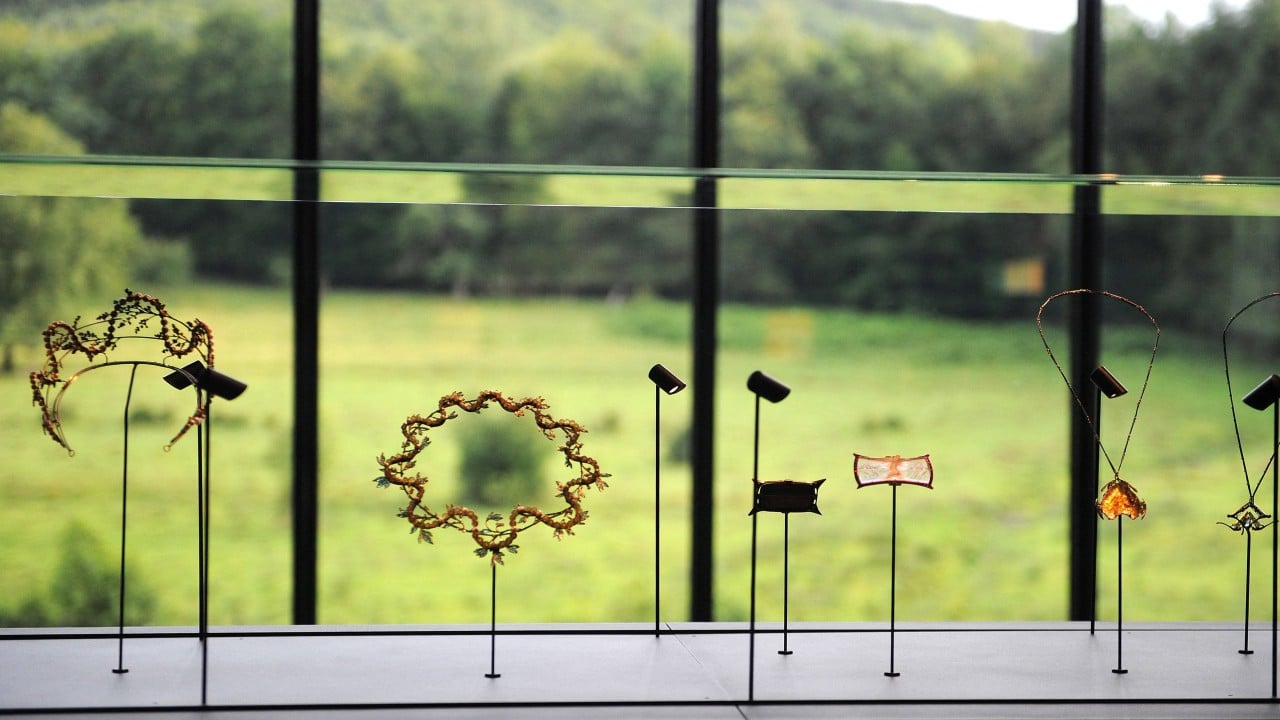
A cleaning lady walking into a crime scene ahead of the police is not a detail from a Hollywood script. It is the sobering reality of the latest multi-million-euro heist to strike the French cultural sector. Early on Sunday, July 5, 2026, thieves breached the Lalique Museum in Wingen-sur-Moder, escaping with approximately twenty rare Art Nouveau and Art Deco jewelry pieces valued near four million euros. The burglary exposes a systemic decay in private security protocols that has left the nation's historical treasures increasingly defenseless against coordinated criminal networks.
This raid is not an isolated incident of bad luck. It is part of an escalating crisis. Only nine months prior, a gang of masked thieves infiltrated the Louvre in broad daylight, stripping the Galerie d'Apollon of eighty-eight million euros worth of French Crown Jewels in less than eight minutes. While the global press treats these events as romantic capers, the mechanics behind them reveal a starker truth. Regional institutions are being systematically outmatched by tactical crews who exploit a flawed reliance on outsourced security networks.
Inside the Wingen sur Moder Breach
The timeline of the Lalique theft demonstrates how little time professionals need when structural defenses fail. At approximately 5:30 AM, the perpetrators forced a door to the museum in northeastern France. They bypassed secondary barriers and moved directly to the high-security jewelry room. Within minutes, six specialized display cases were smashed.
The electronic security systems worked exactly as designed. Sensors tripped, alarms sounded, and the signal reached the private security firm contracted to monitor the site. Then, the human element failed.
Instead of triggering an immediate dispatch of the local Gendarmerie, the security company initiated a lengthy series of internal verification checks. This procedural drag created a window of total impunity for the thieves. By the time the protocol concluded, the thieves had long vanished into the Alsace dawn. The first person to discover the shattered cases and notify law enforcement was an arriving cleaning worker.
Local officials have not hidden their fury. Christian Dorschner, the mayor of Wingen-sur-Moder, publicly condemned the security provider for a catastrophic operational failure. His anger points to a broader, uncomfortable reality facing European cultural preservation. Museums are spending millions on electronic detection systems while remaining dependent on underpaid, slow-moving third-party contractors to handle the response.
The Louvre Precedent and the New Playbook
To understand the confidence of the thieves who struck the Lalique collection, one must examine the October 2025 heist at the Louvre. That operation shattered the myth of invulnerability surrounding major state institutions. Disguised as construction workers, a four-man team used a commercial furniture lift to scale a first-floor balcony, cut through a window with power tools, and held guards at bay before escaping on motor scooters.
The common denominator across both thefts is meticulous reconnaissance. These are not opportunistic smash-and-grab operations. Criminal syndicates are conducting thorough pre-operational surveillance, identifying exact response times, and mapping the precise locations of the most valuable assets.
At the Lalique Museum, the thieves ignored hundreds of exceptional glass and crystal works to focus entirely on the jewelry room. They knew exactly what they wanted, where it was, and precisely how many minutes they had before a physical response could realistically materialize.
[Alarm Triggered] ---> [Security Company Verification Delay] ---> [Cleaning Staff Arrival] ---> [Police Notified]
      05:30 AM                  Critical Time Lost                    Morning Shift                Too Late
The Black Market Destiny of Stolen Heritage
A persistent question surrounds the theft of highly recognizable cultural property. How do you liquidate twenty pieces of unique René Lalique jewelry or centuries-old royal artifacts without getting caught?
The answer lies in the evolving structure of transnational organized crime. Historical jewelry presents a unique logistical challenge for thieves compared to fine art paintings. A canvas must be kept intact to retain its value, requiring a wealthy, unscrupulous private collector willing to hide it forever. Jewelry can face a far more brutal fate.
Priceless items are frequently dismantled within hours of a theft. Gold and platinum mountings are melted down in backroom foundries, erasing their historical provenance completely. Large, historic precious stones from events like the Louvre heist are shipped to illicit cutting centers in Antwerp, Dubai, or Mumbai, where they are re-cut to alter their weight and facet profiles. Once transformed, they re-enter the legitimate global diamond market with clean certificates.
The Lalique pieces, however, present a different complication. Much of the value in Lalique jewelry lies in molded glass, enamel work, and unique horn or ivory carvings rather than raw diamond weight. Melting them down destroys their financial value entirely. Investigative history suggests two potential paths for this haul:
- The Ransom Option: Fleeing syndicates use the stolen items as leverage, attempting to sell them back to insurance companies or cultural ministries through intermediaries for a fraction of the market value.
- The Collateral Network: The items are moved to eastern Europe or South America, where they are never displayed but instead used as physical collateral to secure major drug or weapons transactions between cartel factions.
The Illusion of Museum Security
The recurring failure of museum defense systems stems from a fundamental misunderstanding of asset protection. For decades, institutions have focused on detection rather than denial. They install advanced closed-circuit cameras, motion sensors, and laser grids. These tools are excellent for recording a crime, but they do nothing to physically stop a motivated intruder.
If a security door can be breached with a standard crowbar or a battery-powered angle cutter in under ninety seconds, the most expensive camera system in the world merely provides high-definition footage of a loss.
Furthermore, the economic pressures on regional museums have led to dangerous cost-cutting measures. Budgets are allocated toward high-profile exhibitions and public relations rather than maintaining an in-house, well-trained, around-the-clock physical security force. When response protocols are outsourced to regional security centers handling hundreds of commercial accounts simultaneously, a delay is not just possible; it is statistically inevitable.
The French Ministry of Culture has repeatedly promised comprehensive audits and accelerated security upgrades across the country's thousands of state-linked museums. Yet, as long as the operational response chain remains fractured by bureaucratic delays and third-party incompetence, the country's historical archives remain exposed. The thieves have figured out the clock. Until museums change the way they defend their perimeters, the timeline will continue to favor the criminals.