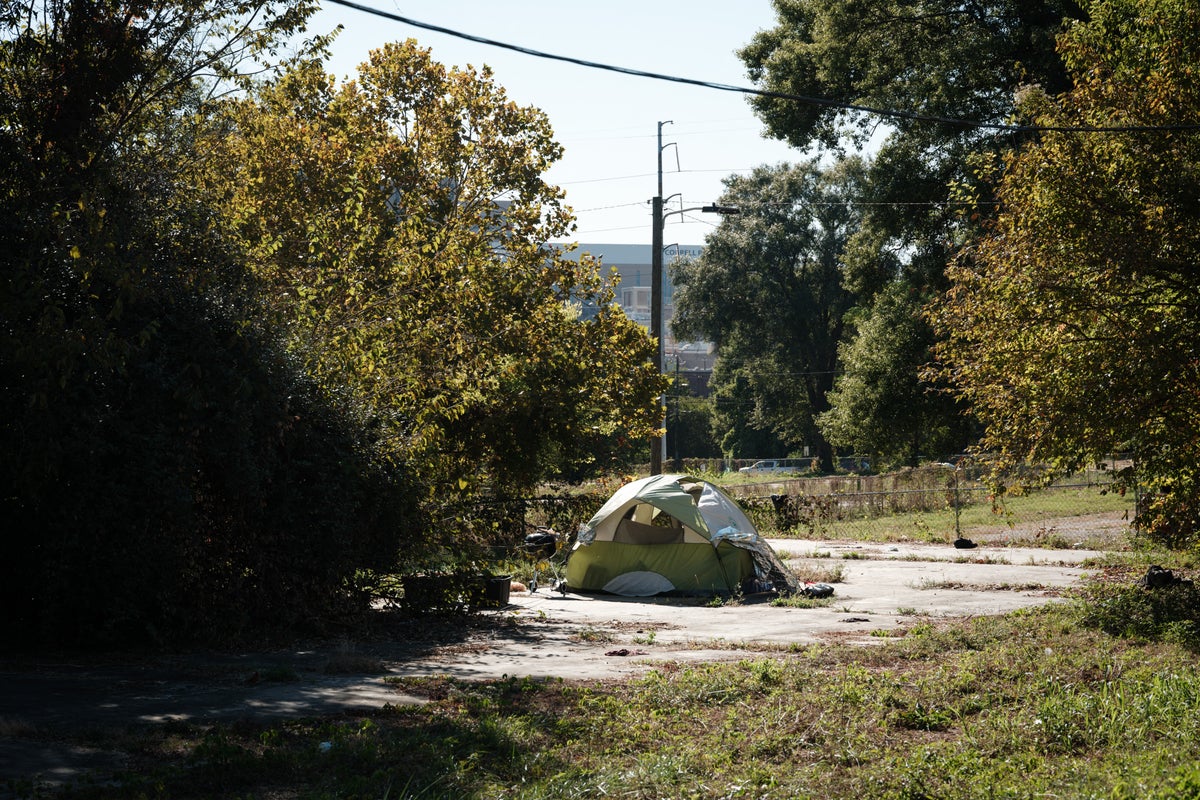
Municipal preparation for global mega-events consistently precipitates a structural shift from long-term social management to short-term spatial curation. In the immediate vicinity of major international venues, municipalities frequently accelerate the clearing of unsheltered populations. The forced removal of tents and personal property—including critical medical supplies—near high-profile event sites represents a distinct operational strategy driven by immediate aesthetic demands rather than sustainable urban planning. Examining this phenomenon requires moving past surface-level critique to deconstruct the operational math, systemic externalities, and policy bottlenecks that govern municipal displacement.
The Tri-Partite Incentive Matrix of Mega-Event Governance
Municipal execution of encampment sweeps ahead of major international exhibitions operates under a compressed timeline that distorts standard public policy trade-offs. This behavior is governed by three competing institutional incentives.
Global Reputation Capital and Tourism Valuation
Municipalities hosting global tournaments act under intense pressure to present an optimized image of safety, cleanliness, and infrastructure efficiency. International broadcast rights, corporate sponsorships, and projected tourism revenues create a rigid financial framework. The perceived risk of negative global press regarding urban poverty or visible homelessness incentivizes rapid, high-visibility sanitation interventions over slow-moving housing placement protocols.
Civil Liability and Municipal Risk Management
The operational execution of sweeps frequently creates a structural contradiction within city risk management frameworks. While municipalities cite public health ordinances, fire codes, and sidewalk accessibility to justify the removal of temporary structures, the destruction of personal property introduces severe legal vulnerabilities. The seizure of prescription medications, identification documents, and survival gear directly violates constitutional protections against unreasonable seizure and due process failures. Municipalities balance the immediate, predictable risk of local civil rights litigation against the perceived existential risk of failing to meet international event readiness standards.
The Spatial Displacement Loop
Enforcement actions do not reduce the absolute number of unsheltered individuals; they redistribute them across different municipal sectors. Removing encampments from a zone adjacent to a stadium shifts the population density to secondary and tertiary zones outside the immediate line of sight of international visitors. This spatial displacement creates temporary vacuums that inevitably refill once peak event security protocols expire, establishing a cyclical operational pattern with zero net reduction in homelessness.
The Cost Function of Discontinuous Enforcement
The systematic disposal of essential items—specifically tents and maintenance medications—alters the economic and operational metrics of both emergency medical services and municipal court systems. Municipalities often externalize these costs onto the broader county or state healthcare infrastructure.
Total Economic Cost = Direct Operational Cost + Healthcare Escalation Cost + Legal Liability Exposure + Recidivism Friction
Direct Operational Cost
Executing an encampment sweep requires multi-agency coordination, consuming hundreds of man-hours across police departments, sanitation crews, and social service agencies. The hardware costs include heavy machinery, waste disposal fees, and temporary storage facilities for seized property that meets internal storage criteria. When policies mandate the immediate destruction of property rather than cataloging and storage, the city trades long-term legal exposure for short-term labor savings.
Healthcare Escalation Cost
When municipal sanitation crews dispose of maintenance medications—such as insulin, psychiatric prescriptions, and HIV therapies—the immediate consequence is an acute spike in emergency department admissions. The unhoused individual, stripped of preventative medication, transitions from a low-cost maintenance state to a high-cost acute crisis state.
- Chronic Disturbance: The interruption of daily medication adherence destabilizes chronic conditions, forcing emergency medical services (EMS) interventions.
- Asset Replacement Friction: Navigating the bureaucratic channels to replace lost identification, insurance cards, and prescriptions requires weeks of administrative processing, during which the individual remains highly vulnerable to preventable health crises.
- Institutional Burdens: The financial burden of these emergency room visits falls directly on safety-net hospitals and public tax bases, dwarfing the nominal budget allocated for municipal sanitation.
Legal Liability Exposure
Federal jurisprudence establishes clear boundaries regarding the property rights of unsheltered individuals. When municipal actors fail to provide adequate notice, detailed itemization, and reasonable retrieval mechanisms for seized goods, they trigger systemic class-action lawsuits. The resulting financial settlements and court-mandated injunctions frequently cost municipalities millions of dollars, effectively nullifying the short-term economic gains projected from event-driven tourism.
Structural Bottlenecks in the Continuum of Care
The failure to transition individuals from high-visibility encampments to stable housing during event preparation highlights deep structural bottlenecks within the municipal continuum of care. The system encounters friction at three critical points.
The Crisis Response Capacity Gap
Municipalities frequently justify sweeps by asserting that shelter beds are offered to every displaced individual. This assertion obscures the distinction between nominal bed availability and functional capacity. Low-barrier shelter beds—which accommodate couples, pets, individuals with severe behavioral health challenges, and personal belongings—are almost universally operating at maximum capacity. Offering a standard shelter bed that requires an individual to abandon their remaining possessions or separate from their family unit introduces a friction point that guarantees a high refusal rate.
Permanent Supportive Housing Intake Velocity
The velocity at which individuals move from the street to permanent supportive housing is throttled by administrative complexity and documentation requirements. Acquiring housing vouchers requires birth certificates, social security cards, and verified income statements. When municipal sweeps destroy these very documents, the individual’s intake velocity drops to zero, resetting the administrative clock and extending their duration in the unsheltered system.
Data Siloing Across Municipal Agencies
Sanitation departments, police precincts, and housing authorities rarely operate on unified data platforms. A sanitation crew tasked with clearing a specific block operates independently of the street outreach teams who have spent months building rapport and tracking housing applications for the individuals on that same block. The sudden execution of a sweep scatters the population, breaking the chain of contact required for housing case managers to finalize placement.
Quantitative Analysis of Displacement vs. Mitigation Strategy
To evaluate the structural inefficiency of event-driven displacement, we can contrast standard municipal enforcement metrics against an optimized transitional housing model.
| Metric | Discontinuous Displacement (Sweeps) | Structured Transitional Housing |
|---|---|---|
| Immediate Spatial Efficacy | High (0–48 hours) | Moderate (2–6 weeks) |
| Long-Term Spatial Stability | Low (Re-population within 90 days) | High (Sustained retention) |
| Per Capita Daily System Cost | High (Driven by EMS, Police, Courts) | Predictive/Fixed (Lease and Case Management) |
| Property Rights Compliance | High Risk of Constitutional Violations | Zero Risk |
| Data Integrity | Destroys client tracking and records | Enhances longitudinal data collection |
The reliance on discontinuous displacement reflects a structural preference for immediate spatial efficacy over long-term cost minimization. The choice is driven by the immutable deadline of the mega-event kick-off, which penalizes the slower, more sustainable timeline of structured transitional housing.
Strategic Resource Reallocation Mechanics
Altering this destructive cycle requires restructuring the operational mandates governing municipal event preparation. Rather than deploying sanitation resources as punitive tools to clear space, cities must utilize the capital influx of mega-events to fund dedicated, low-barrier stabilization zones.
Decoupling Sanitation from Policing
The execution of site cleanups must be structurally separated from criminal enforcement. When sanitation crews operate under the mandate of property preservation rather than property destruction, the loss of life-critical assets like medication drops significantly. This shift requires the implementation of clear, trackable storage bins and the deployment of mobile property storage units adjacent to event perimeters, allowing individuals to maintain their belongings without impeding public right-of-ways.
Fast-Track Document Remediation Cells
Recognizing that document loss is the primary administrative bottleneck to housing, municipalities preparing for major events should establish mobile, cross-agency document remediation cells. These cells must be deployed in advance of any site clearance, working to duplicate and secure state identifications, medical records, and housing applications in digital repositories. This safeguards the progress made within the continuum of care, ensuring that physical displacement does not equate to administrative erasure.
Capital Allocation via Event Surcharges
To address the funding shortages that limit low-barrier shelter capacity, municipalities must integrate a dedicated human infrastructure surcharge into event ticketing, hotel taxes, and corporate sponsorships. Directing a fixed percentage of mega-event revenue into a rapid-response housing trust fund allows cities to scale up temporary low-barrier capacity months before the event begins, absorbing the visible population through voluntary placement rather than forced displacement. This mechanism aligns the financial windfall of the event with the systemic needs of the host city's most vulnerable infrastructure.
Municipalities preparing for the intense scrutiny of global events face a choice between the illusion of order and the structural reality of urban stability. Continuing the practice of destroying survival assets ensures an escalation in public health costs and legal liabilities long after the crowds have departed. True municipal readiness is measured not by the rapid clearance of visible poverty, but by the resilience and capacity of the social systems designed to manage it.


