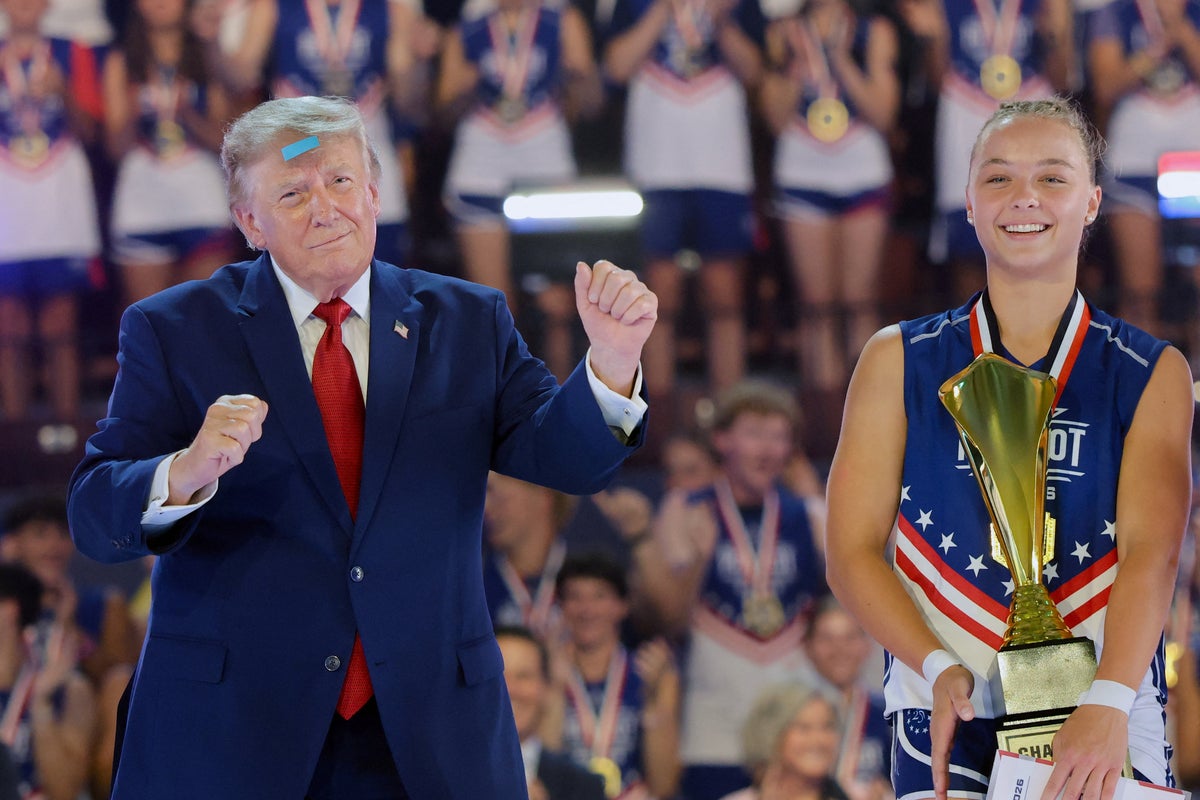
Political staging relies on precise behavioral mechanics rather than spontaneous expression. When public figures integrate recognizable physical routines like choreographed dance movements into high-profile events, they execute a calculated framework of audience capture. This operational dynamic bypasses traditional media filtering, utilizing direct sensory triggers to cement brand identity within targeted demographics. Public relations execution at events such as the Patriot Games in Ohio demonstrates how physical signaling functions as a primary driver of engagement, shifting political communication away from policy discourse and toward cultural resonance.
The Three Pillars of Behavioral Signaling
To understand how high-profile appearances command attention, analysts must deconstruct the mechanics of public staging into distinct operational components. Each component serves a specific function within the broader architecture of modern attention economies.
- Audience Synchronization: The deliberate alignment of physical environment, lighting, and sound to evoke a specific emotional state. Pyrotechnics and high-intensity visual cues alter the baseline arousal level of spectators, making them more receptive to subsequent behavioral cues.
- Cultural Memorability: The deployment of familiar, highly accessible cultural artifacts. Utilizing popular dance motifs creates an immediate cognitive shortcut, substituting complex ideological positions with recognizable populist markers.
- Frictionless Distribution: Designing moments specifically for digital fragmentation. Physical actions that require zero contextual explanation travel efficiently across decentralized media networks, maximizing reach without incurring advertising expenditures.
This triumvirate of mechanics transforms static political rallies into dynamic entertainment vehicles. By reducing complex governance themes to repeatable, high-contrast actions, organizers optimize for algorithmic distribution.
The Economics of Attention Capture
Traditional media analysis often treats political rallies as news-gathering operations. This perspective misreads the fundamental incentive structure of modern campaigning. The primary objective is not the transmission of policy details to an informed electorate, but the generation of high-velocity engagement metrics.
When an individual enters a venue amid visual stimulation and executes a well-known physical routine, the economic return on investment manifests in three distinct ways:
- Gaze Retention: Visual novelties interrupt the passive consumption habits of media users, extending the duration of exposure.
- Algorithmic Favorability: Content management systems prioritize high-valence, emotionally charged visual stimuli over text-based reporting, reducing the cost-per-impression for the political brand.
- In-Group Reinforcement: Shared cultural touchstones validate the identity of the base, solidifying loyalty and insulating the constituency against counter-messaging.
The cost function of this strategy is minimal. The investment requires only physical presence and basic spatial coordination, while the potential yield spans millions of organic impressions across fractured digital ecosystems.
The Mechanics of Public Brand Differentiation
In a saturated media landscape, standard speech delivery suffers from diminishing marginal returns. Audiences develop cognitive fatigue when exposed to repetitive rhetorical structures. Physical disruption—such as unscripted or stylized movement within a formal setting—functions as a pattern interrupt.
Pattern interrupts shatter expectations. When a figure typically associated with rigid institutional power engages in self-referential, populist physical humor, the resulting incongruity commands cognitive focus. This technique bridges the gap between institutional authority and populist relatability.
The strategic deployment of these behavioral assets requires tight operational control. The venue must be curated to isolate the subject from hostile counter-narratives, ensuring that every frame captured by digital devices reinforces the intended brand narrative. The Ohio event exemplifies this principle, utilizing a controlled competitive atmosphere to frame the subject as both a patron of regional pride and an active participant in popular culture.
Systematic Implications for Modern Communication
The evolution of political strategy toward performance art reflects broader structural changes in how populations consume information. As text-based analysis yields to visual shorthand, the criteria for political efficacy shift. Competence is increasingly evaluated through the lens of theatrical command rather than administrative precision.
Recognizing this shift allows observers to model future campaign tactics with greater accuracy. Future iterations of public staging will likely incorporate even more granular feedback loops, utilizing real-time digital engagement metrics to adjust physical performance on the fly.
The strategic imperative for any modern political actor is clear: ideological coherence matters less than behavioral memorability. Entities that master the deployment of cultural shortcuts will continue to dominate the attention economy, irrespective of traditional analytical metrics.