The survival of a political regime under high-intensity kinetic bombardment is frequently misconstrued as a victory of state resilience. In the wake of the three-month conflict involving the United States, Israel, and Iran, which culminated in the June 2026 Switzerland memorandum of understanding, the Islamic Republic remains institutionally intact despite sustained airstrikes and a total maritime blockade. Survival, however, is a dynamic function of resource depreciation rather than a static baseline of political willpower.
The regime survived the immediate kinetic campaign because its asymmetric command structure, subterranean missile architecture, and internal security apparatus were optimized for decentralized preservation. The post-war landscape reveals a stark divergence between political survival and structural viability. With a destruction bill estimated at $270 billion against a pre-war gross domestic product of $371 billion, Iran faces a capital stock wipeout of approximately 73%. This structural degradation transforms the regime’s core operational challenge from external asymmetric deterrence to internal system containment. The coming months will determine whether a state can manage a systemic economic collapse when its primary levers of financial distribution and social control are structurally broken.
The Capital Destruction Matrix: Quantifying the Infrastructure Wipeout
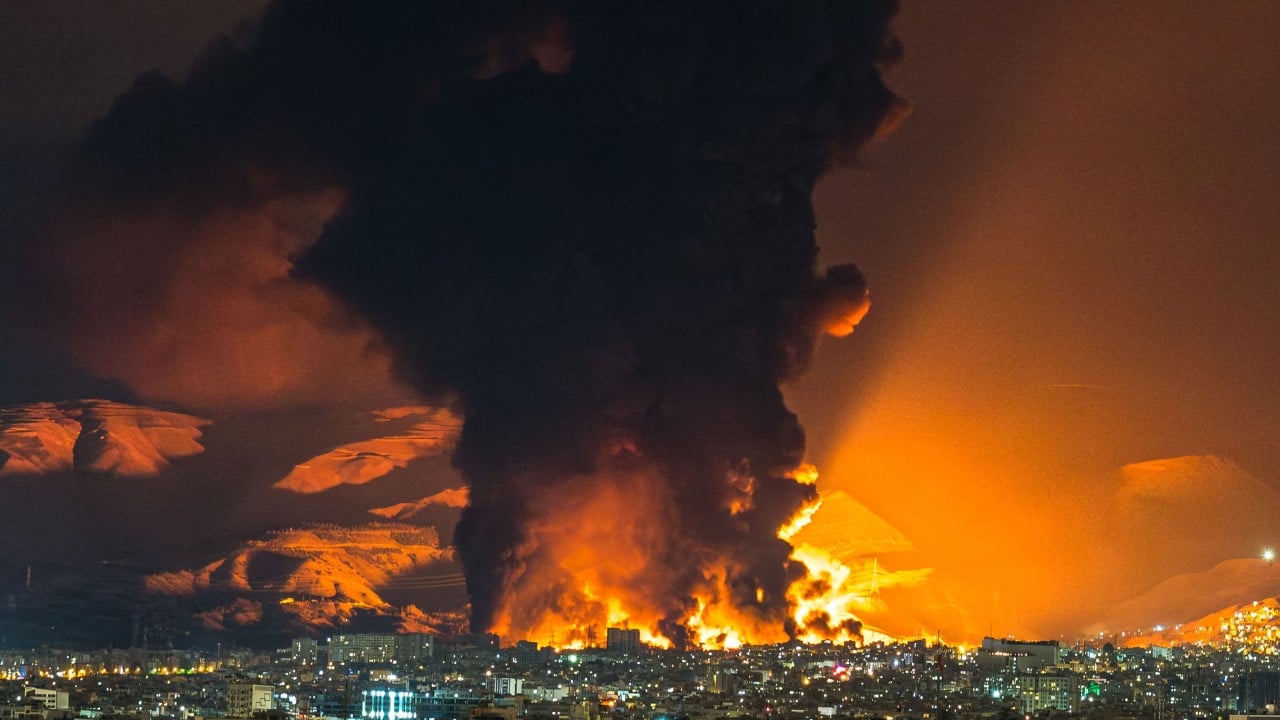
To understand the post-war operational capacity of the state, the destruction must be analyzed through a capital depreciation framework. Forty days of concentrated air campaigns targeted five critical macro-economic nodes: energy grids, steel manufacturing plants, petrochemical complexes, maritime ports, and primary transport corridors. This was not a campaign of indiscriminate city bombing, but a precise dismantling of Iran's industrial output potential.
The structural consequences across these sectors follow a clear cascading logic:
- The Energy Grid and Refining Taper: The elimination of major refining nodes and power generation stations has severed the domestic energy supply chain. The destruction of domestic refining capacity forces the state into an acute dependency on imported refined products, instantly reversing its traditional position as an energy exporter. This creates a severe structural deficit in domestic electricity allocation, forcing industrial idling to preserve basic power for urban centers.
- The Industrial Base Decompression: Heavy industries, specifically steel and petrochemicals, served as the primary mechanisms for non-oil revenue generation and sanction-evasion liquidity. The physical destruction of these facilities removes the primary domestic absorbers of raw materials and eliminates the state's most reliable sources of non-dollar hard currency.
- The Logistical Choke: The targeting of rail networks, transport corridors, and commercial port facilities like Bandar Abbas has frozen internal supply chains. The physical breakdown of logistics increases the internal transaction costs of moving goods by orders of magnitude, isolating agricultural provinces from dense urban consuming centers.
This physical destruction is equivalent in scale to the total losses sustained during the eight-year Iran-Iraq War in the 1980s, yet it was compressed into a ninety-day window. The rate of capital destruction outpaced the state's capacity to deploy stopgap mitigations, resulting in an immediate and uncompensated contraction of total productive capacity.
The Monetary Trap: Blockades, Inflation, and Liquidity Constraints
The secondary phase of the conflict—the two-month naval blockade of the Strait of Hormuz—initiated a monetary shockwaves that cannot be neutralized by political rhetoric. The blockade halted approximately 20% of global oil supplies and vital liquefied natural gas volumes, sending Brent crude spiking and severing Iran’s primary source of sovereign revenue.
The mechanics of the Iranian monetary crisis operate through three reinforcing loops:
1. The Fiscal Deficit and Currency Monetization
With oil and petrochemical exports effectively reduced to zero during the blockade, the state's fiscal revenue collapsed. Fixed state obligations—including public sector wages, internal security payrolls, and basic subsidies—remained constant or increased due to war mobilization. To cover this fiscal chasm, the Central Bank of Iran resorted to aggressive currency monetization. The expansion of the monetary base, entirely unbacked by physical production or foreign exchange reserves, triggered an immediate devaluation of the rial, pushing localized inflation to 77%.
2. The Import-Dependence Contradiction
The physical destruction of domestic manufacturing and agricultural supply lines occurred simultaneously with a critical food security crisis in the wider region. Because Iran relies on international markets for core inputs, the depreciation of the rial exponentially increased the cost of imported staples. The state faces an optimization dilemma: it must deploy its dwindling hard currency reserves to import food and medical supplies to prevent urban unrest, which directly starves the industrial sector of the capital required for reconstruction.
3. The Frozen Asset Liquidation Limit
The Switzerland framework granted a temporary 60-day sanctions waiver on U.S. dollar-denominated oil exports and unlocked between $12 billion and $24 billion of the roughly $120 billion in Iranian assets held overseas. This liquidity injection is highly conditional and structurally insufficient. The released funds are tightly monitored and legally restricted to humanitarian purchases, meaning they cannot be directly allocated to rebuild targeted military infrastructure, ballistic missile facilities, or petrochemical plants.
The Domestic Legitimacy Cost Function
A regime's durability under external pressure is directly tied to its capacity to enforce internal cohesion. Historically, external threats trigger a rally-around-the-flag effect. In the contemporary Iranian context, this effect has a remarkably short half-life due to preexisting structural friction between the populace and the ruling elite.
The domestic stability equation is governed by three primary variables:
Domestic Instability Risk = f(Inflation Rate, Employment Contraction, Institutional Trust)
The war directly caused the displacement of an estimated two million workers due to the destruction of industrial hubs and logistical networks. This sudden spike in structural unemployment intersects with an urban population already reeling from high inflation and the memory of severe domestic crackdowns early in the year.
The primary mechanism of regime survival over the past decade was the redistribution of state resources to a loyal core via subsidies, security apparatus payrolls, and institutional patronage. When the state's revenue generation model is dismantled, its capacity to fund these patronage networks is compromised. The regime must choose between funding its ideological security forces to suppress dissent or subsidizing bread and fuel for a volatile populace. If the security forces experience a real-wage decline due to inflation, their operational efficiency and loyalty during prolonged domestic unrest become highly uncertain.
The Strategic Volatility of the 60-Day Switzerland Framework
The memorandum of understanding signed in Switzerland provides a temporary diplomatic pause rather than a permanent structural resolution. The framework creates a 60-day window to negotiate three deeply entrenched issues: the status of Iran's highly enriched uranium stockpiles, the architecture of permanent sanctions relief, and freedom of navigation through the Strait of Hormuz.
The structural flaw of this negotiation framework lies in the irreconcilable strategic minimums of the parties involved.
The United States administration, operating under a posture of severe economic disruption due to global energy shocks and supply shortages, requires verifiable, irreversible degradation of Iran's nuclear enrichment capacity—specifically targeting the estimated stockpiles enriched up to 60%. For Washington, sanctions relief is a variable that scales only with Iranian compliance.
The Iranian leadership views its remaining nuclear material and missile stockpiles—of which an estimated two-thirds survived the air campaign—as its ultimate survival guarantee. Having observed the vulnerability of its conventional infrastructure to western air power, the regime cannot surrender its asymmetric deterrent without immediate, comprehensive, and unconditional sanctions lifting that permits unrestricted oil monetization.
The regional sub-theater further complicates this timeline. Israel's parallel operations in Lebanon and its deep-seated doctrine regarding Iran’s nuclear facilities mean that any perceived stalling in the Switzerland talks increases the probability of a return to unilateral kinetic strikes. The ceasefire is not a peace agreement; it is a highly volatile operational pause where both sides are actively recalculating their attrition limits.
The Strategic Playbook: The Path to Regime Preservation or Collapse
Iran cannot rebuild its $270 billion in destroyed capital through domestic resource mobilization or via its existing informal trade networks with China. The remaining Chinese-facing oil pathways are constrained by targeted banking sanctions and the physical degradation of Iranian export terminals. The regime's survival strategy over the next 12 to 18 months requires an immediate shift from ideological expansion to defensive consolidation.
The optimal operational playbook for Tehran requires executing three sequential moves:
- Tactical Nuclear Downblending: To convert the 60-day ceasefire into a prolonged sanctions waiver, Iran must execute an on-site dilution or downblending of its 60% enriched uranium stockpiles under verifiable international oversight. This concession preserves the underlying enrichment infrastructure and knowledge base while removing the immediate casus belli for a renewed air campaign, throwing an economic lifeline to the domestic state budget.
- Selective Industrial Prioritization: The state must abandon immediate plans for holistic reconstruction and instead channel all unlocked overseas liquidity into two narrow corridors: agricultural logistics to stabilize urban food prices and the rapid repair of low-complexity oil export infrastructure. Rebuilding high-tech petrochemical and steel plants must be indefinitely deferred in favor of generating immediate cash flow from raw crude exports.
- External De-escalation and Internal Pivot: The regime must instruct its remaining regional proxies to maintain strict compliance with regional de-confliction mechanisms. Every unit of financial and military resource must be diverted away from external projection and reinvested entirely into internal security and urban policing. The primary threat to the state is no longer an American carrier strike group, but a coordinated national general strike triggered by economic exhaustion.
If the leadership fails to secure a permanent sanctions lifting within the next six months, the economic trajectory leads directly to hyperinflation. At that threshold, the physical capacity to import basic caloric inputs will fail, rendering internal security suppression increasingly ineffective. The regime’s survival hangs entirely on its willingness to trade its hard geopolitical leverage for immediate macroeconomic oxygen.