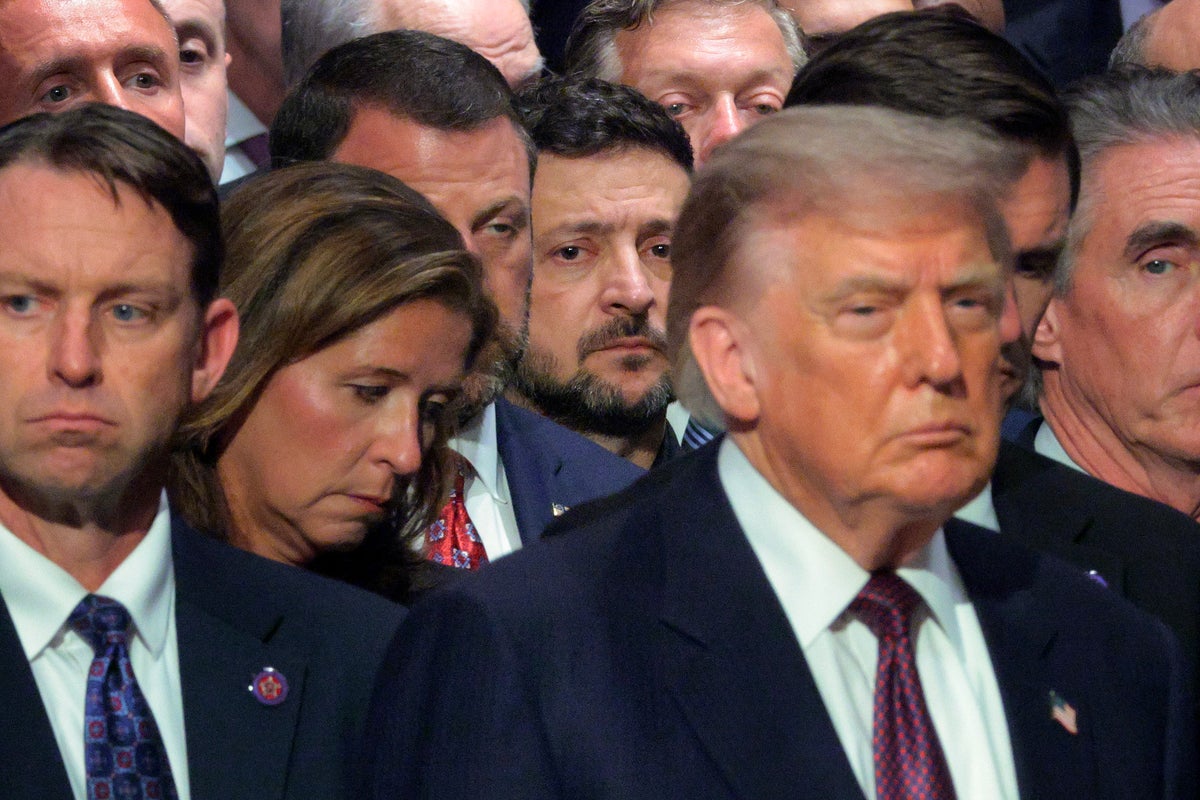
When Donald Trump stood at the pulpit to memorialize Senator Lindsey Graham, the political atmosphere of Washington shifted. The public reconciliation of two fierce rivals who once traded insults on national television illustrates a peculiar truth about modern political survival. Trump recalled the infamous 2015 campaign moment when he broadcast Graham's personal cell phone number to a massive crowd, admitting flatly that it was something he should not have done. Yet that brazen provocation did not permanently fracture their relationship. Instead, it served as the strange, combustible foundation for a decade-long political partnership that reshaped the conservative movement.
Understanding this alliance requires looking past the superficial theater of cable news commentary. Political commentators often treat political friendships as rigid ideological contracts. They are not. They are transactional ecosystems built on utility, shared enemies, and an acute understanding of institutional power. Graham, a traditional hawk from South Carolina, and Trump, an isolationist populist, represented two warring factions of the Republican Party. When they forged an alliance, they bridged an internal chasm that many observers thought was unbridgeable.
The mechanics of their bond relied heavily on constant communication. Trump noted that after the phone number incident, Graham began calling him relentlessly. This persistence was not accidental. Graham understood early that attempting to isolate or destroy the populist wave was a fool's errand. Instead, he chose proximity. By maintaining an open line to the Oval Office and Mar-a-Lago, Graham secured influence over judicial nominations, foreign policy debates, and legislative strategy. He became an interpreter of the populist base for the old guard, and an institutional guide for an outsider president.
Consider the confirmation battle over Supreme Court Justice Brett Kavanaugh. That legislative brawl exposed the raw, unfiltered fury of contemporary American jurisprudence. During the Senate Judiciary Committee hearings, Graham delivered a blistering, impassioned defense of Kavanaugh that electrified conservatives and infuriated opponents. Trump later pointed to that exact moment as a high-water mark of Graham’s career. It was a display of raw legislative combat that proved invaluable to the administration. Graham was willing to absorb the fury of the opposition to secure a generational shift in the federal judiciary.
Critics often accused Graham of opportunistic shape-shifting. The critique holds a grain of truth, but it misses the deeper institutional reality. Washington rewards those who can adapt to shifting centers of gravity. Graham was a survivor of the old Senate, an institution defined by procedure, backroom deals, and committee chairmanships. When the rules of the game changed overnight, many of his peers dug their heels into moral opposition and became irrelevant. Graham chose adaptation. He realized that the Republican voter base had fundamentally changed, and he aligned his political survival with that new reality without entirely abandoning his legislative network.
This relationship also highlights how personal grievances are routinely subordinated to strategic necessity in high-stakes politics. The 2016 primary cycle was brutal. Graham famously called Trump a race-baiting, xenophobic religious bigot. Trump mocked Graham as a lightweight. Yet within a few short years, they were golfing partners and close confidants. Outsiders find this whiplash disorienting. Insiders recognize it as standard operating procedure. Power respects momentum, and both men possessed enough political gravity to make an alliance mutually beneficial.
The friction between their worldviews never entirely vanished. Foreign policy remained a persistent fault line. Graham maintained an interventionist posture across global theaters, advocating for robust American commitments abroad. Trump consistently pushed an America First doctrine skeptical of foreign entanglements. Despite these sharp ideological divergences, they managed to compartmentalize their disagreements. They focused on shared goals: reshaping the courts, cutting regulations, and maintaining conservative momentum.
As Washington pays tribute to a legislative giant who operated at the center of power for over three decades, the legacy of the Trump-Graham axis remains complex. It demonstrates that political coalitions are forged not through shared sentiment, but through shared ambition and pragmatic adaptation. The phone number leak could have ended everything. Instead, it marked the beginning of a pragmatic partnership that altered the trajectory of modern American governance.
Trump Pays Tribute to Lindsey Graham: 'He Died Doing the Work He Was Born to Do'
This video provides a first-hand look at the memorial service and the remarks delivered regarding the late senator's career.