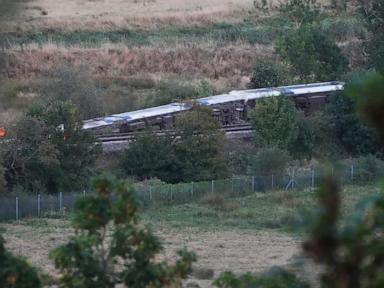
Two passenger train derailments occurring in England within a 48-hour window signal an operational stress test failure rather than an accumulation of random anomalies. When multiple high-consequence safety incidents compress into a tight temporal band, the underlying cause is rarely isolated crew error or acute weather events. Instead, it points to systemic vulnerabilities within asset maintenance schedules, track geometry degradation tolerances, and signaling feedback loops.
Understanding this sequence requires abandoning reactive media narratives and examining the mechanics of heavy rail networks through a functional lens. Rail systems operate under tight safety margins governed by heavy dynamic loads, aging infrastructure, and complex scheduling pressures.
The Three Structural Vectors of Network Strain
Network reliability degrades along three distinct vectors: mechanical wear, asset management backlog, and environmental stress. Each vector interacts with the others, compounding the probability of catastrophic failure.
Mechanical Wear and Track Geometry
A steel wheel interacting with a steel rail creates a high-pressure contact patch roughly the size of a five-pence coin. Under sustained high-tonnage traffic, this interface generates micro-defects in the rail head and sleeper fastenings.
Track geometry deteriorates continuously. Gauge spread, lateral alignment shifts, and vertical surface irregularities alter how wheelsets guide through curves and switches. When maintenance regimes rely on fixed-interval inspections rather than condition-based predictive monitoring, track degradation can outpace intervention cycles.
Asset Management and Capital Deferred Maintenance
Infrastructure owners operate under constrained funding models that force capital prioritization. When renewal budgets tighten, asset managers extend the operational life of legacy signaling equipment, ballast beds, and drainage systems beyond their design parameters.
This creates a deferred maintenance debt. A neglected ballast sub-base loses its elasticity and drainage capacity, leading to track sinkage under heavy axle loads during periods of heavy rainfall. When local weather events saturate compromised foundations, lateral track resistance drops below the safety threshold required for high-speed rolling stock.
Scheduling Density and Recovery Pressure
Modern timetable structures prioritize high frequency to maximize passenger throughput and revenue. This high-density operating philosophy eliminates structural buffer time in the schedule.
When a minor delay occurs, operators introduce recovery pressure into the system. Crew changes accelerate, maintenance windows shrink to overnight hours of substandard duration, and inspection thoroughness diminishes to clear lines for morning peak services. This operational tempo leaves little room for safety margin restoration.
The Cost Function of Safety vs. Capacity
The economics of railway operations force a perpetual tension between commercial capacity and asset safety. Every minute a track is closed for manual ultrasonic rail flaw detection or ballast tamping is a minute of lost revenue and schedule disruption.
Network operators manage this through risk-informed prioritization matrices. However, these matrices frequently underweight low-probability, high-impact events like consecutive mainline derailments. The cost function heavily penalizes minor delays while treating structural degradation as a linear, manageable expense until a threshold failure occurs.
To rebalance this equation, operators must transition from reactive failure replacement to continuous predictive telemetry. Axle-box acceleration monitors mounted on revenue-service trains can detect track geometry anomalies in real time, mapping micro-defects before they manifest as gauge widening or rail breaks.
Operational Mitigation and Failure Modes
Implementing safety interventions introduces its own operational drag. Speed restrictions over degraded track sections prevent derailments but introduce network-wide congestion, cascading delays across interconnected corridors.
Similarly, replacing aging timber sleepers with concrete variants or upgrading fastener types requires extended line closures that challenge passenger expectations and freight logistics. The limitation of current intervention strategies lies in their localized nature. Engineers often treat the symptom—such as isolated joint bar cracking—without addressing the systemic sub-grade failure driving the localized stress concentration.
Systemic Realignment
The recurrence of high-consequence transport incidents demands a fundamental shift in how network operators assess operational risk. Safety cannot be treated as a static compliance checklist maintained during annual audits. It functions as a dynamic equilibrium between asset health, traffic density, and maintenance velocity.
Network administrators must decouple infrastructure renewal budgets from short-term fiscal cycles. Priority must shift toward automated, continuous monitoring systems that remove human inspection variability from track safety assessments. Until asset maintenance velocity matches the wear rate imposed by high-density rolling stock timetables, the network will remain vulnerable to clustered failure events.