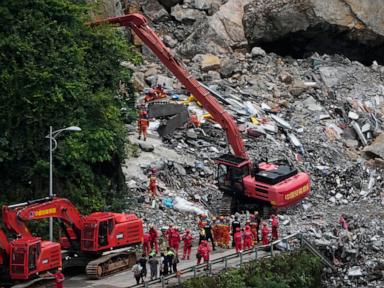
The intersection of saturated geomorphology and emergency response logistics creates a compounding failure cascade during mountainous mass wasting events. When heavy precipitation triggers a landslide, the immediate mortality rate is dictated by the velocity of the displaced earth, while the secondary survival rate depends entirely on the efficiency of the search-and-rescue deployment. In high-altitude or steep-terrain environments, such as the mountainous regions of southwestern and central China, these incidents are not isolated geological anomalies; they are predictable outcomes of specific hydrological thresholds meeting vulnerable structural topographies.
Optimizing the survival window requires a cold calculation of variables: soil shear strength, precipitation volume, transit degradation, and the physical constraints of heavy machinery deployment in unstable zones. Media coverage frequently characterizes these events as sudden tragedies, yet an analytical decomposition reveals a systematic timeline of mechanical failures and operational bottlenecks.
The Triad of Mass Wasting Mechanics
To understand the operational constraints of a rescue mission, one must first isolate the variables that govern slope failure. Landslides driven by rainfall operate under a specific cost function of soil instability, which can be categorized into three distinct phases.
Pore Water Pressure Elevation
Soil stability relies on friction between particles. As rainfall penetrates the ground, it fills the voids between soil grains. When these voids become fully saturated, the water pressure pushes the grains apart. This reduction in effective stress systematically diminishes the shear strength of the slope. The critical threshold occurs when the destabilizing gravitational force exceeds the declining shear resistance of the soil mass.
Structural Loading via Saturation
Water adds substantial mass to the upper layers of a slope. A cubic meter of dry soil gains significant weight when saturated, increasing the downslope gravitational force. The slope is subjected to increased driving stress at the exact moment its structural capacity is at its lowest point.
Lithological Preconditions
The underlying geology dictates the failure style. Areas characterized by fractured shale, weathered granite, or loose colluvium are highly susceptible. When these materials sit atop an impermeable bedrock layer, infiltration water pools at the interface, creating a lubricated plane of failure that accelerates the downslope velocity of the slide.
The Operational Bottlenecks of Wet Weather Extraction
The primary objective of a post-disaster deployment is the location and extraction of victims within the critical 72-hour survival window. Precipitation does not merely cause the initial slide; it actively degrades the efficacy of the response infrastructure through three distinct vectors.
Secondary Slide Risks and Structural Instability
The primary failure plane remains highly volatile following an initial landslide. Continued rainfall introduces further water volume into the exposed scarp, frequently triggering secondary movements. This creates an acute hazard for search teams. Operational safety protocols require continuous monitoring using laser rangefinders or synthetic aperture radar to detect micro-movements in the slope, introducing necessary but time-consuming delays into the extraction process.
Transport Infrastructure Degradation
Landslides inherently target valley floors where transportation arteries are located. The debris field blocks access roads, while the weight of the material can collapse bridges and culverts. Heavy earthmoving equipment—essential for clearing deep deposits—cannot reach the primary impact zone without prior clearance of peripheral access points. This creates a sequential bottleneck: rescuers must clear roads to access the site, consuming hours that directly impact victim survival probability.
Soil Liquefaction and Mechanical Limitations
Rainfall transforms the displaced earth into a high-density slurry. Manual excavation is physically inefficient, while heavy mechanical excavators risk sinking into the unstable mud matrix or triggering further collapse beneath their own weight. Rescuers face a trade-off between the speed of mechanical displacement and the precision required to avoid harming subsurface survivors.
[Precipitation Infiltration]
       │
       ▼
[Pore Pressure Increase] ──► [Slope Failure] ──► [Roadway Blockage]
                                   │                    │
                                   ▼                    ▼
                        [Secondary Slide Risk] ──► [Delayed Heavy Machinery]
Quantifying the Survival Window under High Overburden
The probability of survival for individuals trapped beneath a landslide decays exponentially compared to structural building collapses. In a standard seismic event, structural elements create void spaces. In a mass wasting event, the fluid nature of the matrix fills these voids, leading to rapid asphyxiation.
The survival function is governed by three primary environmental metrics:
- Matrix Porosity: Coarser debris (boulders and fractured rock) preserves localized oxygen pockets. Fine-grain silt and clay seal off airflow entirely.
- Overburden Depth: Pressures exceeding specific thresholds cause immediate mechanical trauma to human physiology, independent of oxygen availability.
- Thermal Exposure: Rain-saturated mud accelerates hypothermia, rapidly depleting a trapped individual's metabolic reserves.
Because of these factors, the search strategy must shift from broad structural clearing to targeted micro-location. Teams rely on acoustic listening devices and canine units, though both systems experience severe degradation in active rain. Water droplets generate acoustic noise that masks faint subsurface sounds, and wet ground traps and dissipates scent molecules, reducing canine accuracy.
Structural Mitigation Strategy
Managing the risk of rainfall-induced landslides requires moving away from reactive emergency management toward predictive structural hardening. Municipalities operating in high-risk zones must deploy a dual-layered defense model.
The first layer requires passive engineering interventions. Active slopes must be stabilized using deep-rooted soil bioengineering, systematic rock-bolting, and the construction of reinforced retaining walls equipped with high-capacity drainage weep holes to prevent pore pressure accumulation.
The second layer demands the integration of real-time early warning networks. By coupling telemetered rain gauges with deep-seated inclinometers embedded in high-risk scarps, geotechnical teams can identify when a slope is approaching its critical saturation threshold. This data allows for preemptive evacuations before the mechanical failure plane materializes, shifting the operational goal from hazardous post-disaster rescue to systemic risk avoidance.