On July 28, 2026, a magnitude 7.1 earthquake struck Kumamoto Prefecture on Japan’s southern island of Kyushu, registering the maximum level 7 on the Japan Meteorological Agency Shindo seismic intensity scale. Operating at a shallow hypocentral depth of approximately 10 kilometers, the event generated high-frequency ground acceleration vectors that maximized structural stress across regional population centers.
Deconstructing the event requires analyzing the mechanical energy release, the localized vulnerability of critical infrastructure, and the industrial supply chain shock transmission that follows high-magnitude tectonic slip.
The Mechanics of Shallow Crustal Rupture
The physical severity of a seismic event is a direct function of focal depth, fault kinematics, and energy attenuation gradients. The Kumamoto tremor originated from a shallow crustal fault, identified preliminarily as a rupture along the southern segment of the Hinagu Fault system.
Shallow focal depths restrict the geometric dispersion of seismic waves. When a rupture nucleates 10 kilometers beneath the surface, the attenuation distance between the seismic source and surface infrastructure is compressed. This dynamic prevents the geometric spreading of energy across larger volumes of the Earth's crust before impact.
Seismic stations recorded peak ground acceleration values reaching up to 1.7 g alongside peak ground velocities exceeding 94 centimeters per second in localized zones. These parameters indicate severe transient velocity pulses. Structures subjected to these thresholds experience instantaneous inertial forces that exceed their elastic design limits, inducing plastic deformation and progressive structural failure in unreinforced joints.
The Three Vulnerability Vectors of Regional Infrastructure
Structural performance during the Kumamoto sequence exposed distinct fracture points within modern engineering deployment. Damage concentrated across three primary vectors: large-span commercial spaces, industrial thermal facilities, and regional transit corridors.
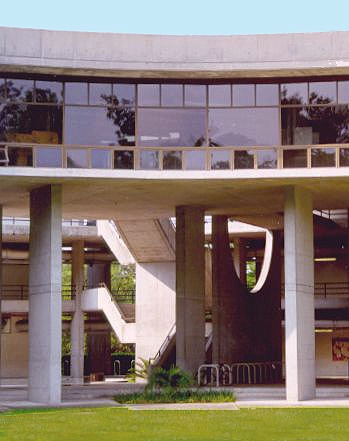
Commercial architecture relies on open-floor geometries to maximize retail space. During the tremor, the second-floor collapse of the Aeon Mall in Kashima Town highlighted the vulnerability of large-span diaphragms under horizontal shear loading. The structural failure was compounded by an ensuing secondary explosion—attributed provisionally to compromised gas utility lines—which transformed a structural collapse into a multi-hazard thermal event.
Industrial infrastructure exhibited analogous vulnerabilities. The structural failure of a factory chimney at Nippon Paper Industries in Yatsushiro, which resulted in multiple fatalities and trapped personnel, demonstrates the dynamic overturning moments experienced by slender masonry and concrete structures when subjected to high-frequency spectral accelerations.
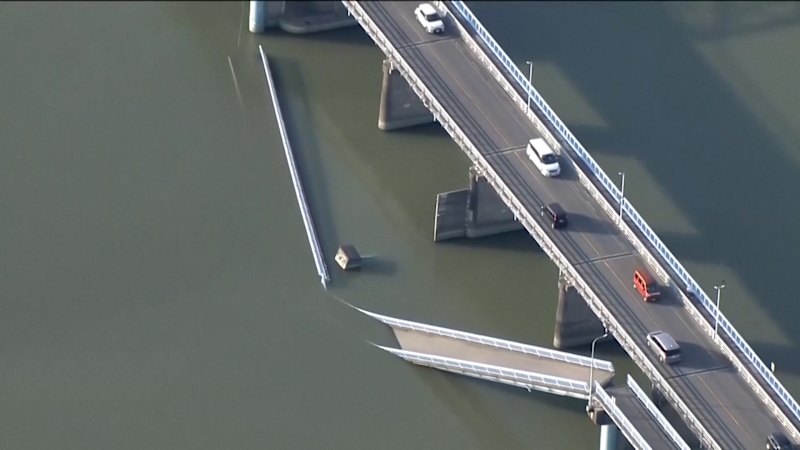
Transportation arteries sustained localized plastic buckling. Elevated highway segments and regional rail links experienced foundational displacement, forcing immediate network shutdowns. The suspension of high-speed Shinkansen services and the temporary closure of Kumamoto Airport created logistical bottlenecks, isolating emergency response networks during the critical golden hours following the initial rupture.
Industrial Supply Chain Propagation and Semiconductor Sensitivity
Kyushu serves as a foundational node in the global semiconductor fabrication ecosystem. The region hosts dense manufacturing clusters for major entities, including Taiwan Semiconductor Manufacturing Company, Sony, and Tokyo Electron.
Semiconductor fabrication plants operate under extreme cleanroom tolerances. Micro-vibrations or unexpected power fluctuations instantly compromise active wafer lots, rendering entire production batches defective. Following the 7.1-magnitude mainshock, automated seismic trip systems triggered immediate shutdowns across regional fabrication facilities to protect sensitive lithography tools from internal damage.
While primary structural inspections confirmed minimal integrity loss to core cleanroom shells, the temporary idling of power-intensive utilities and equipment calibration cycles introduced immediate production latency. The economic cost function of such an event is dictated not by direct structural replacement expenses, but by the recovery time objective of highly integrated technological supply chains.
The Aftershock Cost Function and Resource Allocation
The primary hazard immediately following a high-magnitude shallow earthquake shifts from the initial energy release to the aftershock decay rate. The Japan Meteorological Agency recorded roughly 100 aftershocks within the initial operational window, with magnitudes scaling up to 5- on the Shindo scale.
Each subsequent slip event acts upon already degraded structural members. Buildings that sustained hairline fractures during the mainshock exhibit severely reduced residual load-bearing capacity. Consequently, the government mobilization of 3,600 Self-Defense Force personnel alongside local emergency services was structured around two concurrent imperatives: active search-and-rescue operations within collapsed structures and the mandatory evacuation of approximately 300,000 residents from zones at high risk of secondary structural collapse or slope failure.
Deploy localized structural health monitoring arrays integrated with automated gas-valve shutoff actuators to eliminate secondary ignition vectors in commercial zones before seismic waves reach surface thresholds.