The machinery of congressional oversight moves at a glacial pace until it hits a tripwire. When a Senate committee panel weighs a contempt citation against a high-profile public official, the immediate coverage focuses on the political theater. Red versus blue. Accountability versus partisan weaponization. Yet beneath the cable news soundbites lies a precise, procedural chess match governed by the Congressional Accountability Act, House and Senate rules, and centuries of precedent regarding the limits of legislative power.
Understanding why a congressional panel moves toward contempt requires looking past the shouting. It demands an examination of how subpoenas work, where executive privilege collides with legislative inquiry, and what legal thresholds must be crossed before a criminal referral reaches the Department of Justice.
The Constitutional Roots of Oversight
Legislative oversight is not explicitly detailed in the text of the Constitution, but it has been recognized by the Supreme Court since the late 19th century as an inherent power necessary for lawmakers to draft effective laws. If Congress cannot investigate how executive agencies spend money or implement statutes, it cannot legislate responsibly.
This power includes the authority to issue subpoenas, compel testimony under oath, and demand documents. When a witness refuses to comply voluntarily, committees escalate the pressure.
- Voluntary Requests: Staff-led interviews and informal document production.
- Deposition Subpoenas: Legally binding orders requiring a witness to appear behind closed doors for transcribed questioning.
- Hearing Subpoenas: Public commands to testify before a full committee.
- Contempt Citations: The ultimate internal penalty when a witness stonewalls or fails to satisfy the panel's demands.
When a committee threatens a contempt charge, they are not handing down a criminal conviction. They are initiating a formal accusation that an individual has obstructed the constitutional duty of the legislature.
Anatomy of a Legislative Showdown
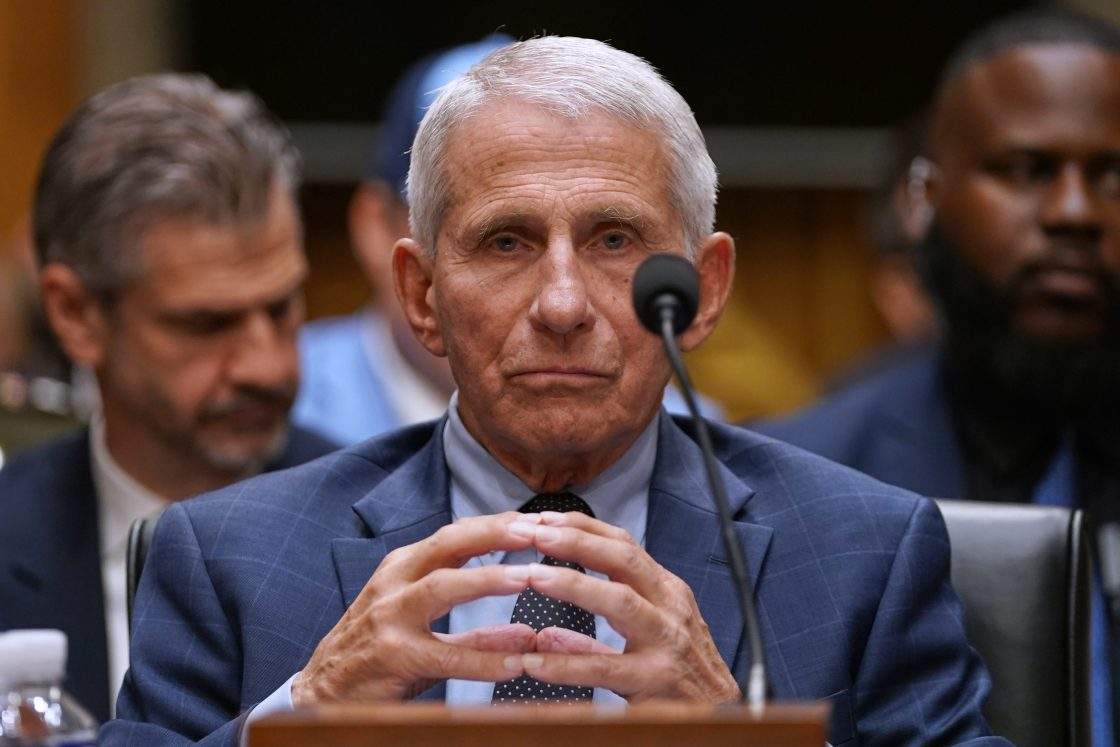
The friction between Capitol Hill investigators and retired federal officials typically centers on document trails and contradictory testimonies. In the case of Dr. Anthony Fauci and various oversight panels investigating the origins of COVID-19 and federal funding streams, the flashpoints involved specific email archives, travel records, and recollections of unrecorded conversations.
Investigators look for gaps between public assertions and private communications. When a committee issues a subpoena for internal memos or personal correspondence used for official business, the battle lines are drawn over definitions. What constitutes an official record? How far can an inquiry stretch into private communications?
The Burden of Proof
To justify a contempt vote, the committee majority must demonstrate two critical elements:
- Materiality: The questions asked or documents requested must pertain directly to a valid legislative purpose.
- Willfulness: The witness must have intentionally refused to comply with a lawful, properly served subpoena without a legally recognized privilege.
If a witness invokes a valid legal privilege, such as executive privilege or attorney-client privilege, the dynamic shifts. However, retired officials or former advisors face a steeper hill when claiming executive protections, as those privileges are primarily designed to protect sitting presidents and their active advisory circles.
The Mechanics of Contempt
If a committee decides a witness has crossed the line from uncooperative to obstructive, the path forward branches into two distinct administrative routes.
The Criminal Contempt Statute
Under federal law (specifically 2 United States Code Section 192), a person who willfully makes default or refuses to answer questions relevant to a congressional inquiry is guilty of a misdemeanor.
- The committee votes to report the contempt resolution to the full chamber.
- The full Senate or House debates and votes on the resolution.
- If passed, the presiding officer of the chamber certifies the contempt citation to the United States Attorney for the District of Columbia.
- The statute mandates that the U.S. Attorney shall bring the matter before a grand jury for indictment.
This mandatory language has been a point of friction for decades. U.S. Attorneys appointed by the executive branch have occasionally declined to prosecute congressional contempt citations, arguing prosecutorial discretion. This creates a constitutional tension between the legislative branch demanding enforcement and the executive branch controlling federal prosecutions.
Civil Enforcement and Inherent Contempt
Alternatively, a committee can bypass the criminal statute and seek a civil lawsuit in federal district court, asking a judge to issue an order compelling compliance under threat of daily fines or imprisonment for civil contempt.
There is also inherent contempt, a rarely used mechanism where the Sergeant-at-Arms takes the individual into physical custody and brings them to a makeshift holding room in the Capitol until they agree to comply. This power has not been exercised in modern times, as lawmakers prefer the slower, less chaotic federal court route.
The Reality of Partisan Splits
Contempt votes in modern congressional committees rarely pass with bipartisan consensus. When an investigative panel votes along strict party lines, the credibility of the underlying investigation takes a hit in the court of public opinion.
Critics argue that contempt citations have transformed from solemn constitutional safeguards into routine partisan weapons. Supporters counter that stonewalling by witnesses leaves committees with no alternative if they wish to preserve the integrity of the legislative branch.
When a high-profile figure faces these proceedings, the legal teams on both sides spend months parsing committee transcripts for ambiguous phrasing. Every "I do not recall" and every redacted email address becomes a battleground over memory and transparency.
The Long-Term Institutional Shift
The recurring cycle of subpoenas, heated exchanges, and threatened contempt citations reveals a broader institutional decay in how Washington handles accountability. Oversight has largely morphed into a public relations battleground rather than a fact-finding mission.
When the dust settles on committee reports and floor votes, the fundamental question remains whether Congress can reform its own investigative processes to prioritize factual discovery over television optics. Until the incentives shift back toward quiet, rigorous auditing of executive power, these high-stakes showdowns will continue to end in stalemates, leaving the public with more spectacle than answers.