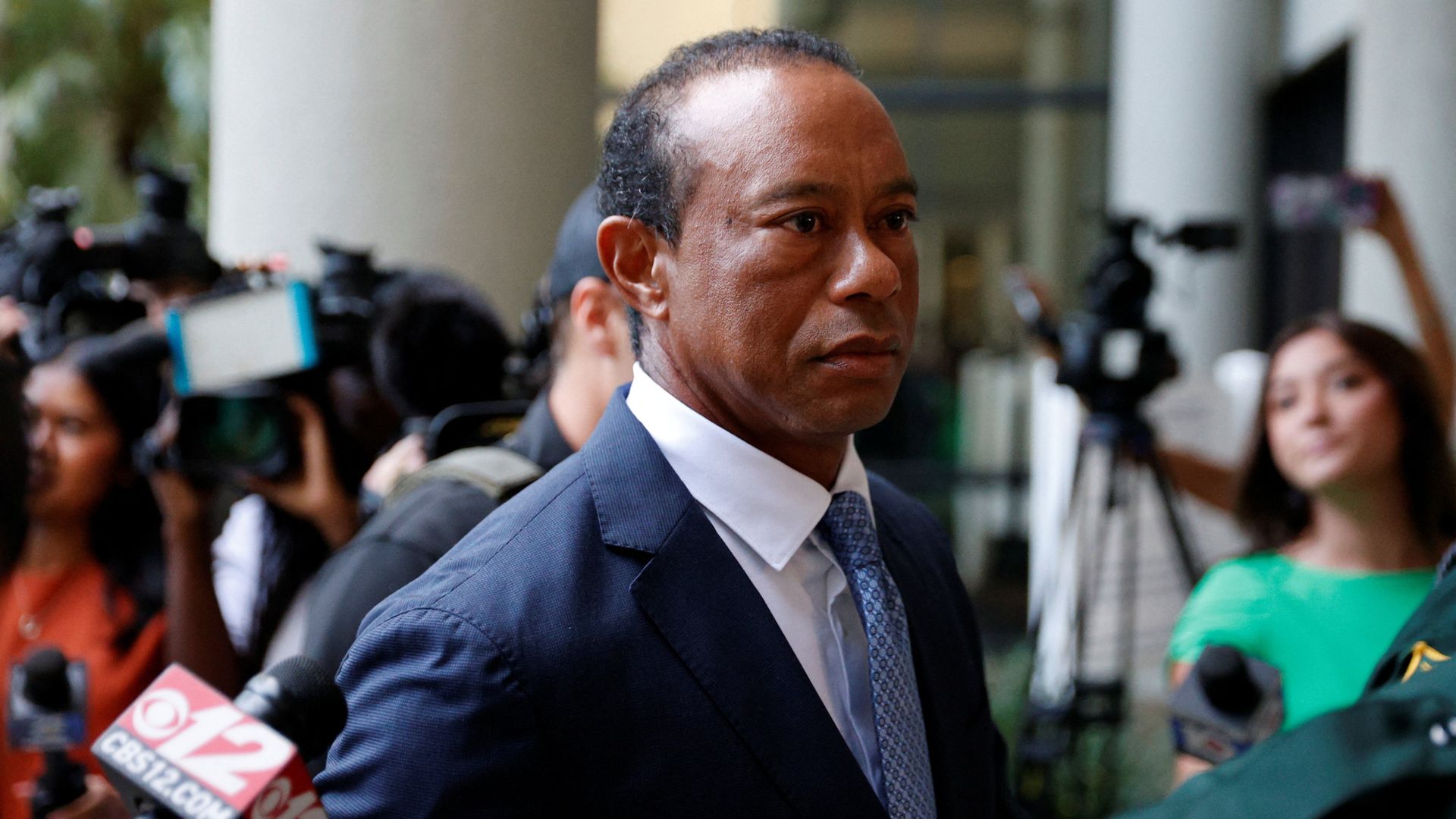
High-profile legal infractions involving elite athletes typically trigger predictable media cycles, characterized by superficial commentary on personal morality rather than rigorous structural analysis of systemic risk, legal exposure, and behavioral economics. When Tiger Woods entered a plea of no contest to a reckless driving charge following a high-speed single-vehicle rollover crash, public discourse focused almost exclusively on the narrative arc of a fallen icon. This approach obscures the underlying mechanics of liability, operational risk management, and the legal calculus of plea negotiations in high-stakes jurisdictions.
Analyzing this event requires stripping away biographical sensationalism to examine three primary vectors: the mechanics of the reckless driving charge under statutory law, the risk-mitigation strategy behind a no-contest plea, and the broader institutional exposure facing high-net-worth individuals operating heavy machinery under physical duress. By examining the structural incentives driving both the prosecution and the defense, observers can map how elite legal counsel navigates catastrophic vehicular incidents. If you enjoyed this piece, you might want to look at: this related article.
The Statutory Definition and Evidentiary Thresholds of Reckless Driving
To understand the legal outcome, one must first deconstruct the statutory parameters of reckless driving. Unlike driving under the influence, which relies heavily on chemical blood alcohol concentration thresholds or specific toxicological panels, reckless driving is fundamentally a behavioral standard.
The prosecution must prove a willful or wanton disregard for the safety of persons or property. "Willful or wanton" constitutes a legal term of art denoting conduct committed with an intentional disregard of safety or under circumstances exhibiting a conscious indifference to the consequences. In single-vehicle rollovers, prosecutors frequently build this threshold using specific telemetry and environmental variables: For another angle on this story, check out the latest update from Bleacher Report.
- Excessive Velocity Relative to Conditions: Reconstructing the vehicle's speed via onboard event data recorders, commonly known as black boxes, against posted limits and environmental hazards.
- Path of Travel Anomalies: Analyzing yaw marks, skid trajectories, and final resting points to prove erratic steering inputs or a complete failure to execute corrective braking maneuvers.
- Physical and Cognitive State Indicators: Factoring in fatigue, prescription or over-the-counter medication usage, and physiological distractions that impair reaction times below the statutory duty of care.
In the absence of a chemical intoxication conviction, proving willful disregard becomes significantly more reliant on circumstantial physics. Investigators must demonstrate that the driver did not merely make a momentary miscalculation or suffer a mechanical failure, but actively chose a course of action carrying a high, unjustifiable probability of harm. When dealing with high-performance vehicles engineered for rapid acceleration, establishing this baseline requires precise accident reconstruction rather than generalized assumptions about speed.
The Cost Function of a No Contest Plea in High Stakes Litigation
Faced with potential criminal exposure, legal defense teams operate within a strict cost-benefit framework designed to minimize collateral damage. A plea of no contest, or nolo contendere, represents a tactical compromise between admitting criminal culpability and mounting a protracted, public trial.
The economic and professional utility of a no-contest plea lies in its unique evidentiary firewall. Unlike a guilty plea, a plea of no contest cannot typically be used as an admission of guilt in subsequent civil litigation. For a global brand asset and high-net-worth individual, this distinction is financially critical.
+------------------------------------------------------------+
|                The Defense Decision Matrix                 |
+------------------------------------------------------------+
|  Trial Route         | High public exposure, financial     |
|                      | drain, civil liability risk         |
+------------------------------------------------------------+
|  Guilty Plea         | Immediate criminal record, open     |
|                      | admission usable in civil lawsuits  |
+------------------------------------------------------------+
|  No Contest Plea     | Controlled criminal penalty, blocks |
|                      | direct civil admissions of fault    |
+------------------------------------------------------------+
When evaluating the plea option, defense counsel must weigh three distinct cost centers:
- Reputational Capital Preservation: Protracted criminal trials generate daily media cycles that exacerbate brand erosion, whereas a swift, negotiated resolution halts the news cycle and signals institutional closure.
- Civil Liability Insulation: Admitting guilt in a criminal proceeding hands plaintiff attorneys a powerful prima facie argument in potential personal injury lawsuits filed by passengers or third parties affected by the collision.
- Resource Allocation: Litigating complex accident reconstruction reports through expert testimony incurs substantial capital expenditure with diminishing returns once physical evidence heavily favors the prosecution.
By accepting a minor criminal sanction—such as fines, community service, or probationary terms—the defense effectively caps the downside risk of the incident, trading a controlled administrative penalty for absolute immunity against weaponized admissions in civil court.
Operational Vulnerabilities in Elite Personal Transport
The mechanics of single-vehicle accidents involving elite performers frequently highlight systemic vulnerabilities in how high-net-worth individuals manage personal transit logistics. Operating high-horsepower vehicles without professional security or driving support introduces acute operational risk.
Modern luxury vehicles possess power-to-weight ratios and handling dynamics that diverge sharply from standard consumer automobiles. Without specialized track training, drivers routinely underestimate the latency between steering input and vehicle response at elevated velocities. Furthermore, the convergence of chronic physical ailments, intense rehabilitation regimens, and pharmaceutical management creates a high-risk operating environment.
Elite athletes managing musculoskeletal trauma often rely on therapeutic regimens that include substances affecting cognitive processing speed, spatial awareness, and peripheral vigilance. When these physiological stressors intersect with sleep deprivation and tight scheduling demands, the probability of micro-sleep events or delayed motor responses increases exponentially.
Mitigating this vulnerability requires institutionalizing professional transport protocols. High-performance organizations routinely mandate dedicated driving staff for key personnel to eliminate the human error variable entirely. Relying on self-operation under high-stress conditions represents a systemic failure of risk management, treating personal transit as a casual convenience rather than a high-risk operational task requiring strict safety margins.
Systemic Outcomes and Future Risk Mitigation
The resolution of high-profile traffic incidents through mitigated plea structures establishes a clear precedent for how legal systems handle celebrity infractions. Prosecutors secure an administrative victory and public accountability without bearing the fiscal burden of a jury trial, while the defense successfully contains the blast radius of potential civil litigation and reputational fallout.
To prevent recurrence, the operational response must extend beyond legal compliance into structural lifestyle modification. Organizations managing high-profile assets must audit personal transit policies, replacing ad-hoc driving habits with standardized security logistics. The fundamental lesson of severe vehicular incidents is not moral or biographical; it is an issue of operational engineering, requiring the systematic elimination of avoidable human error through professional redundancy and disciplined risk architecture.