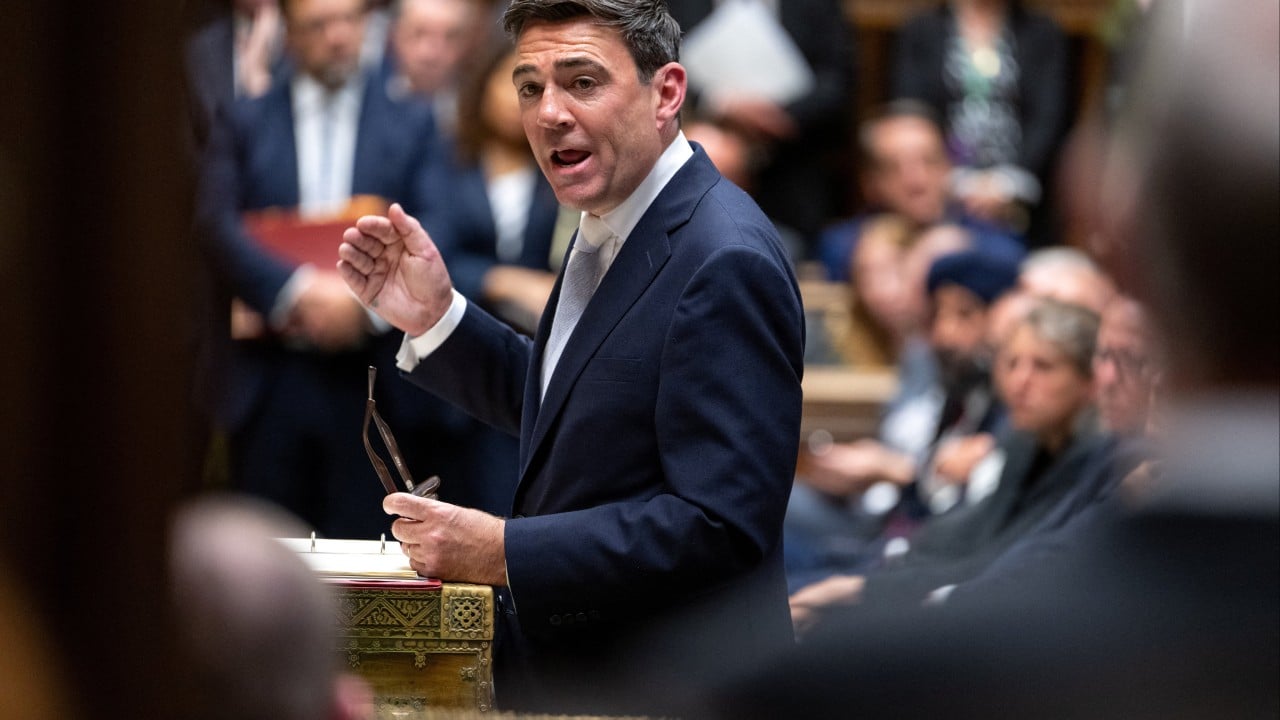
Politics loves a prodigal son. Andy Burnham stands at the dispatch box in the House of Commons, returning to the green benches after sixteen years away from ministerial office, carrying the heavy title of Prime Minister. The narrative spun by Downing Street is clean and cinematic. A leader forged in municipal governance returns to Westminster to restore hope, reassert state authority over creaking utilities, and rescue family budgets from the crushing gravity of the cost of living. Yet reality is far more jagged than the carefully choreographed optimism of a summer recess rollout.
When Burnham addresses Parliament, he is attempting something historically difficult. He must reconcile the populist, anti-privatisation rhetoric that defined his tenure as Mayor of Greater Manchester with the uncompromising arithmetic of the national exchequer. British infrastructure is old, fractured, and deeply indebted. Transport networks, water companies, and energy grids require astronomical sums of capital just to stop leaking literal and figurative resources. Simply declaring that public control will magically unlock growth bypasses the fundamental question of where the money originates.
Consider the impending structural battles over water and energy. Supposing a government administration decides to bring a collapsing utility provider like Thames Water into public ownership through insolvency mechanisms. The legal mechanics alone will tie up courts for years, while taxpayers inherit billions in hidden liabilities and broken pipes. Whitehall veterans know this intimately. State ownership does not automatically create capital; it merely transfers the burden of debt collection from private shareholders to the taxpayer balance sheet.
Burnham is betting his early premiership on the notion that voters care more about ideology and accountability than fiscal headroom. His initial summer policy maneuvers—capping local transport fares and removing VAT from domestic energy bills—offered immediate, tangible relief. They provided households with brief breathing space. However, those subsidies require funding. Treasury insiders note a multibillion-pound deficit left unattended by his predecessor, Keir Starmer, particularly within long-term defence and public sector pay commitments.
Opposition benches under Kemi Badenoch are sharpening their knives for precisely this vulnerability. The Conservative strategy centers on exposing the chasm between Burnham’s expansive ambitions and his funding mechanisms. If you promise a national care service, expanded regional devolution, and lower household bills simultaneously, the market demands to know which tax levers will pull the weight.
Furthermore, Burnham faces internal friction within his own parliamentary party. Nearly one hundred Labour backbenchers are pushing hard for radical electoral reform, demanding a formal commission on proportional representation. Burnham has historically expressed sympathy for voting reform during his previous leadership bids. Embracing it now risks alienating traditionalists who fear minority coalitions, while rejecting it alienates the growing faction of MPs who feel current electoral mechanics no longer reflect the fractured reality of modern British voting habits.
Then there is the persistent shadow of public sector delivery. Municipal ownership worked reasonably well for regional transport coordination under the Manchester Bee Network, where local accountability could directly influence bus timetables. Scaling that philosophy to a nationalized utility sector with legacy technological debt is an entirely different operational challenge. Bureaucracy does not inherently breed efficiency. Without rigorous structural reform inside civil service departments, nationalized entities often replicate the worst excesses of corporate monopolies without the discipline of profit loss.
The prime minister’s return to Westminster is ostensibly about bringing power back to the people. Yet power in modern Britain is hemmed in by bond markets, legal constraints, and global energy dependencies. The honeymoon period of a fresh premiership invariably evaporates the moment the first major legislative bill hits committee scrutiny. Burnham has chosen a path of active state intervention. Whether that intervention becomes a blueprint for national renewal or an expensive lesson in administrative overreach will be decided not by speeches in the chamber, but by the cold calculations of the upcoming autumn Budget.
UK PM Andy Burnham Gives First Commons Speech as Farage Is Sworn In
This broadcast captures the live proceedings in the House of Commons as Andy Burnham delivers his first major address as Prime Minister alongside concurrent parliamentary swearing-in events.
http://googleusercontent.com/youtube_content/1



