Heroism sells. Nuance does not.
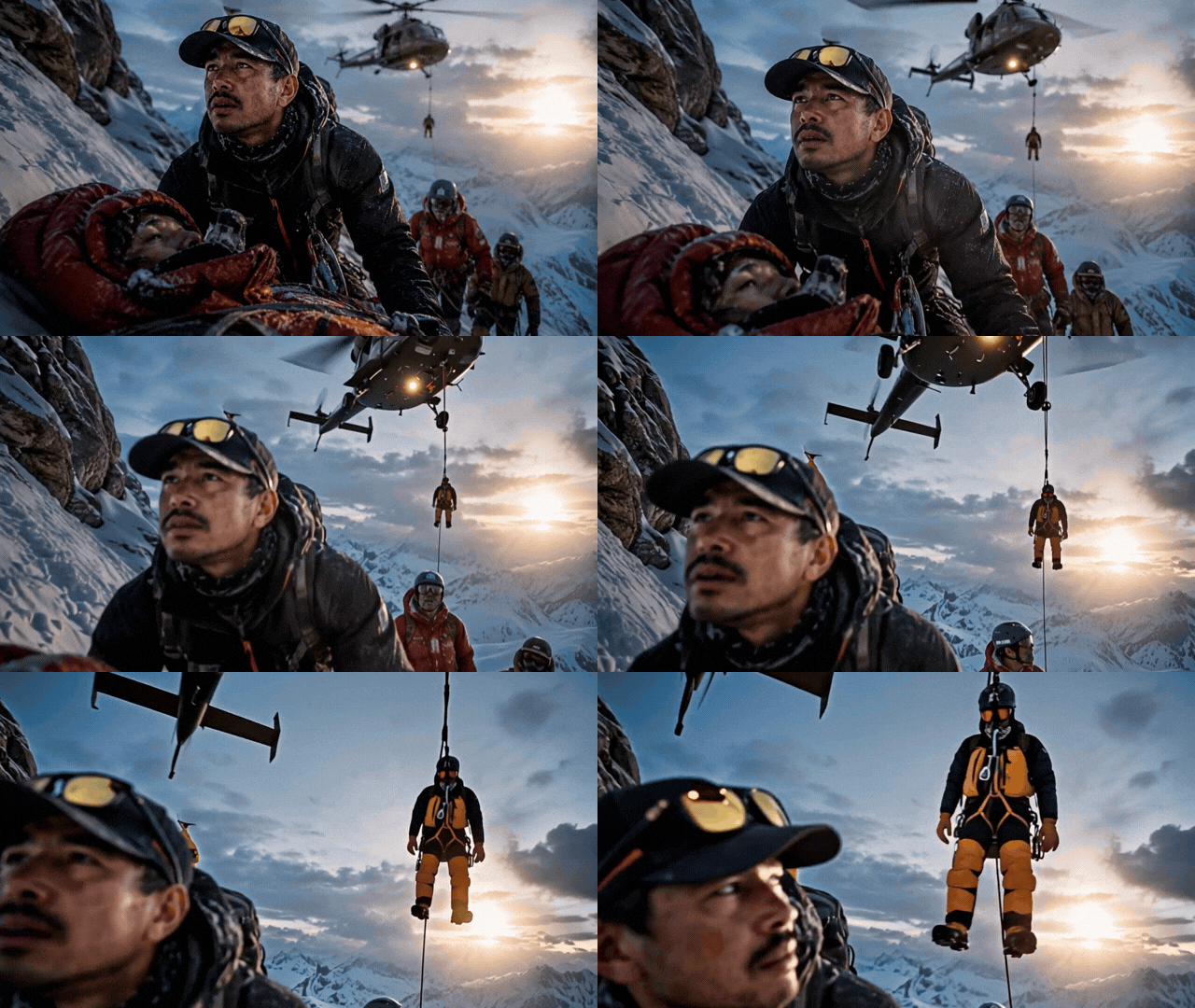
When media outlets recount how Nirmal Purja and his team hauled a stranded climber off the death zone of Annapurna, they paint a cinematic portrait of pure selflessness. A man trapped in the frozen vacuum of the high Himalayas, saved at the absolute eleventh hour by an elite squad of mountaineers who threw caution, time, and personal safety to the wind.
It makes for a brilliant movie script. It is also a sanitized, commercially convenient fairy tale that completely misses the mechanical reality of modern commercial high-altitude climbing.
I have watched sponsors pour millions into the mythos of the lone-wolf mountaineer saving the day, while ignoring the systemic failures that put the climber on that cursed ridge in the first place. The lazy consensus of mainstream adventure journalism wants you to believe that high-altitude rescues are spontaneous acts of pure altruism driven by moral clarity.
They are not. They are calculated damage control operations in an industry that has commercialized terrain where human biology simply cannot survive.
Let us dismantle the mythology brick by brick.
The Economics Of The Death Zone
To understand why a rescue on Annapurna generates breathless headlines while everyday systemic negligence goes entirely unpunished, you have to look at the balance sheet.
Modern high-altitude mountaineering is no longer an esoteric scientific endeavor or a quiet personal reckoning with the elements. It is an extreme tourism ecosystem. Clients pay five-figure sums to commercial operators for guided paths up peaks that used to require decades of apprenticeship. They buy supplemental oxygen, fixed ropes, and crucially, the psychological safety net of a sherpa infrastructure.
When a climber runs out of oxygen, collapses, or succumbs to cerebral edema at 7,000 meters, the mainstream narrative focuses entirely on the heroism of the rescue party. What gets airbrushed out of the frame is the question of liability and preparation.
Imagine a scenario where a commercial airline pilot flies a heavy aircraft straight into a severe, known thunderstorm because the passengers paid extra for an expedited schedule, and then emergency crews are praised as saints for pulling the survivors from the wreckage. You would call that gross negligence. Yet, when it happens on Annapurna, we hand out medals and write hagiographies.
Purja and his team possess superhuman physiology and unmatched technical competence. Nobody disputes their physical capacity. But celebrating a high-altitude rescue without interrogating the commercial pressures that create the emergency is like praising a firefighter who repeatedly puts out intentional arson fires while ignoring the guy selling matches next door.
The Myth Of Spontaneous Altruism
The core misconception pushed by the popular press is that high-altitude rescues happen because someone looked up at the mountain, felt a pang of conscience, and sprinted into the freezing void to do the right thing.
High-altitude environments do not permit spontaneous decisions. At eight thousand meters, your brain is slowly starving for oxygen. Cognitive function degrades. Decision-making becomes binary and brittle.
When a rescue operation launches, it is rarely a spur-of-the-moment act of charity. It is a severe risk management calculation. Leaving a dying climber on a crowded commercial route is an absolute PR disaster for operators and expedition leaders. A body left in plain sight on the standard route destroys the summit-to-safety ratio that marketing departments rely on to sell next season's slots.
Furthermore, let us be frank about the optics. In an era where every major ascent is broadcast live via satellite messengers, GoPros, and drone footage, optics dictate future funding. The rescue is marketing. It is content. It is brand preservation wrapped in the noble shroud of alpine brotherhood.
To say this out loud is considered sacrilege in mountaineering circles. The code of the hills demands absolute silence about the transactional nature of survival. But pretending that elite mountaineers operate outside the laws of economics and reputation management is naive.
The Real Cost Of The Rescue Culture
Every time a high-profile rescue succeeds against impossible odds, a dangerous psychological signal is sent down the chain to amateur climbers. It whispers a subtle, lethal message: You can push your limits, ignore your personal safety margins, and gamble with your own lack of acclimatization, because someone better than you will eventually come up and drag you down.
This is the moral hazard of modern mountaineering.
In finance, moral hazard occurs when an entity is insulated from risk, leading them to behave more recklessly than they would otherwise. High-altitude rescue has developed the exact same pathology. When climbers know that a team of elite professionals might stage a heroic intervention, their personal threshold for turning back drops significantly.
Turnaround times are ignored. Weather windows are forced. Supplemental oxygen reserves are miscalculated. The safety buffer is outsourced entirely to the expectation of rescue.
I have seen operators blow millions on marketing campaigns that romanticize these death-defying extractions, while actively cutting corners on baseline medical screening for amateur clients. They take people who belong on local hiking trails, drop them onto the world's most dangerous avalanche chutes, and cross their fingers that the Sherpa team can compensate for the client's lack of competence.
Redefining Competence
Let us correct a fundamental misunderstanding about what true expertise looks like in the death zone.
Mainstream media equates expertise with dramatic rescue footage. If you carry someone on your back down a vertical ice wall, you are an expert. If you sit quietly in your tent and wait out a storm because the conditions are suicidal, you are viewed as cautious or unexciting.
This is entirely backward.
True mastery in high-altitude environments is preventative. It is the ability to recognize failure before it requires a helicopter, a team of Sherpas, and a viral news cycle. The best mountaineers in history are not the ones who participate in the most dramatic rescues; they are the ones who rarely need to be rescued, and who refuse to participate in avoidable logistical disasters.
When we glorify the rescue, we implicitly devalue the discipline required to avoid needing one. We teach the next generation of climbers that drama is synonymous with achievement.
The Uncomfortable Truth About Annapurna
Annapurna does not care about your press release. It does not care about your sponsor logos, your cinematic rescue documentaries, or your viral social media posts. Statistically, it remains one of the deadliest mountains on earth, with a fatality rate that dwarfs Everest.
The mountain strips away human ego with absolute indifference. Yet, the human apparatus surrounding the mountain works overtime to rebuild that ego through storytelling. We take a place defined by brutal, unyielding geological reality and turn it into a morality play about human courage.
It is time to stop confusing crisis management with good management.
If you want to support high-altitude climbers, stop cheering for the rescues. Start demanding accountability for the commercial operators who pack the death zone with unqualified clients. Start scrutinizing the logistical shortcuts that turn minor altitude sickness into a life-or-death crisis at eight thousand meters.
Until the industry addresses the structural incentives that breed these emergencies, every heroic extraction is just a Band-Aid on a broken system.
Put down the romantic script. Look at the balance sheet.
The mountain wins every time. The only variable is how much money we make pretending otherwise on the way down.