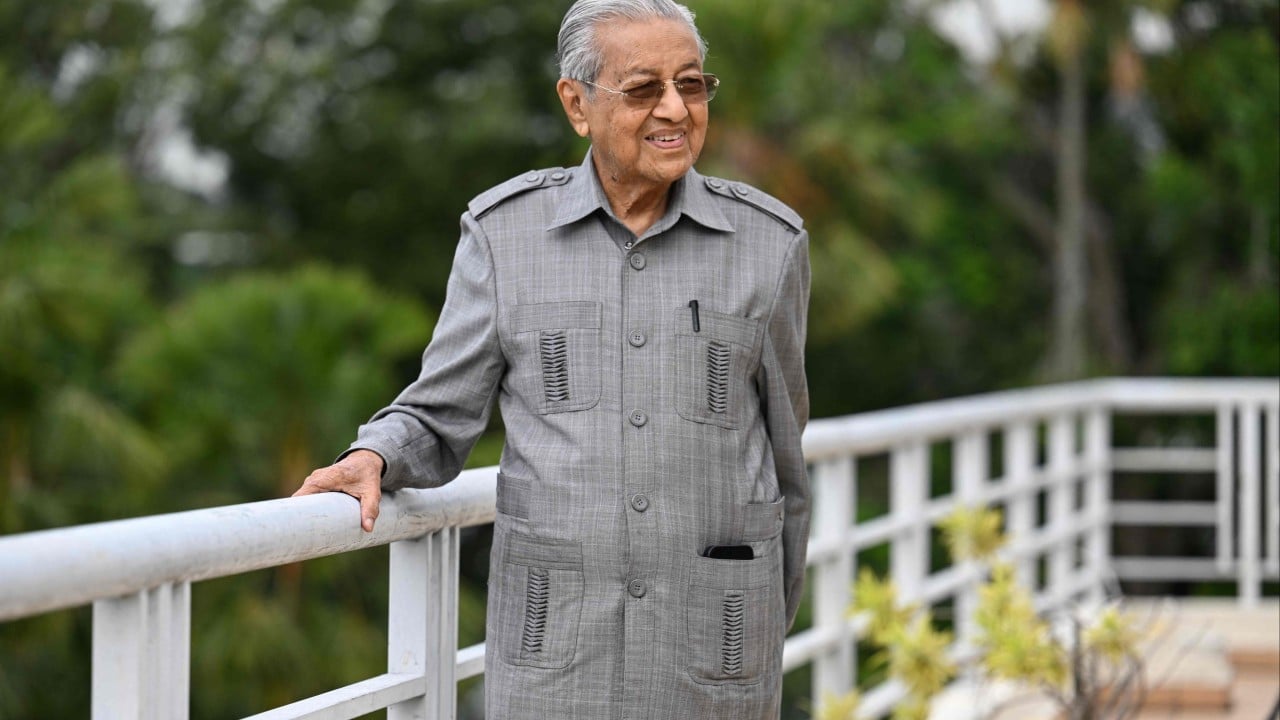
Mahathir Mohamad is not looking for your approval. At 98, the man who shaped Malaysia through sheer force of will remains as unyielding as the steel in the Petronas Towers. When critics brand him a dictator or an autocrat who dismantled the country’s judiciary to preserve his own grip on power, he meets the accusation with a shrug. To Mahathir, the "dictator" label is a superficial Western obsession that ignores the pragmatic necessity of dragging a backwater agrarian economy into the industrial age. He views his legacy not through the lens of human rights reports, but through the hard metrics of GDP growth, infrastructure, and the survival of the Malay identity in a globalized market.
The central tension of Mahathir’s career is the trade-off between democratic purity and national stability. He stepped into power in 1981, inheriting a nation still reeling from racial tensions and economic inequality. By the time he first stepped down in 2003, Malaysia was a "Tiger Economy." But the cost was high. He silenced the press, jailed opponents under the Internal Security Act, and fundamentally altered the balance of power between the executive and the courts. For those who lived through it, the "Mahathir Era" was a time of unprecedented prosperity bought with the currency of political silence.
Power Without Regret
Mahathir’s refusal to engage with his detractors isn't just stubbornness. It is a calculated philosophical stance. He believes that for a developing nation to succeed, it needs a firm hand at the wheel, not the chaotic, often polarized debates found in Western-style liberal democracies. In his view, the ends almost always justify the means. If building a world-class electronics industry required curbing the influence of labor unions or bypassing traditional legal hurdles, he made the trade without blinking.
This pragmatism defined his relationship with the West. He was the champion of "Asian Values," a concept that prioritized social harmony and economic progress over individual liberties. He famously sparred with the IMF during the 1997 Asian Financial Crisis, defying their "Washington Consensus" by imposing capital controls. Economists at the time predicted disaster. They were wrong. Malaysia recovered faster than many of its neighbors who followed the IMF’s grueling austerity measures. This victory cemented his belief that he alone knew what was best for his people.
The Judicial Crisis and the Ghost of 1988
To understand why the "dictator" label sticks, one must look at the 1988 judicial crisis. It was the moment the mask slipped. When the courts threatened his leadership of the UMNO party, Mahathir didn't just fight the case; he dismantled the independence of the judiciary itself. He sacked the head of the Supreme Court and several other judges, ensuring that the legal system would never again be a meaningful check on his power.
Critics argue this was the "original sin" of modern Malaysian politics. By weakening the courts, Mahathir cleared the path for the massive corruption scandals that would plague his successors, most notably the 1MDB disaster. If the judiciary had remained a robust watchdog, could billions of dollars have been siphoned out of the state coffers? Probably not. Mahathir, however, maintains that he acted to prevent political instability that would have destroyed the economy. It is a convenient defense that ignores how much the instability he feared was actually a threat to his personal tenure.
The Paradox of the 2018 Comeback
Nothing complicates Mahathir’s legacy more than his return to power at the age of 92. In a move that shocked the world, he joined forces with his former enemies—including the man he once jailed, Anwar Ibrahim—to topple the corrupt regime of Najib Razak. For a brief moment, the "dictator" was hailed as a "savior of democracy."
But the alliance was built on sand. The old habits of centralized control and political maneuvering hadn't disappeared. The transition of power to Anwar, which Mahathir had promised, became a moving target. The resulting political infighting led to the collapse of the reformist government in 2020, leaving many Malaysians feeling betrayed. It revealed that while Mahathir could play the democrat to win an election, he had no interest in actually sharing the stage. He remains a man of the old guard, convinced that only his vision is the correct one.
The Economic Mirage
While Mahathir points to the skylines of Kuala Lumpur as proof of his success, a deeper look at the data shows a more nuanced picture. His "Vision 2020" sought to turn Malaysia into a fully developed nation. While poverty rates plummeted, the country remains stuck in the "middle-income trap." The heavy reliance on state-linked companies and the affirmative action policies favoring the Malay majority—which Mahathir championed—have created a system that often prioritizes political loyalty over meritocracy.
Investors who once flocked to Malaysia are now looking toward Vietnam or Indonesia, where the political environments, while still complex, are seen as more predictable and less dependent on the whims of a single patriarch. The industrial base Mahathir built is aging. The education system he oversaw struggled to produce the high-tech workforce needed for the 21st century. His legacy is one of bricks, mortar, and semiconductors, but it lacks the institutional flexibility required for the next stage of development.
The Malay Dilemma Redux
At his core, Mahathir is a Malay nationalist. His seminal book, The Malay Dilemma, argued that the Malay race needed state intervention to compete with the more economically dominant Chinese minority. He spent decades implementing the New Economic Policy (NEP) to bridge this gap. While it successfully created a Malay professional class, it also institutionalized a system of patronage that is now almost impossible to dismantle.
This system is his greatest triumph and his greatest failure. It provided a safety net that prevented the kind of ethnic violence seen in the late 1960s, but it also birthed a culture of entitlement and "money politics." Today, the very party he led for two decades is synonymous with the corruption he claims to loathe. He created the machine, and then he lost control of it.
Confronting the End
Mahathir Mohamad spends his final years in a state of perpetual combat. He is currently under investigation for his past wealth, a move he dismisses as a political vendetta by the current government. He continues to hold press conferences, write blog posts, and issue warnings about the "erosion" of Malay rights. He is a man out of time, yet he refuses to leave the field.
History will likely judge him as a transitional figure. He was the bridge between the colonial era and the modern world, a leader who understood that power is not given, but taken. He doesn't care if you call him a dictator because he believes the results speak for themselves. Whether those results are sustainable without the heavy-handed tactics he pioneered is the question his successors are currently failing to answer.
The tragedy of Mahathirism is that it produced a nation that outgrew its father. Malaysians today want more than just a new highway or a taller building; they want the right to speak, the right to a fair trial, and a government that doesn't treat the national treasury like a private bank account. Mahathir gave them the prosperity to ask for these things, but he never intended to give them the things themselves. He built the house, but he forgot to provide the keys to the people living inside.
Those who seek to understand the future of Southeast Asia must first grapple with this shadow. It is a shadow cast by a man who moved mountains but refused to let the dust settle. He remains the definitive architect of his country, flaws and all, standing amidst the ruins of his own political creation.
Stop looking for an apology that will never come.

:max_bytes(150000):strip_icc():focal(819x186:821x188)/Murdaugh-Family-e90854a716884d608fb6fd925e18d840.jpg)
