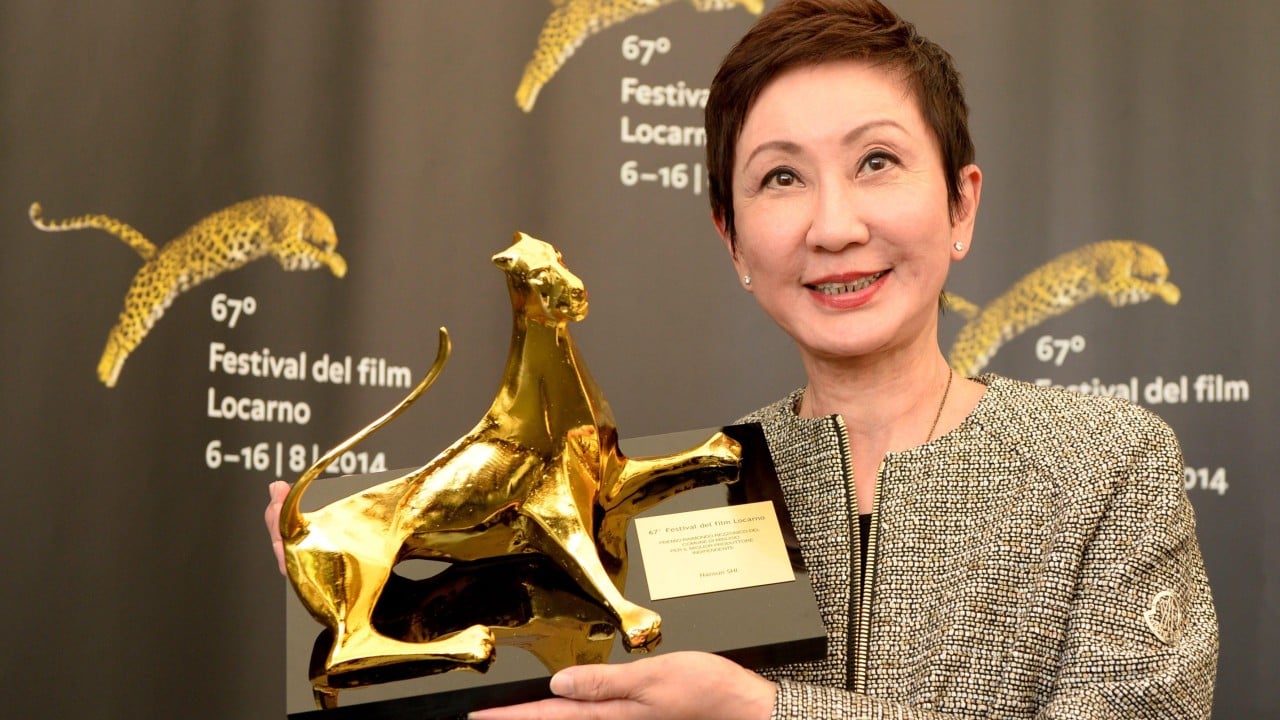
The passing of Shi Nan-sun at age 75 marks the end of an era for international film production. While the public often attributes the golden age of Hong Kong cinema to the kinetic directors in front of or just behind the camera, it was Shi who built the actual machinery that allowed those visions to reach a global audience. She was not merely a financier or a coordinator. She was the strategist who took a chaotic, localized, and often hyper-reactive entertainment market and retrofitted it for the global stage.
Her departure leaves a profound vacuum. Modern film production across Asia frequently struggles to balance artistic eccentricity with international commercial viability, a formula that Shi mastered decades ago. Understanding her impact requires looking past the glitz of red carpets and examining the structural innovations she brought to a volatile industry. Recently making headlines recently: The Anatomy of Sam Neill.
The Cinema City Formula and the Birth of Structured Chaos
In the early 1980s, Hong Kong filmmaking operated largely on instinct, speed, and localized gags. Then came Cinema City. The studio founded by Karl Maka, Dean Shek, and Raymond Wong was a powerhouse of creativity, but it required a systematic mind to turn artistic energy into a sustainable corporate entity. Shi Nan-sun became that stabilizing force.
She instituted organizational logic. Writers and directors at Cinema City were notorious for working out of a legendary room called the "Seven-Person Bureau," where ideas were tossed around until dawn. While the creative minds argued over gags and action set-pieces, Shi figured out how to budget those ideas, secure pre-sales, and ensure that the films actually found distribution outside of the domestic market. Further details into this topic are detailed by Rolling Stone.
She recognized early that a film industry relying entirely on its home territory was inherently vulnerable. Hong Kong had a small population. To survive, its movies needed to travel. Shi used her multilingual capabilities and sharp cross-cultural understanding to establish firm distribution channels in Taiwan, Southeast Asia, and eventually the West. She did this by treating the films not as disposable local comedies, but as high-value cultural exports.
Financing the Vision of Tsui Hark
The creative partnership between Shi Nan-sun and director Tsui Hark remains one of the most consequential pairings in film history. Tsui was a visionary known for pushing technical boundaries, demanding expensive special effects, and abandoning scripts midway through production if a better idea struck him. Managing that kind of genius requires a rare combination of patience and absolute financial authority.
Shi provided both. When Tsui wanted to modernize the martial arts genre with complex wirework and visual effects in films like Zu Warriors from the Magic Mountain, Shi managed the soaring costs by pioneering international co-productions. She understood that if a director wanted to spend like a Hollywood filmmaker, the producer had to sell the film like a Hollywood studio.
This meant attending major international film festivals not just to show completed products, but to secure pre-sales based on treatments and conceptual art. Her presence at Cannes and Berlin became legendary. Foreign buyers trusted her implicitly because she possessed an immaculate track record of delivering what she promised, even when the director she was managing was notoriously unpredictable.
The Industrialization of the Independent Producer
Before Shi Nan-sun, the concept of an independent producer in Hong Kong was poorly defined. Most producers were either studio executives enforcing rigid corporate guidelines or wealthy benefactors with little knowledge of film craft. Shi established a middle path that prioritized the integrity of the project while protecting the capital of the investors.
Structured budgeting became her trademark. She introduced accountability to a system where budgets were previously scribbled on napkins. By enforcing strict accounting practices, she made Hong Kong cinema attractive to institutional investors who had previously viewed the movie business as a reckless gamble.
This level of professionalization changed how the entire region approached film finance. It allowed for the creation of ambitious, high-budget epics that defined the late 1980s and 1990s. Without her systematic approach to the business side of art, masterpieces like A Better Tomorrow or The Killer might have collapsed under the weight of their own production difficulties.
Navigating Changing Markets and Political Shifts
The true test of an industry analyst and executive is the ability to survive structural shifts. When the Hong Kong film market faced a sharp decline in the late 1990s due to piracy, economic downturns, and the changing political environment, Shi did not retreat. Instead, she pivoted toward mainland China and broader international collaborations.
She understood the changing regulations better than almost anyone else in the business. Navigating the complex censorship rules and distribution quotas of the mainland required a delicate touch. Shi managed to produce massive hits like the Detective Dee franchise and The Taking of Tiger Mountain by ensuring they met the scale required for the expanding mainland theatrical market while retaining the stylistic energy that made Hong Kong cinema famous in the first place.
Her later career was a lesson in adaptation. She saw that the future lay in large-scale co-productions that could appeal to both Chinese audiences and international genre fans. It was a difficult tightrope to walk. Many of her peers failed to make the transition, producing films that felt either too localized for the mainland or too diluted for international tastes. Shi avoided these traps by maintaining her core philosophy that a good story, backed by impeccable production values, transcends borders.
The Modern Production Crisis and the Shi Legacy
The current state of film production across East Asia highlights just how ahead of her time Shi Nan-sun truly was. Today, the industry faces fragmentation. Studios often rely on algorithm-driven data that stifles creative risk, or they fund indulgent art-house projects that struggle to find an audience outside of festival circuits.
Shi proved that these two worlds do not have to be mutually exclusive. A producer can respect the wild imagination of a director while enforcing the fiscal discipline needed to keep the lights on. She did not view commerce as the enemy of art. She viewed commerce as the shield that protected art from corporate interference.
Her death leaves a blueprint that contemporary producers would do well to study. The industry no longer possesses the same density of executives who can speak three languages, negotiate a distribution deal in Europe, re-draft a production budget on a flight, and talk a brilliant director down from a creative ledge all in the same day. That specific blend of international sophistication and street-smart grit is increasingly rare in a world dominated by committee-driven studio decisions. The machinery she built still stands, but the master operator is gone.