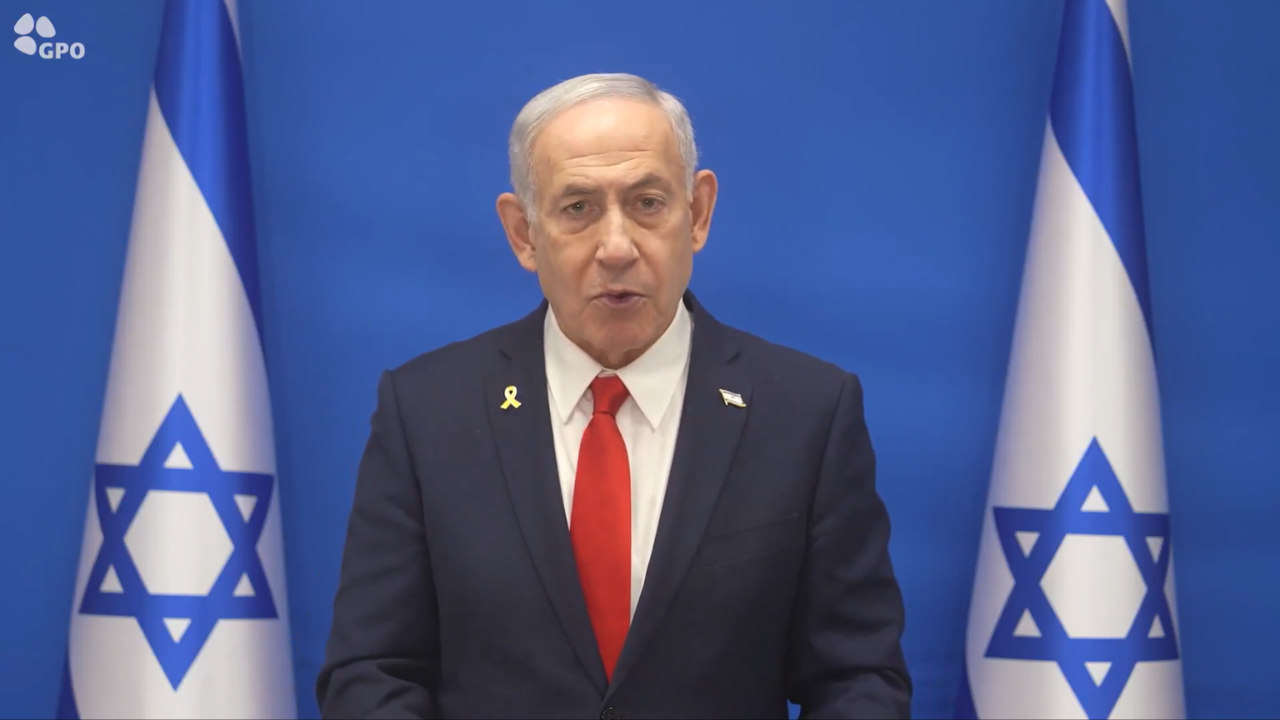
The signing of the trilateral framework agreement in Washington between the governments of Israel and Lebanon, mediated by the United States, introduces a structural shift in regional security mechanics rather than a definitive resolution to hostilities. While optimistic diplomatic messaging frames the accord as a foundational baseline for long-term coexistence, an objective evaluation of the text and subsequent operational directives indicates a highly transactional, performance-based arrangement. Israeli Prime Minister Benjamin Netanyahu’s immediate declaration that the Israel Defense Forces (IDF) will retain positions within the southern Lebanese security zone underscores the core structural reality of the agreement: territorial withdrawal is not an immediate concession, but the final output of a highly conditional verification function.
To evaluate the viability of this framework, the strategic landscape must be analyzed through three primary pillars: the conditional verification matrix, the operational design of the pilot zones, and the domestic stability constraints within Lebanon.
The Conditional Verification Matrix
The trilateral framework operates on a sequenced, conditions-based roadmap. Unlike traditional ceasefires that rely on fixed timelines or geographic lines of demarcation under international monitoring bodies, this architecture ties Israeli troop redeployment explicitly to the verified disarmament of non-state armed groups, primarily Hezbollah, and the destruction of their military infrastructure.
The strategic mechanism can be expressed as a conditional performance dependency: Israeli territorial concession ($C_t$) occurs if and only if the Lebanese Armed Forces (LAF) achieve a verifiable monopoly on the use of force ($M_f$) within a designated sector. The verification protocol relies on a newly established trilateral Military Coordination Group for Lebanon (MCG4L), facilitated by the United States. This structure introduces a strict enforcement loop:
- Information Collection and Targeting: The identification of non-state military assets and subterranean infrastructure networks.
- Kinetic Cleansing and Demilitarization: The active physical dismantling of these networks, carried out exclusively by the LAF.
- Trilateral Verification: Joint assessment by the MCG4L to confirm the absence of hostile military infrastructure.
- Phased Redeployment: Incremental withdrawal of IDF units to predefined geographic coordinates.
The fundamental structural flaw in standard peace frameworks is the reliance on the goodwill of asymmetric actors who are not parties to the text. Because Hezbollah was excluded from the Washington talks, the framework treats the group not as a negotiating partner, but as an operational variable to be neutralized by the Lebanese state. Consequently, the rate of Israeli withdrawal is governed entirely by the capability and willingness of the LAF to execute a high-risk demilitarization campaign against a heavily armed domestic political entity.
Operational Design of the Pre-Defined Pilot Zones
To mitigate the risk of immediate systemic failure, the framework utilizes an incremental deployment strategy via two initial pilot zones. Prime Minister Netanyahu confirmed that these sectors were selected based on direct recommendations from the IDF General Staff, ensuring that early territorial handovers do not compromise Israel's broader defensive posture.
[Expanded Security Zone] -> Pilot Zone 2 (North of Litani River)
--------------------------- (Litani River Boundary)
[Original Security Zone] -> Retained by IDF (Anti-tank missile mitigation)
---------------------------
[Adjacent to Blue Line]  -> Pilot Zone 1 (South of Litani River)
The first pilot zone is situated south of the Litani River, outside the core security zone but adjacent to the internationally recognized Blue Line. The second pilot zone is located north of the Litani River, within an expanded security perimeter established during recent military operations. According to military assessments, the IDF does not require permanent tactical control over this specific northern sector to maintain its defensive integrity.
By separating the theater into distinct operational zones, the framework isolates tactical failures. If the LAF fails to secure Pilot Zone 1 or faces armed resistance that it cannot suppress, the breakdown does not trigger a collapse of the entire framework. Instead, it halts the sequence, freezing the IDF in its current defensive posture. Netanyahu emphasized that the original security zone—specifically calibrated to remain outside the effective range of direct anti-tank guided missile (ATGM) fire targeting northern Israeli communities—will remain occupied by Israeli forces. Furthermore, displaced Lebanese civilians are restricted from re-entering these contested zones during the initial phases, preserving a clear line of sight and minimizing tactical ambiguity for deployed forces.
The Lebanese Sovereign Capability Bottleneck
The primary bottleneck threatening the execution of the framework is the profound asymmetry between the stated objectives of the Lebanese state and its actual enforcement capacity. The agreement obligates Lebanon to extend full state authority across its entire territory and establish an absolute monopoly on violence. To support this objective, the United States pledged an immediate $100 million in humanitarian assistance alongside $30 million allocated under existing authorities to enhance the operational capabilities of the LAF.
However, financial infusion cannot instantly resolve systemic structural weaknesses. The LAF operates under severe resource constraints and possesses a complex sectarian composition that mirrors the broader Lebanese political landscape. Forcing the national army into direct kinetic confrontation with Hezbollah to enforce disarmament introduces a severe destabilization risk. Senior Hezbollah officials have already issued explicit warnings that the path chosen by the Lebanese authorities in Washington risks instigating internal civil conflict.
This creates an operational paradox. If the LAF moves aggressively to disarm non-state factions to unlock international reconstruction funds and secure Israeli withdrawal, it risks fracturing its own ranks or triggering a domestic insurgency. If the LAF adopts a passive, non-confrontational approach, the verification metrics established by the MCG4L will remain unmet, indefinitely freezing the IDF presence in southern Lebanon.
Geopolitical Alignment and Strategic Trajectory
A critical dimension of this trilateral framework is its explicit exclusion of external regional arbiters. By anchoring the negotiation loop within a Washington-mediated, performance-based structure, the agreement isolates the conflict from parallel diplomatic tracks, such as the temporary bilateral understandings between the United States and Iran. Israeli diplomatic officials highlighted this exclusion as a primary strategic victory, asserting that the framework effectively detaches Lebanese state sovereignty from the broader geopolitical calculations of Tehran.
The strategic trajectory of the southern Lebanon theater will be determined by how the MCG4L handles the first pilot zone transitions. Rather than a rapid stabilization, the region is moving toward a prolonged period of armed status quo, punctuated by localized enforcement operations. The framework does not mark the end of the conflict; it redefines the rules of engagement, shifting the burden of containment from external kinetic strikes to internal sovereign enforcement. The baseline scenario involves Israel maintaining its core security zone for an extended duration, utilizing its territorial presence as a physical hedge against the operational limitations of the Lebanese state.