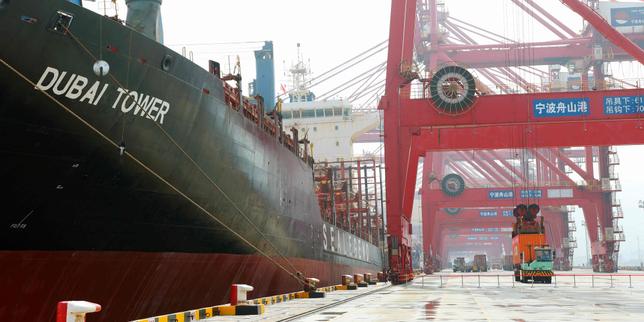
Every shipping publication on the planet just lost its collective mind over a single container ship taking a shortcut through the Arctic. The headlines practically wrote themselves. Trade routes transformed. Suez bypassed. China conquering the frozen north.
It is all noise.
I have watched logistics executives panic over shiny novelties for two decades. I have seen corporations burn tens of millions chasing ghost routes while ignoring the boring fundamentals that actually move freight profitably. This latest obsession with northern passages is no different. It is a triumph of marketing over math.
Let us look past the geopolitical theater and examine the cold, hard operational economics.
The Geography Myth
The lazy consensus in international logistics is simple. Distance dictates cost. Draw a straight line from Shanghai to Rotterdam across the top of the world, and you shave off thousands of nautical miles compared to the traditional southern loop through the Malacca Strait, the Indian Ocean, and the Suez Canal.
Shorter distance means less fuel, right? Wrong.
This reductionist thinking ignores every variable that makes maritime transport function. Distance is a secondary metric in global shipping. The primary metrics are asset utilization, schedule reliability, draft constraints, and bunker consumption profiles under hostile conditions.
When you send a vessel through ice-strengthened waters, you do not just sail faster. You crawl. You burn heavy marine fuel at inefficient speeds, or worse, you wait days for a nuclear-powered icebreaker to clear a path. Every hour a container box sits idling behind an escort vessel destroys the fuel savings you gained by cutting those miles off your GPS.
The Real Constraint Nobody Talks About
Draft and beam limitations in northern straits are brutal. The vessels capable of surviving multi-year ice floes are structurally heavy, narrow, and lack the massive deadweight tonnage capacity of modern ultra-large container ships.
Economies of scale drive modern maritime commerce. We built an entire global network around twenty-thousand-TEU floating islands because unit costs plummet when you stack boxes ten high and twenty-four wide. Try pushing a twenty-thousand-TEU leviathan through the Vilkitsky Strait. You cannot. The hull geometry required for ice resistance directly contradicts the physics required for mega-scale container efficiency.
Instead, companies are forced to deploy smaller, specialized, reinforced vessels. Smaller ships mean higher cost per container moved. You are trading a lower fuel bill for a crippled capacity model.
The Insurance Reality Check
Risk management is where fantasy meets a concrete wall. Talk to marine underwriters in London. Ask them what premium they quote for a commercial cargo transit through high-latitude polar corridors without continuous satellite reconnaissance and heavy ice-class certification.
The underwriting cost alone wipes out any theoretical margin improvement. If a rudder shears off on a submerged ice block off the coast of Siberia, you are not waiting for a local tugboat. You are looking at a multi-week salvage operation in a region with zero infrastructure, zero deep-water ports, and zero rapid-response capability.
Insurance syndicates do not price risk based on optimistic press releases from state-backed shipping lines. They price risk based on catastrophe probabilities. Right now, polar transit math does not pencil out for commercial underwriters, which means it should not pencil out for your supply chain strategy either.
The Regulatory Mirage
Environmental compliance is the final nail in this coffin. Heavy fuel oil usage is heavily restricted or outright banned in sensitive polar ecosystems. Burning compliant, low-sulfur marine gas oil drives operating expenses through the roof.
Simultaneously, international maritime organizations are tightening emissions tracking across every corridor. The carbon accounting for a vessel requiring icebreaker escorts—burning diesel just to push broken ice out of the way of a commercial hull—looks atrocious on a balance sheet trying to hit net-zero targets.
You are substituting a predictable, highly optimized southern trade lane for a regulatory minefield wrapped in frozen water.
Stop Planning for 2050 Today
Executives love a futuristic narrative. It looks great in quarterly stakeholder decks. Telling a board of directors that your supply chain is pioneering the Arctic route sounds like forward-thinking genius.
It is actually a distraction.
Real supply chain resilience comes from redundancy, terminal automation, predictive inventory buffers, and multi-modal optionality. It does not come from gambling multi-million dollar box loads on a melting sea route that works four months out of twelve, provided the weather holds and geopolitical alignments do not completely freeze over.
The next time an industry analyst tells you that northern maritime corridors are the inevitable future of Eurasian commerce, ask them to show you the ten-year return on investment for a standard carrier operating without state subsidies.
They will change the subject. Because the numbers do not work.