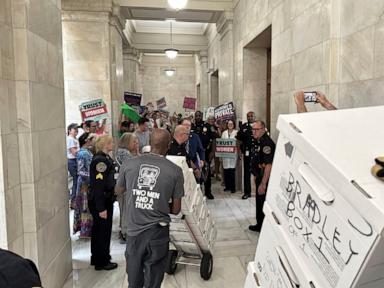
Arkansas politicians just learned a hard lesson about the First Amendment. You don’t get to invent arbitrary hurdles simply because you dislike the laws your citizens are trying to pass.
U.S. District Judge Timothy Brooks issued a blistering 62-page ruling that dismantled a series of restrictive ballot initiative laws passed by the GOP-led Arkansas legislature. These laws weren't designed to protect the integrity of elections. They were designed to exhaust grassroots organizers. The ruling provides a major legal triumph for organizations like the League of Women Voters of Arkansas and Protect AR Rights, proving that direct democracy still has teeth.
If you have ever signed a petition on a clipboard outside a grocery store, you know how the process works. It's a fundamental part of American civic life. Yet, Arkansas lawmakers tried to transform this simple act of political expression into a bureaucratic obstacle course.
The Ridiculous Rules Struck Down by the Court
Let's look at what the state was actually demanding. Under the guise of preventing petition fraud, the state passed laws in 2025 that forced canvassers to act like law enforcement officers and schoolteachers.
First, the state wanted signature gatherers to demand a photo ID from every single person before they could sign a petition. Think about that. You don't need to show a photo ID to engage in political speech. Judge Brooks noted that the Secretary of State's office already verifies every single signature against voter registration rolls anyway. Forcing a private citizen to show ID to another private citizen just to sign a petition serves no purpose other than to intimidate voters and slow down the process.
Second, the state tried to force canvassers to either read the entire ballot question out loud to every signer, or force the signer to sit there and read the whole thing themselves. Ballot initiatives are written in dense, legalistic prose. They are frequently hundreds of words long. Imagine standing on a hot sidewalk in July while a volunteer reads three pages of legal text to you before you can sign a clipboard. It’s absurd. It was a blatant attempt to kill the momentum of citizen-led campaigns.
The Dangers of State Sponsored Doxxing
The court also took aim at a particularly insidious rule requiring petition sponsors to hand over a public list of every paid canvasser's name and home address before they could even begin collecting signatures.
Judge Brooks didn't pull any punches when addressing this rule. He explicitly called out the threat of public disclosure, stating that doxxing is essentially a modern version of the "heckler's veto." By forcing this data into public records during an active campaign, the state was practically inviting bad actors to harass and intimidate workers. The government shouldn't be aiding that kind of behavior.
The Real Motive Behind the Restrictions
This legal fight didn't happen in a vacuum. It was the direct result of a partisan panic that occurred after abortion rights advocates attempted to put a constitutional amendment on the 2024 ballot. State election officials used a narrow legal technicality to disqualify those petitions. Realizing that citizen initiatives were gaining traction on controversial issues, lawmakers scrambled to pass rules to ensure it wouldn't happen again.
Arkansas is not an isolated case. According to data from the Ballot Initiative Strategy Center, there has been a massive escalation in anti-democratic attacks on the ballot measure process across the country. Lawmakers in conservative states are realizing that when citizens get to vote directly on issues like reproductive rights, marijuana legalization, and minimum wage increases, the politicians often lose.
Instead of changing their platforms to match what voters actually want, these politicians are trying to change the rules of the game. They try to frame these restrictions as "common-sense safeguards" for election integrity. Thankfully, the federal judiciary saw right through the rhetoric.
What This Means for Direct Democracy Right Now
This decision dropped at a critical moment. The ruling arrived just days before the July 3 deadline for groups to submit their gathered signatures for the upcoming November ballot.
For groups like Protect AR Rights, the ruling means their hard work over the last several months won't be discarded over manufactured technicalities. They can submit their signatures knowing the unconstitutional rules won't be used to retroactively disqualify their efforts.
However, the battle isn't entirely over. Arkansas Secretary of State Cole Jester has already signaled that his office plans to appeal the decision. Furthermore, Judge Brooks didn't strike down every single contested rule; three specific disputes are still heading to a federal trial later this month.
If you live in Arkansas or any of the other 23 states that allow citizen-initiated ballot measures, you need to pay attention to these local legal fights. Don't take your right to direct democracy for granted. Your state legislators are actively looking for ways to take it away from you.
The next step for voters is simple. Keep showing up. Keep signing petitions for causes you believe in. And most importantly, remember which politicians tried to take your clipboard away when you head to the ballot box this fall.