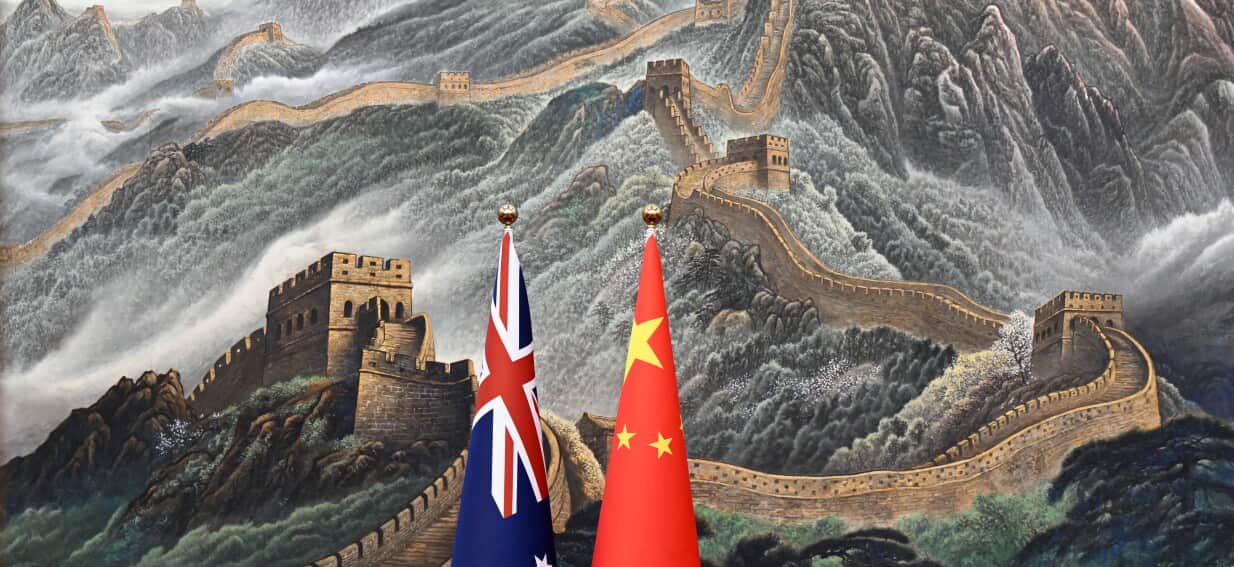
You can stabilize trade and shake hands at international summits, but you cannot legislate away a fundamental philosophical divide. Australia and China share massive economic ties, yet their underlying diplomatic relationship remains permanently capped. Graham Fletcher, Australia's former ambassador to China from 2019 to 2023, recently made this reality crystal clear. He pointed out that a massive worldview gulf sits right at the heart of strained Australia-China ties.
Most casual observers look at the resumption of wine exports, coal shipments, and barley trade and assume everything is back to normal. It isn't. Normalization is not the same thing as intimacy. Canberra and Beijing operate from entirely different planets when it comes to national security, regional influence, and the global rules-based order.
The Myth of Permanent Partnership
Diplomacy loves euphemisms. Officials talk about comprehensive strategic partnerships, mutual respect, and constructive dialogue. But behind closed doors, veteran diplomats know when a relationship has hit a permanent ceiling.
Australia enjoys a relaxed, deeply integrated fellowship with like-minded democracies across the globe. Think of the security architecture shared with close allies, where transparency and shared values form the bedrock of daily cooperation. China doesn't fit into that category, and it never will.
Beijing views regional security through the lens of historical dominance and sphere-of-influence politics. Australia views it through alliance networks, freedom of navigation, and multilateral rules. When a country launches a ballistic missile into the South Pacific—as China did following security pacts in the region—it sends an unambiguous message. Canberra hears that message loud and clear.
Economic Reliance Versus Strategic Reality
It's no secret that China remains Australia's largest trading partner. Roughly a third of all Australian exports find their final destination in Chinese ports. During the peak of diplomatic hostility under former prime minister Scott Morrison, Beijing slapped roughly twenty billion dollars worth of trade sanctions on various Australian commodities.
When the federal government changed in 2022, it acted as a functional circuit-breaker. The Albanese administration worked methodically to stabilize the diplomatic temperature, leading to the removal of most of those biting trade restrictions.
Yet, commerce has strict limits. Economic interdependence does not equal political alignment. China still harbors ambitions to pull Australia closer into its diplomatic orbit, while Canberra focuses entirely on maintaining strategic independence. Pretending that these two opposing gravity wells will eventually merge is a waste of diplomatic bandwidth. Realism dictates that Australia accepts this friction as the permanent cost of doing business in Asia.
The Danger of Domestic Politics
Foreign policy fails when politicians treat international relations as a cheap weapon for domestic point-scoring. Fletcher highlighted a crucial vulnerability within the Australian political ecosystem: the temptation to exploit foreign interference or defense tensions for short-term electoral gain.
When political parties fracture over how to handle Beijing, the nation shows a soft underbelly. Consistency requires ironclad bipartisanship.
How Bipartisanship Protects National Interest
- Policy Consistency: Foreign capitals know that changing governments in Canberra won't rewrite fundamental national security red lines.
- Limited Manipulation: A united front prevents foreign powers from driving wedges between opposing domestic political factions.
- Clear Signaling: Adversaries and allies alike understand exactly where the nation stands without second-guessing political theater.
Without this domestic alignment, Australia invites external interference into its internal governance. Keeping national security above partisan bickering is the only way to deal with a superpower that plays the long game.
Navigating the Taiwan Flashpoint
Trade disputes and diplomatic freezing points are manageable headaches compared to the ultimate strategic risk. Taiwan remains the most dangerous tripwire in the Indo-Pacific.
Beijing views the self-governing democracy as a breakaway province destined for eventual reunification, by force if necessary. Australia's alignment with United States deterrence strategy means any kinetic conflict over Taiwan would drag Canberra into an unmanageable crisis.
While a direct military clash isn't the immediate baseline forecast, the structural mismatch of worldviews makes the entire regional framework brittle. One miscalculation by naval patrols in contested waters can spiral out of control before diplomats even pick up the phone.
Canberra must stop chasing the illusion of a genuinely close friendship with Beijing. Acknowledge the economic reality, manage the inevitable disputes with cool heads, maintain robust defense readiness, and stop pretending that shared trade equals shared values.


