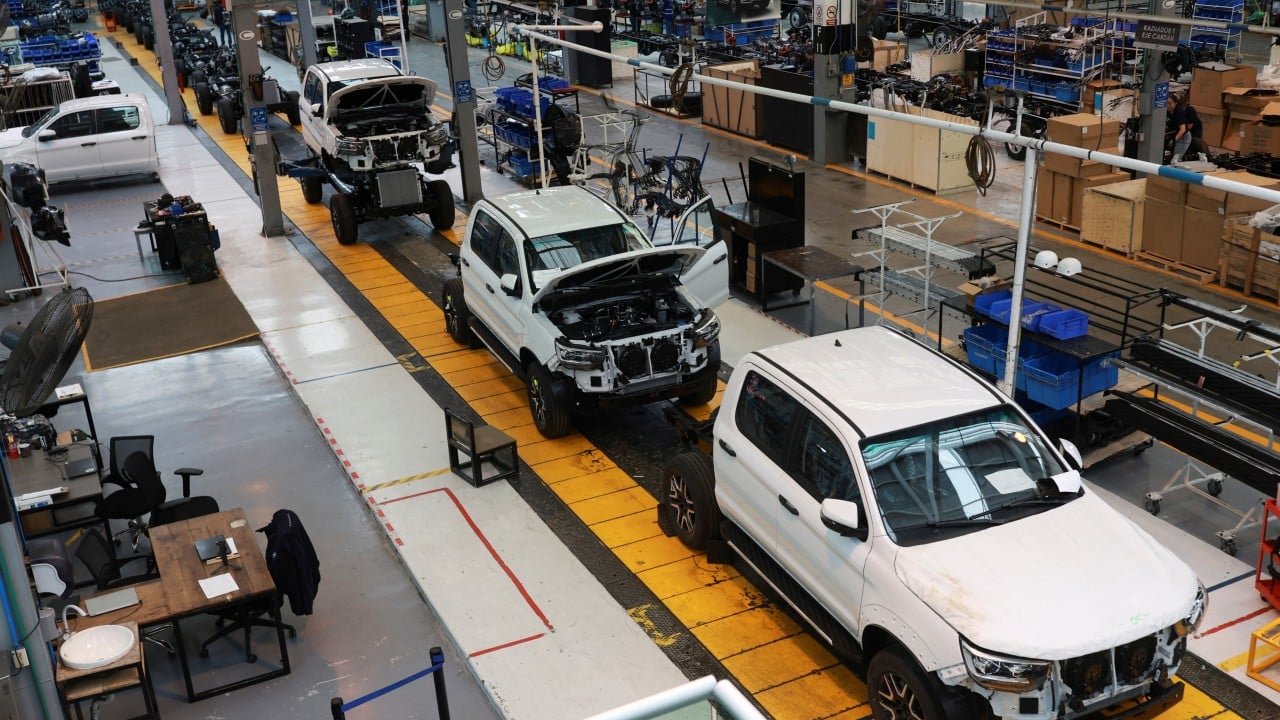
Chinese manufacturers are rewriting the rules of global trade by using Mexico as a strategic trampoline into the American market. While Washington rings alarm bells over direct imports from Beijing, a massive shift in capital and industrial capacity is quietly rendering traditional tariffs obsolete. By establishing deep manufacturing roots south of the border, Chinese firms are gaining duty-free access to the United States under the United States-Mexico-Canada Agreement (USMCA). This is not a temporary loophole. It is a long-term economic realignment that the current trade framework is entirely unequipped to handle.
The panic in Washington is palpable, but the diagnosis is wrong. Industry groups frequently warn that China aims to "infiltrate" North American trade agreements. The reality is far more calculated. Chinese corporations are not sneaking through the cracks; they are walking through the front door by playing the rules of free trade to their absolute limit.
The Industrial Migration to Monterrey
Drive through the industrial parks of Nuevo León, Mexico, and the transformation is undeniable. Names like Hofusan Industrial Park have become hubs for Chinese suppliers looking to shorten their supply chains to the American market. This strategy, known as nearshoring, was originally envisioned by American policymakers as a way to bring manufacturing closer to home and reduce dependence on Asia.
Instead, Chinese companies capitalised on it.
When the Trump administration imposed sweeping tariffs on Chinese goods in 2018, it set off a chain reaction. Rather than abandoning their American clients, Chinese component makers packed up their machinery and relocated to Mexican border states. By doing so, they transformed their products from "Made in China"—subject to heavy tariffs—into "Made in Mexico," which frequently qualifies for zero tariffs under the USMCA.
The numbers tell a stark story. Mexican exports to the US have surged, while direct Chinese exports in several key sectors have dipped. But a closer look at the components inside those Mexican goods reveals a different picture. A significant portion of the raw materials, specialized machinery, and capital driving this Mexican manufacturing boom originates directly from mainland China.
How the USMCA Rules of Origin Are Failing
The core mechanism of any free trade agreement is its "rules of origin." These guidelines dictate exactly how much of a product must be made within the member countries to qualify for duty-free status. In the automotive sector, the USMCA raised this regional value content requirement to 75% to protect North American workers.
The system has a glaring vulnerability.
If a Chinese company builds a factory in Mexico, hires local workers, and sources some local materials, the final product can legally cross the US border without paying a dime in tariffs. The profit, the intellectual property ownership, and the high-value engineering control still reside in Hangzhou or Shenzhen.
Consider a hypothetical example of an electric vehicle battery component. Under old trade models, shipping this part from Shanghai to Los Angeles incurred a 25% tariff. If that same Chinese company establishes a subsidiary in Querétaro, imports the raw lithium from its domestic supply chain, assembles the casing using Mexican labor, and ships it north, it clears customs seamlessly. The United States gets the low-wage assembly jobs, while China retains the high-margin technical dominance.
Washington's trade enforcement agencies are playing a game of whack-a-mole. They monitor shipping manifests and crack down on illegal transshipment—the practice of simply routing unchanged Chinese goods through Mexican ports. But they cannot easily block legitimate, foreign-direct investment. Mexico is a sovereign nation. It has every right to accept billions of dollars in Chinese capital to boost its own GDP and create employment for its citizens.
The Electric Vehicle Battleground
The high-stakes nature of this trade shift is most visible in the automotive industry. China has built an overwhelming global lead in electric vehicle (EV) supply chains, from mineral refining to battery chemistry. American automakers are terrified that cheap, highly subsidized Chinese EVs will flood the domestic market and wipe out local production.
To prevent this, the US government enacted strict tax credit exclusions for vehicles containing materials from "Foreign Entities of Concern." This was designed as a firewall against China.
The firewall is crumbling. Chinese battery giants are aggressively forming joint ventures or setting up independent factories in Mexico. They are positioning themselves to supply the very North American factories that American legacy automakers rely on. The reality is simple. Without Chinese battery technology and cost structures, American EVs struggle to be price-competitive.
This creates an uncomfortable paradox for American policymakers. They can either enforce strict protectionist walls that slow down the transition to cleaner vehicles, or they can allow Chinese-backed Mexican components into the supply chain to lower costs for consumers. They cannot do both.
The Impending 2026 USMCA Review Face-Off
The tension is building toward a specific flashpoint. The USMCA contains a "sunset clause" requiring a joint review of the agreement every six years. The first major review is scheduled for 2026.
American manufacturing coalitions are already lobbying aggressively for drastic changes. They want provisions that explicitly restrict benefits from flowing to companies owned by non-North American entities. Essentially, they want to change the rules from "Where was it made?" to "Who owns the factory?"
The Mexican Dilemma
Implementing such a change will trigger an intense diplomatic battle. Mexico finds itself caught in the middle of a cold war between the world's two largest economies. For Mexico City, Chinese investment is a massive win. It brings infrastructure, creates manufacturing ecosystems, and provides leverage in negotiations with Washington.
- Economic Sovereignty: Mexico resists the idea that Washington can dictate which foreign investments it can accept.
- Supply Chain Reality: Mexican factories rely on Chinese industrial machinery to function; cutting off Beijing hurts Mexican productivity.
- The Border Leverage: Mexico knows that the US relies heavily on its cooperation regarding immigration and counter-narcotics, giving Mexico City significant bargaining power in trade disputes.
If the US pushes too hard during the 2026 review, it risks fracturing the entire North American trade bloc. Forcing Mexico to choose between American market access and Chinese capital could destabilize the exact regional alliance the USMCA was designed to fortify.
The Tariff Illusion
Politicians on both sides of the aisle in Washington love to promise sweeping tariffs as a cure-all for manufacturing decline. It makes for excellent campaign rhetoric. But tariffs are a blunt instrument in a world of highly fluid, weaponized capital.
When you tax a specific country, you do not stop the flow of goods. You merely change their itinerary. Capital is water; it finds the path of least resistance.
The current focus on Chinese "infiltration" misses the structural flaw of modern trade policy. The United States spent decades championing a globalised, rules-based trading system. Now that its primary geopolitical rival has mastered that system, Washington is discovering that closing the door is far harder than opening it. The factory floors of Monterrey and Tijuana are proof that the old economic maps no longer apply.