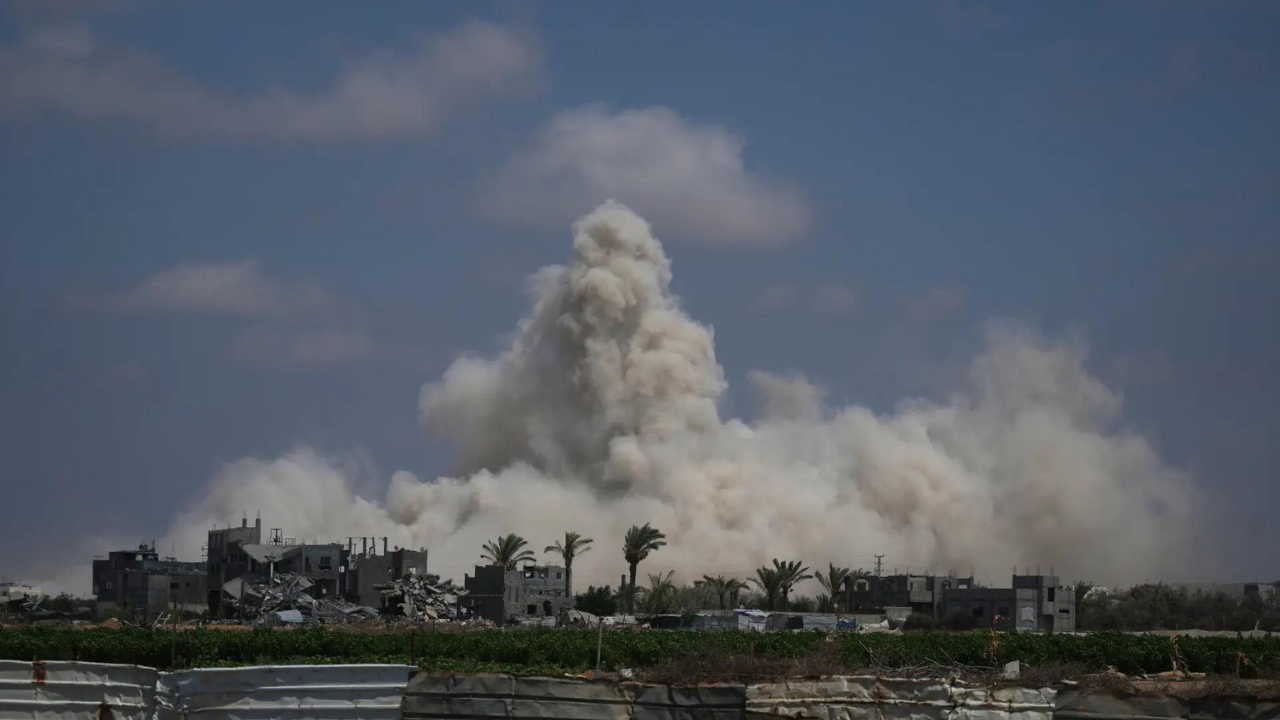
The media wants you to believe in the airborne menace of paper and polyethylene. We are fed a steady diet of wire-service copy about incendiary balloons and floating kites drifting across a heavily militarized border, followed immediately by the inevitable retaliation of multi-million dollar precision airstrikes. It sounds absurd because it is absurd. When sophisticated defense networks frame their operational updates around hobbyist toys fitted with burning rags, the entire discourse has broken down.
Strip away the spin and you find a lazy narrative designed to mask a structural vacuum. We look at the smoke and ignore the dry tinder.
The Physics Of Asymmetric Theater
Let us examine the mechanics of what is actually happening. A high-tech air force does not scramble stealth platforms and deploy ordnance worth a suburban mortgage because children or desperate operators let go of party supplies. They do it because modern escalation ladders require a visible kinetic response to any metric that crosses a boundary, no matter how trivial.
I have watched operational analysts stare at satellite feeds for hours, agonizing over proportionality metrics. When a state actor responds to low-tech airborne nuisances with structural bombing runs, they are not solving a security problem. They are signaling commitment to a domestic audience. It is theater masquerading as doctrine.
- The projectile costs pennies.
- The interceptor costs thousands.
- The political cost of doing nothing is deemed higher than the cost of overkill.
This asymmetry breaks traditional military calculus. When you apply conventional deterrence theory to a population that has zero conventional assets left to lose, your deterrence stops working. You are threatening to bankrupt a person who has already lost their wallet.
The False Premise Of Controlled Escalation
Every briefing note uses the same tired phrasing about proportional response and targeted defense. This is administrative fiction. There is nothing targeted about flattening city blocks because someone tied a burning fuse to a helium tank.
People ask why the response has to be so kinetic, why there is no diplomatic off-ramp, or why the border cannot simply be sealed tighter. These questions miss the point entirely. The questions themselves accept the premise that a collection of improvised incendiaries constitutes a strategic threat worthy of an aerial campaign.
That premise is a lie.
[Improvised Device] ---> [Border Crossing] ---> [Disproportionate Kinetic Response] ---> [Recycled Cycle]
When you look at the economics of the exchange, the strategy makes zero sense unless its actual goal is permanent friction. Permanent friction keeps populations on edge, keeps defense budgets inflated, and keeps political leaders safely entrenched behind flag-waving rhetoric.
The Price Of Administrative Inertia
I have sat in rooms where regional strategy is discussed by people who have never smelled cordite or watched a roof cave in from concussion shock. They treat escalation management like an algebraic equation. If variable A increases, variable B must match it to maintain equilibrium.
They ignore human reality. Every airstrike generates the very desperation that built the kite in the first place. It is a closed loop of self-fulfilling prophecies. You bomb a concrete bunker because a balloon landed in a stubble field, and then you act surprised when the next generation decides to build something heavier.
The truth nobody in the defense establishment wants to admit is that kinetic solutions to non-kinetic desperation are worse than useless. They are fuel for the fire.
Stop buying the fairy tale that a paper toy requires an F-16 to set things right. Start looking at the people profiting from the perpetual cycle of small sparks and massive explosions.


