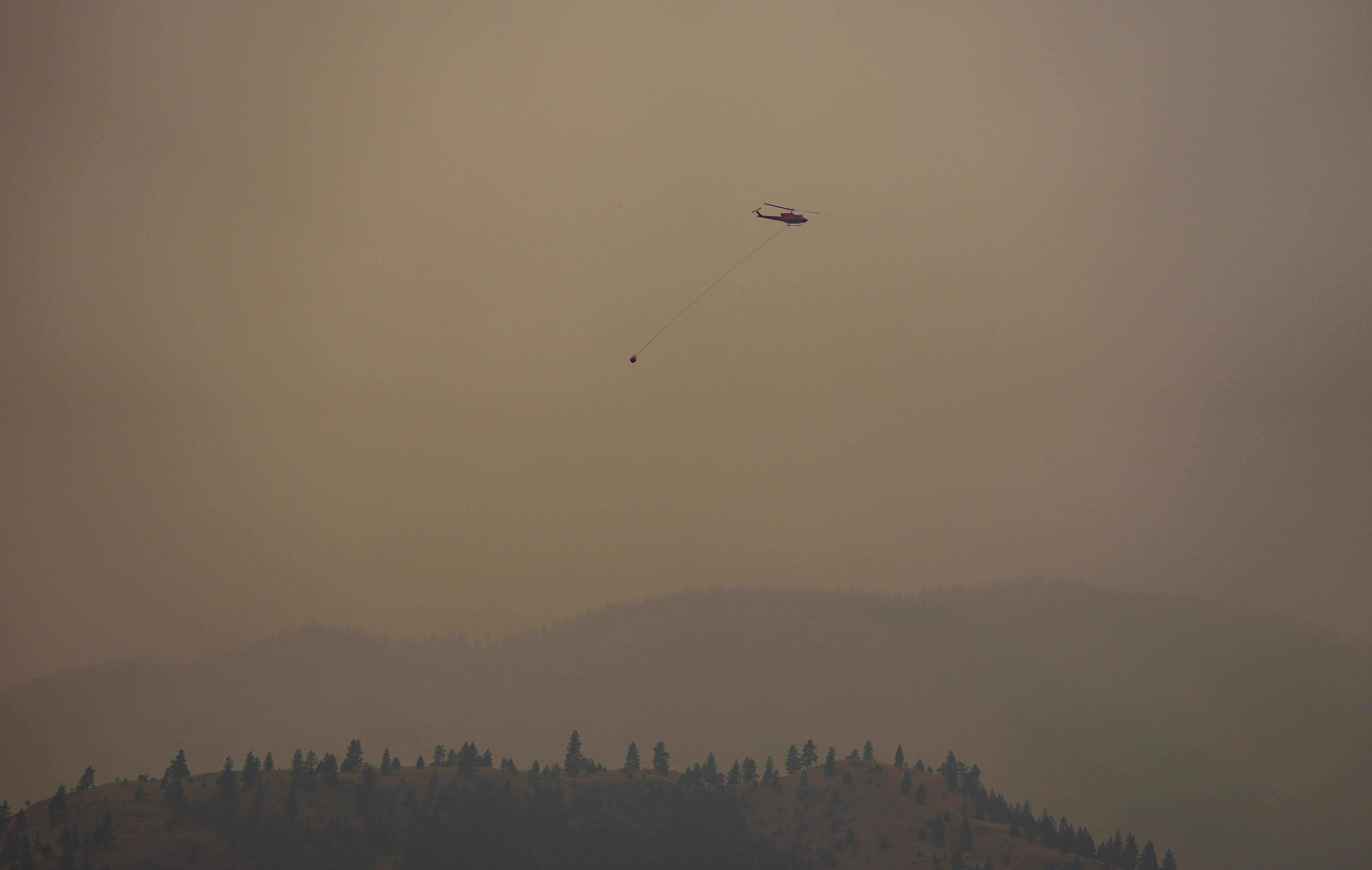
Emergency media briefings function as critical informational nodes during high-consequence natural disasters, yet the mechanics of how information flows from incident command to the public are frequently misunderstood. When municipal authorities, provincial fire agencies, and law enforcement agencies host joint press conferences regarding events such as the Summerland wildfires, the objective is twofold: reducing cognitive load on civilian populations through centralized updates and maintaining operational security.
Understanding the structural anatomy of these briefings requires dissecting the distinct operational mandates of the participating bodies. The BC Wildfire Service operates on predictive modeling, behavior forecasting, and suppression tactics. The Royal Canadian Mounted Police manages public safety, perimeter security, and mandatory evacuation enforcement. Municipal officials oversee local infrastructure, municipal water supplies, and civilian welfare centers. When these three entities synchronize their messaging, they are attempting to solve a complex multi-variable coordination problem under conditions of extreme uncertainty.
The Information Architecture of Crisis Briefings
Crisis communication follows a strict hierarchy of urgency and utility. The opening minutes of an emergency briefing are designed to establish situational baseline parameters rather than tactical nuance.
- Geospatial Boundaries: Defining the active perimeter of the fire front using geographic markers rather than broad regional names.
- Life Safety Status: Immediate declaration of evacuation orders, alerts, and verified casualty or structural loss metrics.
- Resource Deployment: High-level overview of aerial and ground assets currently engaged in suppression activities.
Public confusion during wildfire events typically stems from a mismatch between civilian demand for absolute certainty and the probabilistic nature of fire behavior. Fire spread is governed by a volatile convergence of topography, fuel loading, and meteorological variables such as wind speed, relative humidity, and atmospheric instability. Because these variables fluctuate rapidly, information provided by municipal and provincial officials has a limited shelf life.
Operating procedures dictate that incident commanders must balance transparency with the risk of creating panic or inducing gridlock on evacuation corridors. When municipal leaders urge residents to remain calm while issuing evacuation alerts, they are managing human behavioral response functions to prevent infrastructure failure. Road networks possess finite carrying capacities; an uncoordinated mass exodus can paralyze regional transit routes, trapping populations within active hazard zones.
Inter-Agency Friction Points
The institutional coordination required between provincial forestry ministries and municipal councils introduces inherent systemic friction. The provincial wildfire service maintains technical expertise in forest fuels and suppression strategy, but local governments hold intimate knowledge of municipal assets, vulnerable demographic groups, and local road networks.
Bridging this gap demands standardized communication protocols. However, real-time pressures often expose operational silos. Municipalities may lack direct real-time data feeds regarding fire perimeter shifts, leading to lag times between tactical containment changes on the ground and public notifications issued by civic leaders.
Law enforcement faces a distinct operational challenge regarding perimeter control. Evacuation orders require absolute enforcement mechanisms to prevent looting and unauthorized re-entry, which diverts tactical resources away from active life-safety operations. The RCMP's dual mandate during these briefings is to communicate both the legal necessity of compliance and the spatial constraints of restricted zones.
The Economics of Wildfire Suppression and Public Communication
Resource allocation during a major wildfire incident is governed by triage economics. Aerial assets, specialized hotshot crews, and heavy machinery are finite resources subject to regional prioritization based on asset protection value and human life preservation priorities.
Media briefings serve as the primary accountability mechanism for how these resources are distributed across competing geographical zones. When local officials face public scrutiny regarding perceived delays in asset deployment, the explanation is rooted in risk-weighted prioritization models. A wildfire threatening a high-density urban interface will inherently outrank remote timberland in resource allocation algorithms, regardless of local economic or emotional value placed on rural parcels.
Public messaging must explicitly clarify these trade-offs without inducing secondary crises of confidence. When communication fails, it is rarely due to a lack of data; rather, it results from poor structural translation of technical suppression metrics into actionable civilian behavior.
Resource Allocation and Evacuation Logistics
The operational success of an evacuation depends entirely on the timing of the alert phase relative to fire velocity calculations. Fire progression models use the Canadian Forest Fire Weather Index System to estimate rates of spread, yet unexpected wind shifts can render these models obsolete within minutes.
Evacuation orders must therefore be viewed not as confirmation of immediate destruction, but as risk mitigation thresholds based on projected arrival times of the fire front. Municipalities utilize tiered warning systems to provide a buffer for populations requiring specialized evacuation assistance, such as hospital patients, mobility-impaired residents, and large livestock owners.
The integration of these logistical challenges into joint media updates provides the public with the necessary context to comply with directives. When citizens understand that an evacuation order is a calculated mathematical boundary designed to keep transport corridors clear for emergency vehicles rather than an arbitrary command, compliance rates increase significantly.
Strategic Operational Outlook
The frequency and intensity of wildland-urban interface fires necessitate a shift in how municipal and provincial briefings are structured. Future response frameworks must move away from reactive, post-incident press conferences toward continuous, data-transparent digital dashboards that supplement verbal updates with real-time geospatial telemetry.
Until real-time telemetry replaces legacy briefing formats, emergency communication will remain dependent on the synchronization of municipal logistics, law enforcement perimeter control, and provincial wildfire suppression data. The primary variable determining the success of any emergency response remains the speed and accuracy with which complex technical risk parameters are translated into unambiguous, actionable public directives.