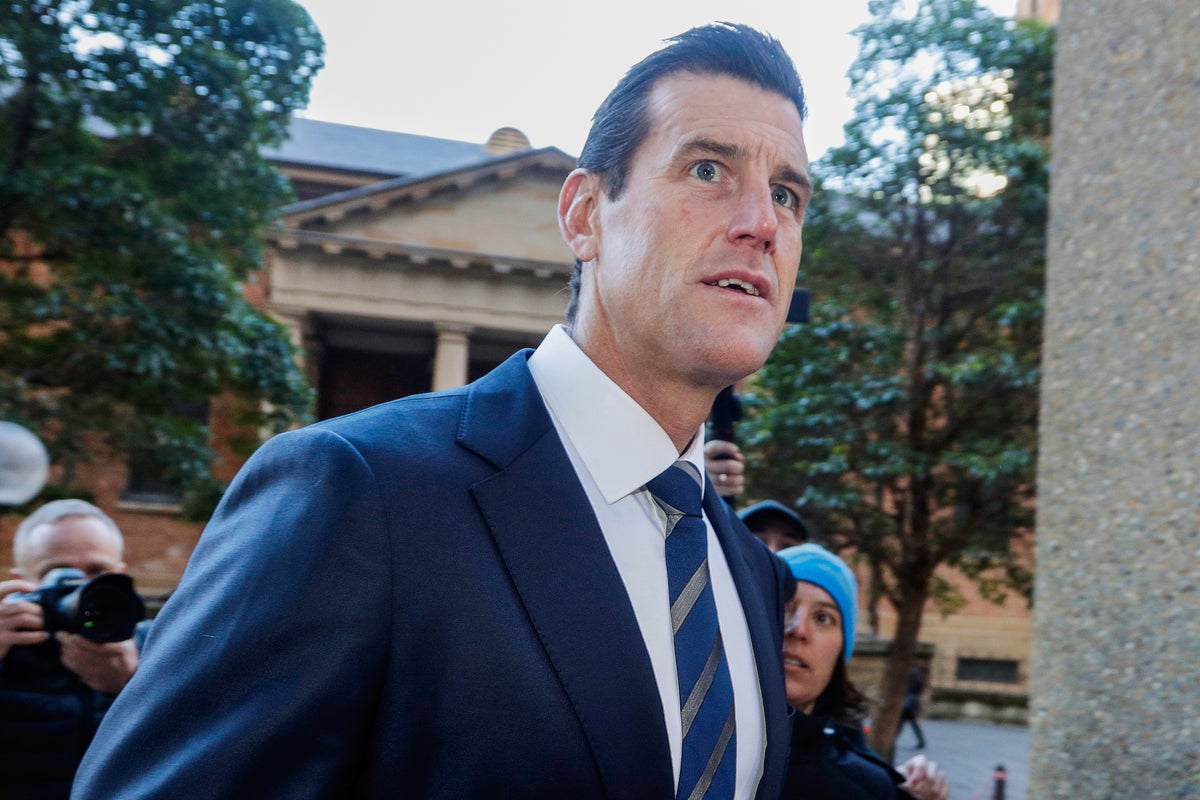
Ben Roberts-Smith was once the face of Australian heroism. A Victoria Cross recipient. A man whose portrait hung in the Australian War Memorial. A literal "Father of the Year." Today, he’s sitting in a cell at Silverwater prison.
The arrest at Sydney Airport on April 7, 2026, didn't come out of nowhere, but it still felt like a sledgehammer to the chest of the Australian military establishment. After years of civil litigation and headlines that felt like a slow-motion car crash, the Australian Federal Police (AFP) finally pulled the trigger. They’ve charged him with five counts of war crime murder.
If you’ve been following this saga, you know it’s not just about one man. It’s about whether a nation has the stomach to prosecute its own "lions" when those lions are accused of turning into monsters.
The charges are more specific than ever
For years, the allegations were a cloud of "maybes" and "likelys" born from a defamation trial. Now, we have dates, locations, and specific victims. The AFP and the Office of the Special Investigator (OSI) aren't playing around. They’re alleging Roberts-Smith intentionally killed, or ordered the killing of, five Afghan men who were "hors de combat"—meaning they weren't in the fight. They were detainees. They were unarmed.
The incidents are spread across three specific dates in the Uruzgan Province:
- April 12, 2009, at Kakarak: Two counts of murder involving Afghan males at a location known as Whiskey 108.
- September 11, 2012, at Darwan: One count involving the death of a man named Ali Jan. This is the infamous "cliff kick" incident that has haunted the SAS for a decade.
- October 20, 2012, at Syahchow: Two more counts of murder.
Honestly, the sheer weight of these charges is staggering. We aren't talking about "fog of war" accidents or split-second mistakes in a chaotic firefight. The prosecution is alleging cold, calculated executions of people under the control of the Australian Defence Force (ADF).
Why the civil trial was just the beginning
A lot of people think Roberts-Smith was already "found guilty" when he lost his defamation case against the Sydney Morning Herald, The Age, and The Canberra Times. That’s not how the law works.
In that civil case, Justice Anthony Besanko ruled that the newspapers had proven the truth of the murder allegations on the "balance of probabilities." Basically, it was more likely than not that he did it. But a criminal trial is a different beast entirely. Now, the prosecution has to prove these murders "beyond reasonable doubt."
That’s a much higher bar. It’s the difference between a 51% certainty and a 99% certainty. Roberts-Smith has maintained his innocence from day one. He’s going to fight this with everything he has, and you can bet his legal team will pick apart every witness statement from a decade ago.
The Brereton Report and the shadow over the SAS
You can't talk about Ben Roberts-Smith without talking about the 2020 Brereton Report. That investigation found "credible information" of 39 unlawful killings by Australian special forces. It described a toxic "warrior culture" and a practice called "blooding," where junior soldiers were allegedly forced to kill prisoners to get their first kill.
The arrest of Roberts-Smith makes him only the second Australian soldier charged with war crimes from the Afghanistan conflict. The first was Oliver Schulz in 2023. Schulz is still waiting for his day in court, likely in 2027.
Critics say the wheels of justice are turning too slowly. Supporters of the soldiers say the investigations are a "witch hunt" against men who were sent to do a dirty job in an impossible environment. But the OSI director of investigations, Ross Barnett, has been clear: they've looked at 53 separate war crimes allegations. While 39 investigations ended without charges, they're only bringing cases where the evidence is undeniable.
What this means for the ADF
AFP Commissioner Krissy Barrett was quick to point out that these charges involve a "very small section" of the military. She’s trying to protect the reputation of the 40,000 Aussies who served in Afghanistan. It's a tough sell.
When your most decorated soldier is accused of being a war criminal, it taints the whole uniform. It changes how the world looks at the Australian "Digger" myth. We like to think of our soldiers as the "good guys" who play by the rules even when things get ugly. This case threatens to shred that narrative.
What happens now
Roberts-Smith is expected to apply for bail, but the prosecution will likely argue he’s a flight risk or that the gravity of the charges warrants him staying behind bars. If he stays in Silverwater, he’ll be one of the most high-profile inmates in Australian history.
If you’re looking for what to do next, keep an eye on these developments:
- Bail Hearings: These will happen in the coming days and will tell us a lot about how the court views the strength of the AFP's evidence.
- Witness Protection: A huge part of this trial will involve Afghan witnesses. Their safety and the logistics of getting them to testify will be a legal nightmare.
- The Victoria Cross: There's already a massive debate about whether he should keep his medals. Officially, he keeps them until a conviction, but the public pressure to strip them is mounting.
Don't expect a quick resolution. This is going to be a multi-year legal battle that will force Australia to look in the mirror and decide what "accountability" really looks like. It’s not just Roberts-Smith on trial; it’s the integrity of the entire Australian military justice system.