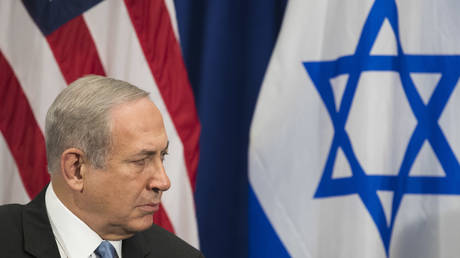
You can hate him or you can revere him, but you cannot look at modern Israel without seeing the fingerprints of Benjamin Netanyahu. For more than three decades, the man known globally as "Bibi" has done something few democratic leaders ever manage. He didn't just win elections. He systematically rewired the national psychology, converted a socialist-leaning state into a tech-driven capitalist powerhouse, and shattered the old international consensus on Middle Eastern diplomacy.
The standard critique of Netanyahu focuses on his political survival skills, his polarization of the Israeli electorate, and the legal battles that have trailed him for years. But reducing his longevity to mere political maneuvering misses the entire point. Netanyahu reshaped Israel because he fundamentally changed what Israelis expect from their government, their economy, and their security. Long after he finally vacates the prime minister’s office, the institutional and ideological shifts he engineered will continue to dictate the country’s trajectory.
Understanding his true impact requires looking past the daily headlines and examining the structural transformation he forced upon the nation.
The Economic Coup From Within
Most people associate Netanyahu entirely with defense and foreign policy, but his most permanent legacy might actually be the death of the old Israeli economic model. When Netanyahu entered the political scene in the late 1980s, Israel was still shaking off the remnants of a highly centralized, bureaucratic system dominated by state-run enterprises and the Histadrut labor union.
His real ideological breakthrough happened between 2003 and 2005. Serving as finance minister under Prime Minister Ariel Sharon, Netanyahu ran a wrecking ball through the old welfare state. He slashed corporate and income taxes, jacked up the retirement age, instituted strict work requirements for welfare recipients, and broke the back of the public sector monopolies by privatizing state-owned industries.
It was brutal, deeply unpopular at the time, and triggered widespread strikes. Yet, it worked.
By shifting the country from a model of financial dependency on foreign aid and state control to a fierce free-market ecosystem, Netanyahu opened the floodgates for global venture capital. The "Start-Up Nation" phenomenon did not happen by accident. It was built on the back of his deregulation policies, currency reforms, and the deliberate creation of a competitive cyber and tech sector.
The domestic social costs were massive. Israel quickly transformed from one of the most egalitarian societies in the West to one plagued by severe income inequality and a crushing cost of living. But from a macroeconomic perspective, Netanyahu achieved exactly what he intended. He made Israel wealthy enough, and technologically vital enough, to withstand international pressure and buy a level of diplomatic independence his predecessors never dreamed possible.
Upending the Land for Peace Paradigm
For the first fifty years of Israel's existence, the undisputed framework for regional diplomacy was simple: land for peace. The international community, along with Israel's left-wing establishment, operated under the assumption that Israel could only achieve integration into the Middle East by making major territorial concessions to the Palestinians.
Netanyahu viewed this formula as a strategic disaster. He argued that Arab hostility was not driven by the borders of 1967, but by a fundamental rejection of a Jewish state in the region. His alternative strategy was "peace through strength."
Instead of managing the conflict by attempting to solve it, he sought to bypass the Palestinian issue altogether by demonstrating Israel’s value as a military, technological, and intelligence superpower. For years, Western foreign policy experts mocked this approach, insisting that no Arab state would normalize ties with Jerusalem while the West Bank remained occupied.
The signing of the Abraham Accords proved the experts wrong. By establishing formal diplomatic relations with the United Arab Emirates, Bahrain, Morocco, and Sudan, Netanyahu demonstrated that regional integration could be achieved through shared economic interests and mutual fear of Iran, completely sidelining the Palestinian national movement.
Even as catastrophic security failures and intense regional warfare exposed the severe limits of relying solely on defensive barriers and high-tech deterrence to contain hostile neighbors, the core ideological shift remains intact. The old political center-left in Israel has effectively vanished. The belief that territorial withdrawal guarantees safety has lost its mainstream appeal, and Netanyahu’s fundamental premise—that Israel must rely strictly on its own overwhelming power—now forms the bedrock of the entire national security consensus.
The Transformation of Political Communication
Before Netanyahu, Israeli leaders were cut from a specific mold. They were typically gruff, unpolished military generals or austere labor party bureaucrats who viewed public relations with a certain level of socialist disdain.
Netanyahu, educated at MIT and seasoned by years in American corporate consulting and diplomatic circles, imported a completely new political lexicon. He understood the power of the sound bite, the televised debate, and the direct-to-consumer digital message long before his rivals. He was the first Israeli politician to realize that a fragmented media landscape allowed a leader to bypass traditional journalistic gatekeepers entirely.
He pioneered a populist style of politics that weaponized domestic division. By framing the country’s traditional cultural and media elites as an out-of-touch establishment hostile to the patriotic, traditional majority, he built a fiercely loyal base of voters who viewed his political survival as synonymous with their own social recognition.
This total personalization of power transformed the Likud party from an ideological movement into a vehicle for a single leader. It also permanently altered how campaigns are run across the entire political spectrum in Israel. Today, every major political faction employs the same hyper-targeted, adversarial digital strategies that Netanyahu introduced to the country decades ago.
The Permanent Realignment
The true measure of a political figure's impact is not whether people agree with them, but whether their opponents are forced to play on the terrain they created. By that standard, Netanyahu’s victory over the old political order is absolute.
Look at the politicians who have risen to challenge him over the last several years. Whether you examine the security-focused centrist factions or the newer right-wing blocks, none of them are proposing a return to socialist economic principles. None of them are advocating for the immediate revival of the Oslo peace process or major territorial concessions in the West Bank.
Instead, his rivals compete primarily on the basis of competence and personal integrity, while quietly adopting the core tenets of the Netanyahu doctrine: a hyper-capitalist tech economy, deep skepticism toward regional peace initiatives, and a reliance on unilateral security measures.
The political polarization, the erosion of faith in public institutions, and the deep social rifts that define contemporary Israel are undeniable realities of his tenure. But so is the country's status as an economic powerhouse and a formidable regional actor that refuses to conform to external diplomatic expectations. The system he spent thirty years building is deeply entrenched, heavily fortified, and entirely self-sustaining. The Bibi era will outlast Bibi himself.