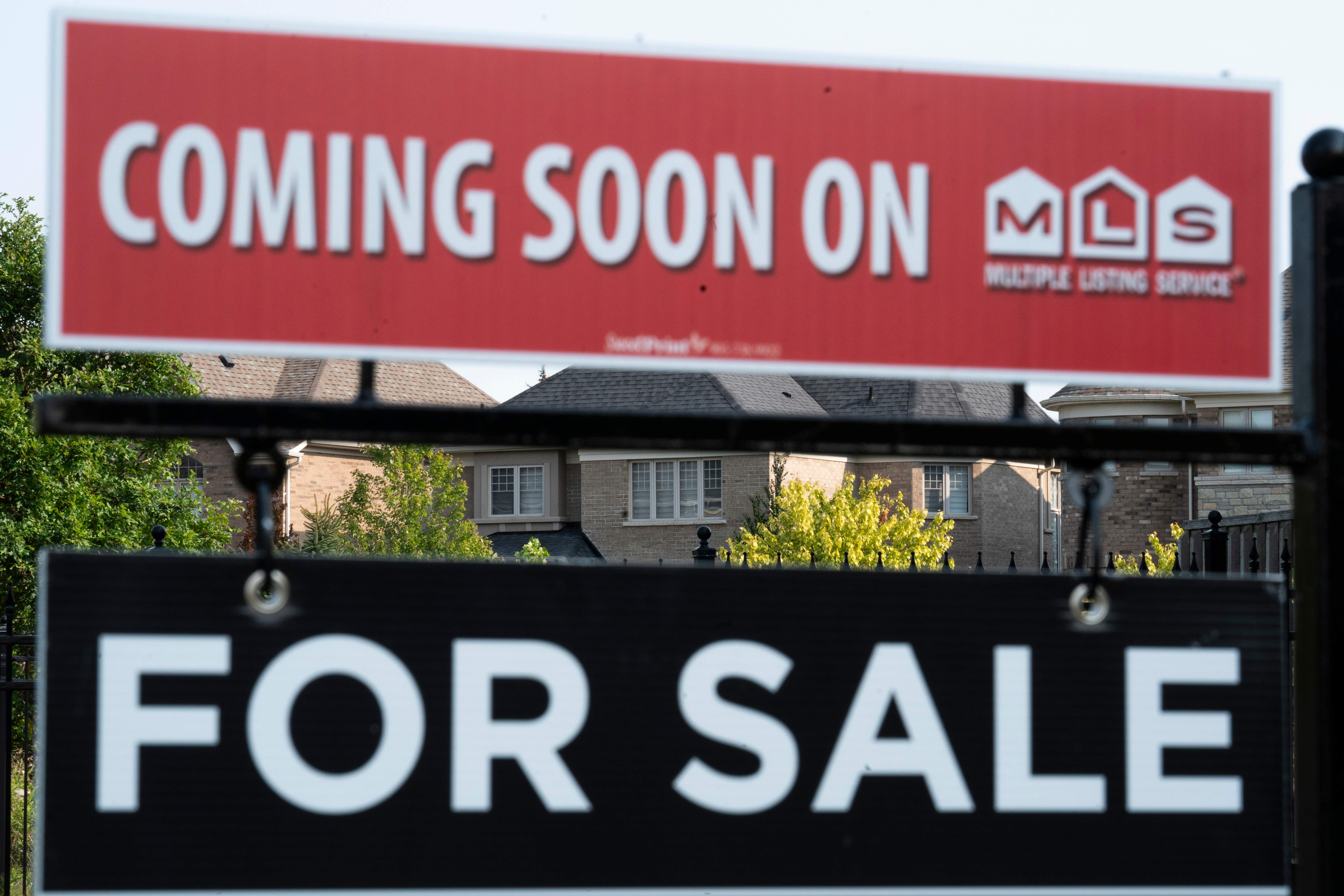
The air inside a half-finished house smells like sawdust, fresh concrete, and desperation. It is a scent every Canadian knows, even if they have never stepped foot on a construction site. It is the smell of the "missing middle," of the young couple standing on a gravel lot in a suburb of Ottawa or Calgary, staring at a wooden skeleton that they can’t quite afford to call home.
For years, the math of the Canadian dream has been failing. We talk about housing starts and interest rates as if they are abstract dials on a machine. They aren't. They are the difference between a child having their own bedroom or sharing a pull-out couch in a basement suite.
Federal Housing Minister Sean Fraser recently signaled a shift in the wind. The federal government is currently in talks with every province and territory to do something that once seemed politically impossible: scrap the provincial portion of the Harmonized Sales Tax (HST) or Goods and Services Tax (GST) on new purpose-built rental housing and, potentially, new homes.
It sounds like a dry administrative tweak. It isn't. It’s a desperate attempt to lower the fever of a nation.
The Tax on a Roof
Consider Sarah and Marcus. They are hypothetical, but their bank account balance is very real. They have saved for six years. They have skipped vacations. They have watched their friends move into condos while they stayed in a one-bedroom apartment that feels smaller every month. When they look at a new build priced at $600,000, they aren't just looking at the cost of lumber and labor. They are looking at a mountain of taxes baked into the foundation.
In many parts of Canada, the tax burden on a new home can account for more than 20 percent of the total price. Before a single nail is driven, the government has already taken its cut. This includes development charges, permit fees, and the ever-present GST. When the federal government announced it would waive its five percent share of the GST on new rental builds last year, it was a spark. Now, Ottawa wants the provinces to pour gasoline on that fire by matching the cut.
The logic is brutal and simple. If you make it five to ten percent cheaper to build, builders will actually start building. Right now, many projects are "underwater." That’s the industry term for a dream that doesn't pay the bills. If a developer can’t make the numbers work, the cranes stay still. The gravel lots remain gravel.
A Patchwork of Permission
The problem with a country as vast as ours is that we are not one economy; we are thirteen different jurisdictions with thirteen different ways of saying "maybe."
Fraser’s mission is to turn those maybes into a synchronized "yes." Ontario and British Columbia have already jumped on board, realizing that their housing crises have moved past the point of polite conversation and into the territory of social emergency. But the remaining provinces are a mixed bag of enthusiasm and skepticism. Some worry about the hole this will leave in their own budgets. It’s a classic standoff: do you take the tax revenue now from a handful of expensive homes, or do you forgo the tax to ensure ten times as many homes actually get built?
History tells us that we have been here before. In the post-war era, Canada didn't just "encourage" housing. We built it with a ferocity that bordered on obsession. We understood then what we seem to have forgotten now: a stable society is built on a foundation of stable addresses. You cannot have a productive workforce if that workforce is spending 50 percent of its take-home pay on a landlord’s mortgage.
The Invisible Stakes
When the GST is removed from a project, the result isn't just a line item change on a balance sheet. It changes the physics of a city.
Imagine a developer looking at a plot of land meant for an eighty-unit apartment building. Under the old tax regime, the profit margin is so slim that a two percent rise in the price of copper piping kills the project. The developer walks away. Those eighty units never exist. Eighty families stay in the bidding wars for older, crumbling houses, driving those prices up even further.
By stripping away the tax, that project suddenly becomes "viable." The shovels hit the dirt. The eighty units are built. The pressure on the local market eases just a fraction. Multiply that by every city in the country, and you start to see the shape of a solution.
But there is a catch. There is always a catch.
Critics argue that there is no guarantee these savings will be passed down to Sarah and Marcus. They fear that developers will simply pocket the tax break as extra profit. It’s a valid fear. Trust in the housing market is at an all-time low. We have been told for a decade that help is on the way, only to see prices climb another rung on a ladder that is already in the clouds.
The federal government’s counter-argument is one of supply and demand. If the tax break triggers a massive wave of construction, the sheer volume of new units will force prices to stabilize. It’s a gamble on the scale of a generation.
The Weight of the Maples
Walking through a neighborhood of "wartime houses"—those sturdy, small, square homes built in the 1940s—you see a different Canada. You see a time when the government realized that the market alone couldn't solve a crisis of this magnitude. Those houses weren't masterpieces of architecture, but they were masterpieces of policy. They provided the floor upon which the middle class was built.
Today, we are trying to find that same spirit in the fine print of tax treaties. It is less romantic than a hammer and a saw, but in 2026, the tax code is the most powerful tool we have.
The talks between Ottawa and the provinces are about more than just percentages. They are about whether we still believe Canada is a place where you can start with nothing and eventually own the ground you stand on. If these talks fail, we aren't just losing a tax break. We are losing the social contract.
The Quiet Room
Behind the closed doors where these negotiations happen, the talk is of "fiscal frameworks" and "intergovernmental transfers." It is bloodless language.
Outside those doors, the world is loud. It is the sound of a moving truck idling in a driveway. It is the sound of a parent telling their adult child that they are welcome to stay in their childhood bedroom for another year because the rent in the city is "just too much right now."
We have spent twenty years treating housing like a luxury investment and twenty minutes realizing it’s a human necessity. The push to cut the GST across the board is an admission of guilt. It is the government admitting that it has been a partner in the soaring costs, taking its cut while the fire spread.
Removing that tax is a way of the state stepping back, of saying that the roof over your head is more important than the revenue in the vault.
As the sun sets over a thousand silent construction sites across the provinces, the stakes couldn't be clearer. We are waiting for the sound of hammers to return. We are waiting to see if a country can still build a future for the people who actually live in it, or if we are destined to remain a nation of renters, staring at blueprints we will never be allowed to touch.
The gravel lot is still there. The sawdust is still settling. The only thing missing is the permission to begin.