A standard shipping container is forty feet long, eight feet wide, and dark as a grave inside. When it sits on a cold dock at the Port of Vancouver, it looks entirely unremarkable. It is just one block in a mountain of steel lego bricks arriving from across the Pacific.
But inside one of these specific containers, intercepted not long ago, sat thousands of bundles of fast-fashion textiles. If you pressed your face against the fabric, it smelled of industrial dyes and ocean salt. To the naked eye, the garments were clean. To the database of the Canada Border Services Agency, they carried a different scent entirely: the invisible, indelible stain of human exploitation.
That single shipment was one of only two turned away by Canadian border officials over a multi-year period for violating forced labor prohibitions. Two. Out of hundreds of thousands of containers entering the country.
Now, consider a different room. A room in Washington, D.C., where trade analysts calculate numbers with the cold precision of an actuary. To the United States Trade Representative, that number—two—is not just a statistical footnote. It is a smoking gun. It is the catalyst for a sudden, aggressive geopolitical maneuver that has left Ottawa scrambling and American importers bracing for impact.
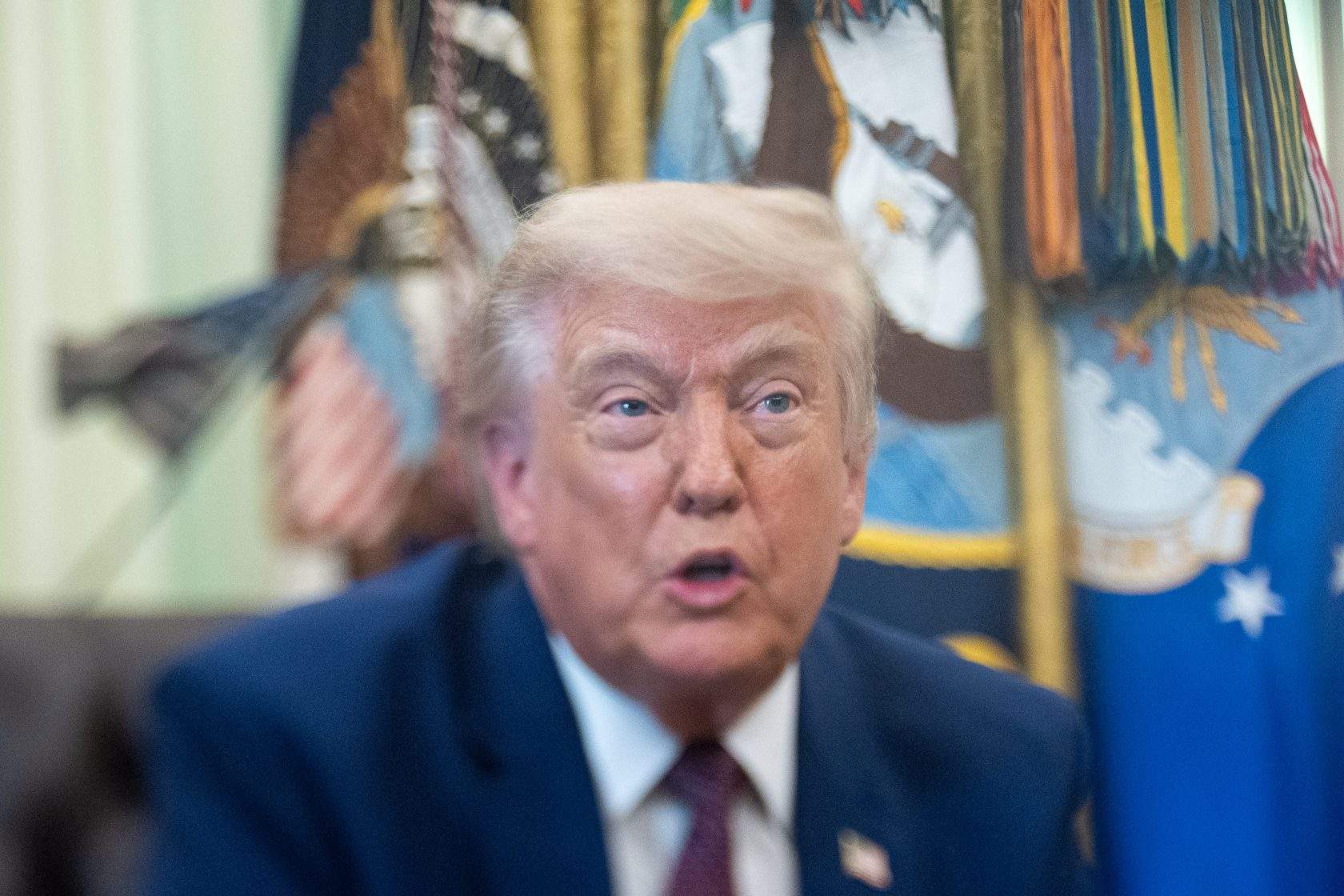
The White House has moved to hit Canada, along with fifteen other major trading partners, with a 10 percent tariff. The justification? A scathing, hundred-page report alleging that America’s closest neighbors are failing to police their own supply chains, effectively letting products born from modern slavery slide across their borders and enter the global bloodstream.
It is a dizzying escalation, but to understand how we got here, you have to look past the political theater and examine the structural cracks in the floorboards of global commerce.
The Paper Fortress
Canada does not view itself as a haven for illicit trade. In Ottawa, the prevailing belief was that the country had built a sophisticated defense against unethical imports. In 2023, Parliament passed comprehensive supply chain legislation designed to force Canadian corporations to pull back the curtain on their suppliers.
The law required companies to file detailed annual reports proving they were actively rooting out child and forced labor. On paper, it looked masterful. Bureaucrats celebrated. Corporate legal teams updated their compliance handbooks.
But compliance is not enforcement.
Consider the reality of how these laws function on the ground. A corporate compliance officer sits at a desk in Toronto, checking boxes on a digital form. They look at a declaration from a third-party supplier in Southeast Asia or East Asia. The document says the workers are treated fairly. The box is checked. The report is submitted to the federal government.
Advocates and trade experts quickly pointed out the flaw in this system. The legislation created a massive influx of corporate paperwork, but it gave authorities very little bite. The government could issue fines for failing to file the paperwork, but it rarely used its teeth to audit private corporate records or seize suspicious shipments at the border.
Between 2020 and 2026, Canadian border officials flagged just fifty shipments on suspicion of being produced by forced labor. Only two were actually stopped and turned back—the textile shipment and another containing frozen seafood.
To the critics, Canada had built a fortress made entirely of paper.
When the Trump administration’s Trade Representative, Jamieson Greer, looked across the border, he didn’t see a partner fighting human rights abuses. He saw an unlevel playing field. The American argument is simple: if Canadian border agents let cheap, unethically produced goods slip into North American supply chains, American workers are forced to compete with the economic ghost of slave labor.
The Rebound Effect
Yet, the timing of this moral outrage invites a deeper skepticism. This tariff announcement did not emerge from a vacuum of pure altruism. It is part of a complex, high-stakes game of legal chess currently playing out in Washington.
Earlier this year, the U.S. Supreme Court delivered a massive blow to the White House's economic strategy. The justices ruled that the administration had overstepped its legal boundaries by using the International Emergency Economic Powers Act to levy sweeping, double-digit global tariffs. The legal wall Trump had built to protect domestic manufacturing was abruptly dismantled by his own country’s highest court, leaving billions of dollars in tariff revenues exposed to corporate refunds.
A presidency built on economic protectionism suddenly found itself weaponless.
But Washington is nothing if not resilient when it comes to trade maneuvers. Blocked by the Supreme Court on one front, the administration turned to an older, highly resilient piece of legislation: Section 301 of the Trade Act of 1974. This specific law allows the U.S. to penalize countries engaging in "unreasonable" or "discriminatory" trade practices that burden American commerce.
To use Section 301, however, you need a specific grievance. You need an investigation.
The administration launched a lightning-fast probe into global forced labor practices, moving at twice the speed of a typical trade investigation. The resulting report became the perfect legal architecture to rebuild the tariff wall. By framing the new 10 percent duties around the eradication of modern slavery, the administration found a legal loophole that could withstand court challenges while achieving its broader economic goals.
For political figures in Canada, the sudden focus on human rights feels less like a moral awakening and more like a tactical ambush. They argue that forced labor is being used as a convenient pretext—a bargaining chip designed to soften Canada up before the high-stakes renegotiation of the continental free trade pact, CUSMA.
The Friction at the Counter
While politicians debate the ethics of trade laws, the immediate anxiety travels downward to the people who actually move the world’s goods.
Imagine a logistics manager at an import firm in Michigan. Her job is to ensure that components arrive from a Canadian supplier on time, every day, to keep an assembly line moving. Suddenly, she faces a reality where a standard shipment could be flagged, delayed, or slapped with an unexpected 10 percent tax at the border because a federal agency deems the broader supply chain suspect.
The administration, acutely aware that American consumers are deeply fatigued by inflation, tried to cushion the blow. The proposed tariff plan contains a sprawling, 76-page index of exemptions. Crude oil, rare earth metals, beef, and pharmaceuticals will not be touched. Furthermore, any goods that fully comply with the existing CUSMA rules are shielded from the levies.
Prime Minister Mark Carney noted this exemption quickly, reassuring the public that Canada’s core trade privileges remain intact. "That puts us in a position where, again, we would still have the best trade deal of any of the U.S. trade counterparts," Carney stated, signaling that the economic damage might be contained.
But the psychological damage is already done. The international business community is waking up to a chilling new paradigm. If the United States uses forced labor compliance as a geopolitical bludgeon, the burden of proof shifts entirely to the private sector.
Any competitor can make a claim. Any shipment can be impounded on a dock. A company must then spend weeks proving a negative—proving that a crop harvested in a distant country, or a thread spun in a foreign mill, was touched only by voluntary, fairly compensated hands.
The True Cost of Certainty
Back in Ottawa, the government has realized that passive defense is no longer an option. Rhetoric must match reality. Prime Minister Carney announced that his government will fast-track new, more aggressive legislation to crack down on illicit supply chains, effectively trying to match the American enforcement standard before the public hearings begin in July.
It is a race against time, a scramble to patch a vulnerability that Canada didn't realize was a target until the arrows were already mid-flight.
The tragedy of the entire situation is that beneath the layers of political cynicism, legal maneuvering, and corporate panic, the underlying problem is devastatingly real. The International Labour Organization estimates that nearly 28 million people worldwide are trapped in forced labor. They harvest the tobacco in Malawi, mine the polysilicon in China, and catch the seafood in the Pacific that eventually winds up in North American stores.
They are the ghosts in our machines, the invisible hands that make modern consumer pricing possible.
We have become accustomed to cheap goods, smooth logistics, and borders that function like toll booths rather than barriers. We want our coffee cheap, our clothes trendy, and our supply chains silent. But the global trading system is no longer allowing for that silence.
Whether this tariff is a sincere attempt to rescue millions from exploitation or merely a clever legal backdoor to protect domestic markets, it has exposed a fundamental truth about how the modern world is built. Every consumer choice carries a hidden lineage. Every shipping container holds a story. And right now, the cost of proving that story is clean is about to become much, much more expensive.


