The suitcase was still open on the bed.
It held a winter coat for a climate that suddenly felt impossibly far away, a framed photograph of a family that had spent four years sacrificing their savings for tuition, and a pair of graduation shoes that would never walk across a stage. For a different perspective, check out: this related article.
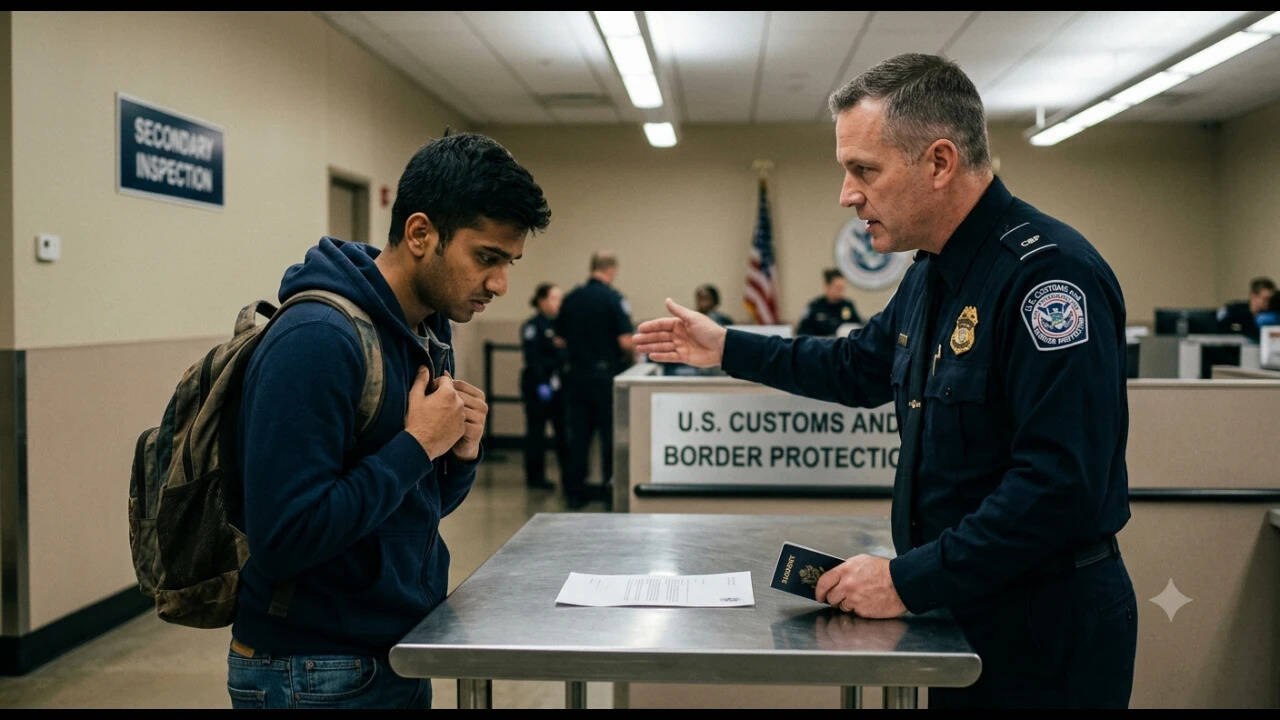
Months. Just a few short months stood between an Indian student and a degree that represented thousands of hours in lecture halls, libraries lit only by fluorescent hums, and late-night study sessions fueled by cold coffee. Then came the terminal screen, the fluorescent glare of a customs desk, and a question that sounds routine until it ends a life:
Unlock your phone. Similar analysis on this trend has been published by The Washington Post.
We treat our devices like digital diaries, holding our private jokes, our text message debates about literature, our late-night searches for homesick remedies, and our casual venting sessions about the stress of midterms. We forget that the glass rectangle in our palm is not just an extension of our thoughts. It is a border checkpoint. And for international students stepping off a flight into the United States, that checkpoint has quietly expanded to swallow everything.
Consider what happens next. A viral post captures the aftermath, but the mechanics remain chillingly ordinary. Customs and Border Protection agents possess the legal authority to search electronic devices at ports of entry without a warrant. No probable cause is strictly required at the threshold. A student tired from a fourteen-hour flight hands over a device. An agent scrolls.
Maybe they find a joke taken out of context. Maybe they find an old text conversation where someone vented frustration about a roommate or a visa delay, tossing around clumsy phrasing that reads like a threat to an algorithm devoid of irony. Maybe they find nothing at all, but the refusal to unlock the device—an assertion of privacy that feels natural at home—brings the entire apparatus of entry crashing down.
Denial of entry. Immediate repatriation. Years of tuition, dreams, and institutional trust dissolved in the time it takes to power down a screen.
To understand why this stings so deeply, you have to remember what an academic visa is designed to be. It is an invitation. It is an explicit promise that a nation welcomes the brightest minds across oceans to study, collaborate, and build futures. Universities spend millions marketing this global exchange. They talk about diversity, international perspectives, and the cross-pollination of ideas.
Yet, at the literal gates of the country, a different reality waits.
The digital footprint of a twenty-two-year-old is messy. It is supposed to be. Youth is defined by testing boundaries, expressing angst, and communicating in a shorthand culture built on hyperbole. When an immigration officer with a quota and a checklist looks at that digital debris, they are not looking at a person. They are looking for risk. And risk is a lens that distorts everything it touches. A sarcastic comment about a stressful professor becomes a behavioral flag. A casual remark about working off-campus to make rent—even if never acted upon—becomes an immigration violation in waiting.
We have built a system where the punishment for entering a digital space without a pristine corporate mindset is exile.
Think back to the last time you sent a message you wouldn't want read aloud by a government official in a windowless room. Now imagine your entire academic career, your family's financial sacrifice, and your identity hanging on whether that official has a sense of humor that day.
The psychological toll is immediate and enduring. Students traveling home for the holidays now face a terrifying calculus. Do they delete their entire digital history before boarding a return flight? Do they wipe their phones clean, creating a suspicious void that might draw even greater scrutiny? Or do they simply stop traveling, trapping themselves within campus borders for years, missing weddings, funerals, and the comfort of home, all out of a quiet, creeping terror that a single chat bubble could end their American chapter?
This is not security. This is anxiety engineered into the infrastructure of migration.
When a student is sent back weeks before graduation, the loss extends far beyond one individual. It ruptures the lab group that depended on their research. It empties a seat in a capstone seminar. It sends a ripple of fear through every international student community across the country, whispering a stark warning: You are a guest, and your welcome can be revoked in the time it takes to swipe through a photo gallery.
The digital border does not care about your transcript. It does not care that you paid out-of-state tuition or that your professors predicted a brilliant career. It sees only the pixelated evidence of a human being living out loud, and it judges them by the coldest possible standard.
The suitcase on the bed remains unpacked. The winter coat goes back into the closet. Across an ocean, a phone screen lights up with a notification from a friend asking when the flight lands, unaware that the journey already ended before it ever truly began.