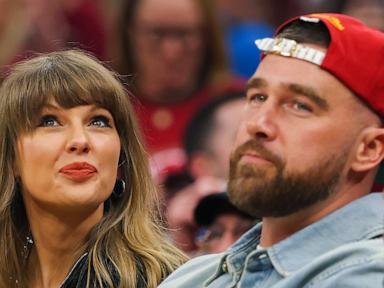
Madison Square Garden is preparing to host two massive events this week tied to the wedding of Taylor Swift and Travis Kelce, completely upending the heart of Manhattan. Law enforcement and entertainment industry sources confirm the venue has cleared its schedule to execute a logistical lockdown designed to shield a reported 1,100 guests from the public eye. A private rehearsal dinner will take place on Thursday for roughly 100 people, followed by a massive, 12-hour celebration on Friday that will run until 4 a.m. Saturday morning.
This is not a traditional wedding. It is a high-stakes corporate and municipal operation.
For decades, the world's most recognizable pop star and her NFL star fiancé have operated under intense public scrutiny. When the scale of an event reaches this magnitude, standard luxury wedding venues like historic estates or private islands become security liabilities. The shift to a subterranean sports arena in the middle of America's densest city reflects a calculated pivot toward complete operational control.
The Fortress Above Penn Station
Most couples look for picturesque backdrops, rolling hills, or historic architecture when planning their nuptials. Swift and Kelce chose a windowless, concrete entertainment bunker built directly on top of the busiest rail hub in the United States.
It is a brilliant counter-intuitive strategy.
While Rhode Island and other coastal enclaves offer beauty, they lack the structural fortification necessary to repel modern paparazzi tactics, drone surveillance, and thousands of gathering fans. Madison Square Garden is already built like a fortress. The arena routinely handles high-profile political events, championship sports, and international dignitaries, meaning its staff and physical layout are hardwired for extreme security containment.
Public records show the city issued strict permits for loading and unloading theatrical materials at the arena. Winick Productions, an elite production firm responsible for high-profile red carpet events like the Grammys and Tony Awards, secured permits to construct massive canopies and tents outside the venue.
These structures serve a singular purpose. They block all sightlines from the street and surrounding skyscrapers.
The physical layout of the Garden allows vehicles to drive directly into secure, underground loading bays. Guests can be transported in fleets of tinted buses directly into the belly of the building without ever exposing a single square inch of skin to the outside elements. It eliminates the vulnerability of the traditional red carpet arrival, rendering telephoto lenses useless.
The Strictest Non Disclosure Agreements in Entertainment History
Securing the perimeter is only half the battle when dealing with a guest list of over a thousand high-profile individuals. The real vulnerability in the modern media environment is the smartphone.
An electronic invitation protocol was deployed weeks ago. According to individuals close to the guest list, these digital invites were hard-coded to strict non-disclosure agreements that require signatures before access codes are even generated.
Inside the venue, a total phone ban will be enforced.
This policy applies universally to billionaire tech executives, pop royalty, NFL stars, catering staff, and local security guards. Specialized locking pouches will be used to seal all mobile devices upon entry. Anyone caught violating the policy faces immediate expulsion and severe financial penalties outlined in the pre-signed agreements.
The guest list reads like a corporate and cultural registry. Kansas City Chiefs teammates including Patrick and Brittany Mahomes will join Hollywood staples like Selena Gomez, Emma Stone, and Gigi Hadid. Legendary musicians Stevie Nicks and Tim McGraw are rumored to perform, alongside whispered appearances by Paul McCartney. Managing these egos requires an unyielding corporate structure, treating the wedding less like a celebration and more like a multi-million dollar corporate product launch.
A Municipal Security Nightmare
The timing of the event could not be more challenging for New York City management. The city is already bracing for an influx of international tourists arriving for early holiday weekend festivities, historic tall ship flotillas, and massive municipal fireworks displays.
New York City Mayor Zohran Mamdani recently acknowledged the convergence of these massive events. The city is forced to balance public safety with the private desires of two global icons.
The event company has obtained legal permits to completely shut down vehicular and pedestrian traffic on portions of West 31st Street and West 33rd Street. These arteries, which flank the arena, will remain frozen for the duration of the two-day event. While Seventh and Eighth Avenues will technically remain open, the resulting traffic gridlock is expected to ripple across Midtown Manhattan for days.
The New York Police Department will bear the brunt of the external chaos. While private security firms manage the hard boundary within the frozen zone, the NYPD must manage the inevitable crowd accumulation on the public perimeter. Fan pens and media staging areas will be constructed to keep thousands of spectators from blocking vital transit entrances to Penn Station below.
The Evolution from Rhode Island to Manhattan
The decision to move the festivities to Madison Square Garden was a late-stage tactical correction. Initial whispers within the industry pointed toward a celebration at Swift’s sprawling Watch Hill estate in Rhode Island.
That plan was scrapped.
When a massive staging tent appeared near the property earlier this summer, it triggered an immediate influx of paparazzi, drone pilots, and fans who swarmed the small coastal town. The lack of infrastructure to handle that level of public disruption made it clear that an open-air venue was entirely untenable.
The Garden provides an institutional scale that no private estate can match. It features an indoor banquet capacity designed to feed and entertain thousands of people simultaneously, backed by industrial kitchen facilities and world-class acoustics. The transition from a private beach house to a sports arena illustrates a broader trend among elite celebrities who must sacrifice traditional romance for logistical viability.
The Economics of a Private Arena Takeover
Renting Madison Square Garden for a multi-day private event is an astronomical financial undertaking that few individuals on earth could contemplate. The venue has no public events scheduled for an entire week, representing millions of dollars in deferred ticket and concession revenue for the Madison Square Garden Entertainment Corp.
The financial calculus extends far beyond the venue rental fee.
The cost of hiring an elite production company like Winick Productions, constructing custom internal staging, securing street closure permits, and employing hundreds of off-duty law enforcement officers runs into the tens of millions of dollars. For Swift and Kelce, this expense is not merely about luxury. It is an insurance policy against the commercialization of their private lives.
By funding a total operational lockdown, they retain absolute ownership over the imagery and narrative of their union. In a media environment where a single unauthorized photograph can command six figures, total containment is the only way to ensure the event remains theirs alone. The corporate architecture deployed at the Garden this week sets a new precedent for how global figures navigate major life events under the unrelenting glare of modern culture.