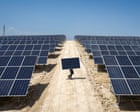
Turkey is currently attempting a high-stakes energy pivot that makes European Union bureaucracy look glacial. While Brussels debates taxonomy and subsidy frameworks, Ankara has quietly weaponized its regulatory environment to force a massive surge in battery energy storage systems (BESS). The goal is straightforward: survival. By tying renewable energy licenses directly to storage capacity, Turkey isn't just encouraging a green transition; it is demanding a total overhaul of its grid architecture to escape the crushing weight of imported gas costs.
The numbers tell a story of aggressive, almost desperate, expansion. The Turkish Energy Market Regulatory Authority (EMRA) has already received applications for storage-linked wind and solar projects exceeding 30 gigawatts. To put that in perspective, Turkey’s total installed power capacity is roughly 107 gigawatts. They are trying to bolt a massive, high-tech shock absorber onto a grid that was never designed for the volatile spikes of solar and wind.
This isn't about being "eco-friendly" in a performative sense. It is a cold calculation driven by the fact that Turkey imports nearly 99% of its natural gas and 93% of its oil. When global energy prices spiked in 2022, the Turkish economy buckled. Energy storage is now viewed as a matter of national security, a way to trap the wind from the Aegean and the sun from Anatolia before it escapes the wire.
The Regulatory Squeeze
Most nations try to entice developers with tax breaks. Turkey took a different route. They changed the rules of the game so that if you want to build a new wind or solar farm, you generally must include battery storage of an equivalent capacity. This "storage-linked" model has effectively created a captive market for battery manufacturers.
Developers are rushing in because these licenses offer a "pre-license" status that bypasses the usual years-long measurement requirements for wind and solar. It’s a shortcut. But shortcuts have a price. The capital expenditure (CAPEX) for these projects is significantly higher than a standard solar farm. Investors are betting that the price of lithium-ion cells will continue to drop fast enough to make the 10-year power purchase agreements (PPAs) profitable.
The strategy is working, at least on paper. While the EU struggles with "not in my backyard" (NIMBY) protests and permitting cycles that can last a decade, Turkey’s centralized decision-making has cleared the path. However, the technical reality of integrating this much storage remains a looming shadow.
Engineering a Modern Grid from Old Iron
The Turkish grid is a legacy beast. It was built for the steady, predictable hum of coal and gas plants. Batteries don't behave like spinning turbines. They provide "instantaneous" frequency response, which is great for stability, but they don't provide the mechanical inertia that keeps a grid from collapsing during a sudden fault.
Engineers at TEİAŞ (the state transmission company) are now tasked with managing a system where a significant portion of the "spinning reserve" is actually chemical. This requires a level of software sophistication that many domestic firms are still scrambling to develop. If the software fails to balance the load, the batteries become expensive bricks, or worse, they could trigger cascading failures across the high-voltage lines connecting Turkey to Bulgaria and Greece.
The Critical Raw Material Wall
Turkey’s ambition hits a literal wall when it comes to the supply chain. Despite having some of the world's largest boron reserves and decent nickel deposits, the country does not yet have a full-scale lithium-ion giga-factory ecosystem.
- Lithium Sourcing: Most cells are still coming from China. This replaces a dependence on Russian gas with a dependence on Chinese minerals.
- Local Content Requirements: To get the best feed-in tariffs, developers must use "Made in Turkey" components. This has led to a gold rush of joint ventures between Turkish conglomerates like Kontrolmatik or Pomega and international tech providers.
- The Fire Risk: As the density of these installations increases, the risk of thermal runaway—a self-heating fire that is nearly impossible to extinguish—becomes a massive insurance headache.
Why the EU is Falling Behind
The European Union's approach to battery storage is fragmented. Each member state has its own rules. Germany focuses on residential "behind-the-meter" storage, while Spain focuses on pumped hydro. The EU lacks a unified mandate that forces storage at the point of generation.
Turkey’s advantage is its lack of legacy baggage. It can experiment with its market structure in ways the EU cannot. By allowing storage operators to participate in the "balancing market"—where they get paid to quickly inject or absorb power to keep the grid at 50Hz—Ankara has created a genuine profit motive that doesn't rely solely on government handouts.
The EU’s "Green Deal" is bogged down in debates over green hydrogen versus batteries. Turkey has skipped the debate and gone straight to the hardware. They are betting that batteries are the "here and now" solution, while hydrogen remains a "ten years away" prospect.
The Financing Gap
Talk is cheap; lithium is expensive. While the license applications are in the tens of gigawatts, the actual "steel in the ground" is much lower. Foreign investors are cautious. High inflation and the volatile Lira make long-term infrastructure plays in Turkey a nerve-wracking prospect for Western banks.
Much of the initial wave is being funded by domestic balance sheets—massive holding companies with deep pockets and political alignment. To reach the 30GW target, Turkey will need to convince the World Bank, the EBRD, and private equity firms that the regulatory framework won't change overnight. The history of Turkish energy policy is littered with retroactive changes that have burned investors before.
The Looming Technical Debt
We must talk about the lifespan of these assets. A gas turbine can run for 40 years with proper maintenance. A lithium-iron-phosphate (LFP) battery bank starts degrading the moment it's commissioned. If these 30GW of projects are built over the next five years, Turkey will face a massive "re-powering" crisis in the mid-2030s when all these batteries reach their end-of-life simultaneously.
There is also the issue of the "missing money" problem. If everyone has a battery and everyone tries to sell power at the same high-price peak, the peak price collapses. This is known as "cannibalization." The first movers in the Turkish market will make a killing. The laggards who finish their projects in 2028 might find that the arbitrage opportunities have evaporated.
China’s Shadow Over the Anatolian Sun
It is impossible to discuss Turkey's battery race without mentioning Beijing. Chinese firms like BYD and CATL are looking at Turkey as a "middle corridor" into the European market. By setting up assembly plants in Turkey, they can potentially circumvent EU trade barriers and tariffs on Chinese-made EVs and batteries.
This puts Turkey in a delicate geopolitical position. It is building its energy independence on a foundation of Chinese hardware. If trade relations between the West and China sour further, Turkey's battery-powered grid could become a collection of orphaned technology without access to spare parts or software updates.
The Hidden Cost of Speed
The rush to approve licenses has led to "speculative squatting." Many firms holding these precious storage licenses have no intention of building. They are waiting for a bigger player to buy them out. This inflates the perceived demand and creates a bottleneck for serious engineering firms that actually have the capacity to execute.
Furthermore, the environmental impact of these localized "mega-batteries" is often ignored. These are massive industrial sites. They require cooling systems that consume water and sophisticated fire suppression systems that use chemicals. In the race to beat the EU, Turkey is cutting corners on the long-term environmental impact assessments that would be mandatory in France or Scandinavia.
The Efficiency Trap
$$\text{Round-Trip Efficiency (RTE)} = \frac{\text{Energy Discharged}}{\text{Energy Charged}} \times 100$$
This simple formula is the heartbeat of the storage industry. Most modern LFP systems hover around 85% to 90% RTE. While that sounds high, losing 10-15% of all stored energy to heat and conversion is a massive hidden tax on the system. When you scale that to 30 gigawatts, you are talking about losing several power plants' worth of electricity just to the physics of storage. Turkey’s grid will need to be significantly oversized to account for these losses, a fact that is rarely mentioned in the upbeat press releases from the Ministry of Energy.
The push for battery storage isn't a sign of a healthy economy; it’s a sign of an economy that can no longer afford the status quo. Turkey is attempting to leapfrog the traditional development cycle of the energy sector. If they succeed, they will have the most flexible, responsive grid in Eurasia, providing a blueprint for every other emerging market. If they fail, they will be left with a landscape of degrading chemical waste and a grid that is more brittle than the one they started with.
The move is bold, but it ignores the fundamental law of energy transitions: you cannot outrun the supply chain. Every battery cell installed in the Taurus Mountains is a cell that was fought for on the global market. Turkey is currently winning the race to sign the papers, but the race to actually power the nation is only just beginning.
Construction has started on the first wave of these facilities, and the results over the next 24 months will determine if this was a masterstroke of energy sovereignty or a multi-billion dollar blunder. The EU is watching closely, not out of admiration, but to see if Turkey’s aggressive mandate model crashes the system before they try it themselves.
The real test will come during the first major winter gas shortage. If the batteries hold the line, the fossil fuel era in Turkey is effectively over. If the lights go out, the storage revolution will be remembered as a costly distraction from the grim reality of energy physics. Final engineering approvals for the first 500MW of integrated storage are due by year-end. That is the deadline for Turkey to prove its grid can handle the future.