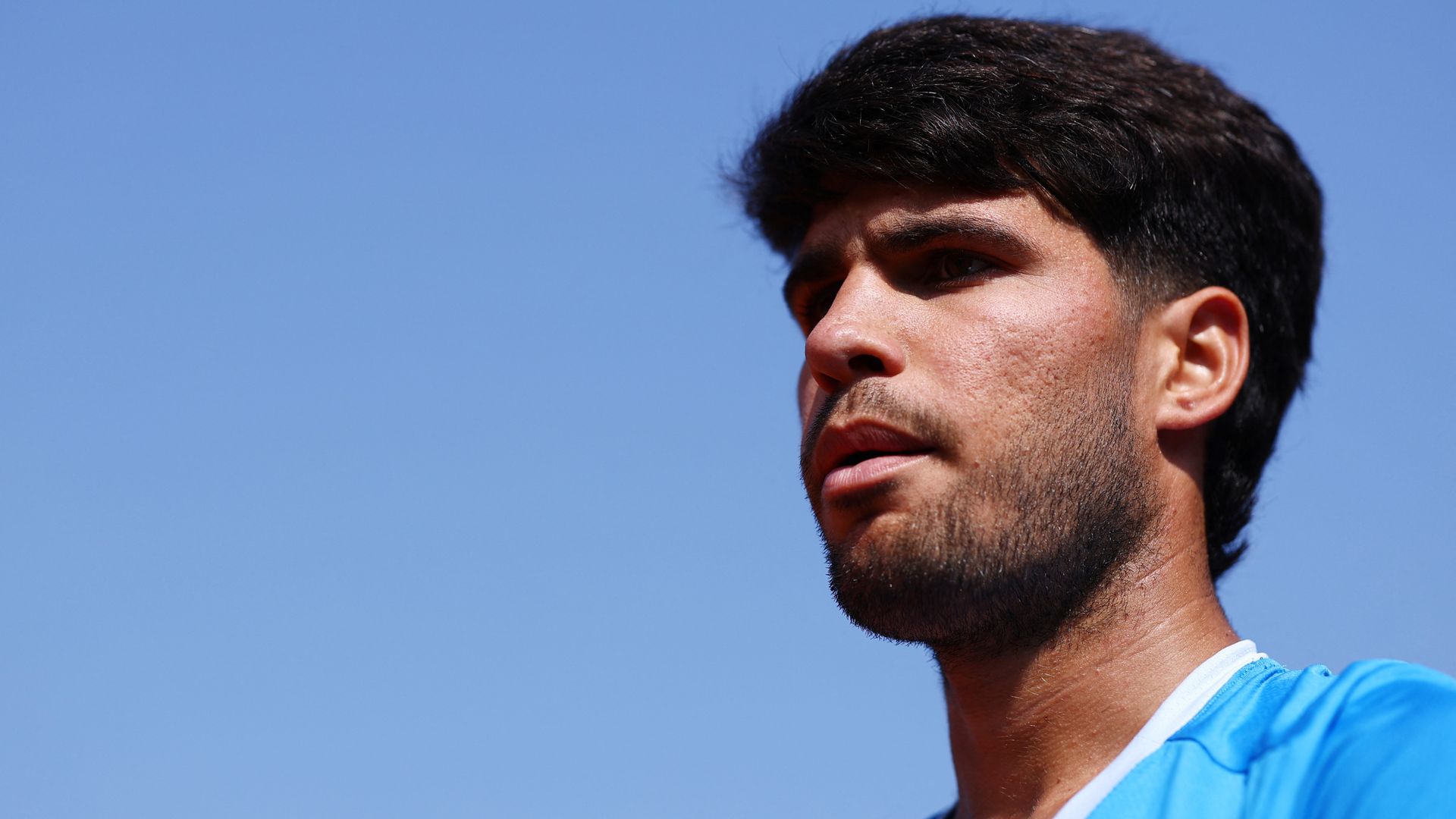
Carlos Alcaraz will not play Wimbledon. The world number two confirmed his withdrawal from both Queen’s Club and the All England Club due to a persistent right wrist injury sustained in Barcelona. This decision effectively wipes out his entire European summer, forcing him to miss consecutive Grand Slams for the first time in six years. While fans lament the loss of an epic grass-court showdown, the reality is far colder. At just 23 years old, the seven-time Grand Slam champion is facing a structural crisis that threatens the very longevity of his career, exposing the unsustainable physical toll of modern baseline tennis.
The immediate fallout is a disaster for the ATP rankings and the competitive balance of the sport. Alcaraz is set to shed 3,300 ranking points by missing Roland Garros and Wimbledon back-to-back. This massive hemorrhage leaves world number one Jannik Sinner virtually uncontested at the summit of the game, while Alexander Zverev rapidly closes the gap from behind.
But looking at this purely through the lens of brackets and ranking points misses the fundamental issue. The real story isn't that Alcaraz is missing two tournaments. The real story is that his hyper-aggressive, violent style of play is actively breaking his body down.
The Biomechanics of Self Destruction
Modern tennis is a brutal sport, but Alcaraz plays it with a unique, punishing ferocity. His signature forehand relies on an extreme semi-western grip combined with violent wrist snap to generate devastating topspin and ball speed. To understand the mechanism, consider the sheer kinetic energy required to transition from a full sprint into an open-stance forehand, absorbing the pace of a 90-mile-per-hour ball and reversing that momentum entirely through the forearm and wrist.
The injury occurred in mid-April during a grueling opening-round encounter against Otto Virtanen at the Barcelona Open. What was initially treated as a minor sprain has turned into a multi-month ordeal that has paralyzed his season. By forcing him out of Madrid, Rome, Paris, and now London, the injury has exposed a glaring vulnerability. The wrist is a complex network of small bones, tendons, and ligaments. Once that area suffers chronic inflammation or structural micro-tears from repetitive deceleration forces, structural integrity compromises rapidly.
Critics often point to Rafael Nadal’s early-career knee issues as a historical parallel, but Nadal’s injuries were largely structural and managed through biomechanical adjustments and specialized footwear. Alcaraz’s issues are rooted in explosive impact. His refusal to play any point with less than maximum intensity means his tendons are constantly pushed past their physiological limits.
The Institutional Meat Grinder
The blame does not rest solely on the player's technique. The ATP Tour schedule has evolved into an institutional meat grinder that prioritizes television broadcast windows and commercial revenue over human recovery.
Consider the calendar that led to this breaking point. Alcaraz began the year at a blistering pace, defeating Novak Djokovic in a brutal Australian Open final to complete his career Grand Slam. Instead of a prolonged recovery period, the tour immediately demanded a transition to the intense physical grinding of the spring hard-court and clay swings. The introduction of mandatory, two-week Masters 1000 events in Madrid and Rome has extended the duration of high-stakes tournament play, offering fewer rest windows for top-tier athletes.
- Mandatory Status: Top players face severe point penalties and financial bonuses cuts if they skip Masters 1000 events without valid, thoroughly vetted medical exemptions.
- Surface Shock: Bouncing from the hard courts of Melbourne to South American clay, back to American hard courts, and then onto European red clay creates immense torque variance on a player's joints.
- Ball Weights: Constant changes in official tournament ball brands across different swings alter the impact vibration traveling up the racket shaft, directly affecting player wrists.
The tennis establishment operates on the assumption that twenty-something athletes are indestructible. They are not. By expanding tournament draws and lengthening the calendar, the sport is actively burning out its brightest stars before they hit their physical prime.
The Power Vacuum at SW19
With the two-time champion officially out of the mix, the Wimbledon draw undergoes a radical transformation. Last year, Sinner defeated Alcaraz in a dramatic final, establishing a rivalry meant to define the next decade. Without the Spaniard anchoring the opposite side of the draw, the tournament loses its most compelling competitive narrative.
This absence creates an immediate windfall for second-tier contenders. Alexander Zverev, Daniil Medvedev, and a aging Novak Djokovic now see a significantly clear path to the final Sunday. Furthermore, the withdrawal causes a ripple effect down the entry list. British player Jan Choinski secures automatic entry into the main draw, freeing up an LTA wildcard that would have otherwise been spent on him.
Yet, a tournament featuring a compromised field diminishes the ultimate value of the trophy. Sinner remains the overwhelming favorite to retain his crown, but walking through a draw devoid of his primary rival strips the tournament of the definitive heavyweight clash the sporting public craves.
A Crucial Crossroad for the Team
The focus now shifts entirely to the hard-court swing in the United States, culminating in Alcaraz's title defense at the US Open in August. The player’s camp, led by former world number one Juan Carlos Ferrero, faces an existential choice. They can continue with the current rehabilitation protocol and hope the wrist holds up under the intense impact of North American hard courts, or they can fundamentally re-engineer how Alcaraz approaches the sport.
Re-engineering a generational talent's game is an incredibly risky proposition. It requires convincing a natural-born fighter to dial back his intensity, to accept losing certain points in service of winning the match, and to alter the wrist-lash mechanics that made his forehand the most feared weapon in tennis. Roger Federer successfully modified his game later in life to protect his back and knees, transitioning to a larger racket frame and shortening points. Alcaraz must undergo this evolution at the start of his career, not the end.
If the camp rushes the recovery to salvage the US Open, they risk transforming a chronic injury into a permanent, career-altering degradation. The tennis world is littered with prodigies whose bodies failed them before their minds ever did. Whether Alcaraz avoids that fate depends entirely on the willingness of his team to prioritize long-term skeletal health over immediate commercial and competitive glory.