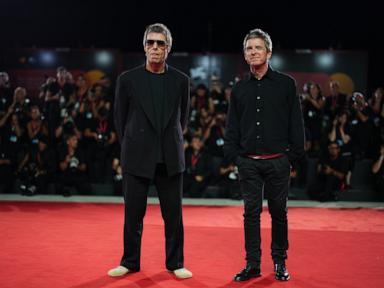
The announcement that Olajide "JJ" Olatunji, known globally as KSI, is recalibrating his position within the Sidemen sent shockwaves through the creator economy. For years, the seven-member British YouTube collective has stood as the gold standard of digital entertainment longevity. While other eras of internet squads disintegrated under the weight of ego, financial disputes, or creative differences, the Sidemen endured. But the recent public declarations of stepping back, paired with defensive reassurances that he will always be around, expose a structural reality that digital media analysts have tracked for years. The traditional YouTube group model is fundamentally incompatible with hyper-scaled individual commercial success.
This is not a simple story of friends drifting apart. It is a corporate case study in equity distribution, opportunity cost, and the compounding pressure of multi-million dollar secondary enterprises. When a single member of a collective develops an individual brand that eclipses the group enterprise by orders of magnitude, the mathematical gravity of that group begins to fail.
The Structural Friction of Individual Scale vs Collective Duty
To understand why a creator like KSI must inevitably distance himself from weekly content production, one must look at the balance sheets rather than the YouTube analytics page. The Sidemen operate as both a content channel and a diversified holding company. Together, the group owns XIX Vodka, the Sides restaurant chain, the Side+ subscription platform, and the annual Sidemen Charity Match. These ventures generate massive revenue, but they require equal split-billing of time and energy from seven distinct individuals.
The economic friction arises when you calculate opportunity cost.
For an average creator, a filming day for a main-channel video is highly lucrative. For KSI, that same eight-hour block represents time taken away from managing Prime Hydration, organizing Misfits Boxing events, preparing for mainstream music releases, or training for pay-per-view bouts. The revenue generated by a shared YouTube video, divided seven ways, cannot compete with the equity valuation growth of a solo venture.
Typical Creator Group Dynamic:
[Group Entity] ──> Drives 100% of Member Value
Members contribute equally, receive equal return.

The Hyper-Scaled Divergence:
[Individual Solo Brand] ──> Billions in Valuation (Prime, Boxing)
▲
│ (Time Conflict)
▼
[Group Entity Content] ──> Shared Revenue (Divided 7 ways)
Every hour spent filming a travel vlog is an hour stolen from a billion-dollar corporate empire. The math simply stops making sense.
The tension is built into the architecture of modern digital celebrity. In the early days of internet video, groups pooled resources to achieve consistency. Algorithm stability required frequent uploads, and sharing the burden allowed creators to avoid immediate burnout. However, this model creates an artificial ceiling for the breakout star.
Lessons from the 2017 Schism and the Playbook of Attention
This is not the first time the public has faced the prospect of the Sidemen fracturing. In 2017, a highly publicized drama saw KSI ostensibly leave the group, move to Los Angeles, and trade hostile diss tracks with his childhood friends. That era generated billions of views and cemented their dominance in the UK media ecosystem.
It also taught the industry a valuable lesson about the monetization of friction.
Mainstream media outlets often take these movements at face value, reporting on the emotional fallout or personal grievances. Investigative analysis reveals a more calculated operational framework. Public declarations of exit or transition serve as excellent tools for audience engagement. They reset narrative expectations. By framing a necessary corporate restructuring as a dramatic, emotional choice, the brand preserves its core asset, which is consumer loyalty.
The current transition is different from the theatricality of 2017. This is a quiet, institutional pivot. When a creator says they will always be here, they are signaling a shift from operational staff to chairman of the board. They are maintaining their equity stake and their cultural association while withdrawing their labor.
The Mathematical Reality of Burnout in Modern Media Enterprises
The physical toll of maintaining a top-tier digital presence is routinely underestimated by traditional media executives. The Sidemen have uploaded substantial, high-production videos every single week for over a decade. No television network operates on this schedule without seasonal breaks or rotating casts.
The production value of their content has scaled dramatically. What used to be seven guys playing video games in a shared house has evolved into massive, multi-location reality television productions requiring crews of fifty people, complex logistics, and international travel.
Consider the logistical load of a standard road-trip video.
- Multiple days of scouting locations.
- Securing commercial filming permits across various municipalities.
- Insurance policies covering high-risk stunts for high-net-worth talent.
- Managing the intense public security risks of filming seven recognizable celebrities in open spaces.
When you subject the same seven individuals to this operational grind for eleven years, psychological fatigue is inevitable. The human brain is not wired to perceive its closest social circle as a perpetual corporate board meeting. By stepping back from the front line of content, a founding member preserves the underlying friendships that guarantee the company's long-term intellectual property value. If they do not step back, the alternative is catastrophic burnout, which leads to genuine acrimony and the permanent destruction of the brand.
Corporate Infrastructure as the Ultimate Retention Tool
Why doesn't a hyper-successful creator just walk away completely? The answer lies in the sophisticated corporate infrastructure the Sidemen have constructed over the last five years.
They ceased being a mere YouTube channel long ago. They are an incubator for consumer-packaged goods. The group built a shared ecosystem where their individual brands feed their collective products, and vice versa.
| Business Entity | Operational Model | Role of Founding Members |
|---|---|---|
| XIX Vodka | Retail Distribution | Brand Ambassadors & Equity Holders |
| Sides | Franchise Hospitality | Marketing Drivers & Menu Collaborators |
| Side+ | Direct-to-Consumer Media | Premium Content Talent |
| SDMN Clothing | E-commerce Merchandising | Design Approval & Seasonal Models |
If KSI removes himself entirely from the Sidemen ecosystem, he damages the valuation of the consumer brands he still owns a piece of. The safety net of the group is that the entity can survive the temporary or partial absence of any single piece. By transitioning into a part-time, legacy appearance role, the breakout star protects their financial interests while freeing up the calendar space required to chase ten-figure valuations elsewhere.
This structural evolution provides a blueprint for the wider creator economy. The first generation of internet stars blew their fortunes or faded into obscurity because they could not scale past their own physical output. The modern creator class builds corporate vehicles that run independently of their daily participation.
The reassurance that a departing member will always be around is a message intended for two distinct audiences. First, it pacifies the fanbase, ensuring they continue to buy merchandise and subscribe to premium tiers. Second, it stabilizes the corporate partnerships and franchise owners who have invested millions in the collective's long-term viability. It is a masterclass in modern corporate communication, executing a necessary structural retreat while presenting it as an act of enduring brotherhood. The era of the full-time, monocultural YouTube group is over, replaced by a reality where members are partners in a diversified media fund. Explicitly or implicitly, survival requires learning how to leave the room without closing the door.