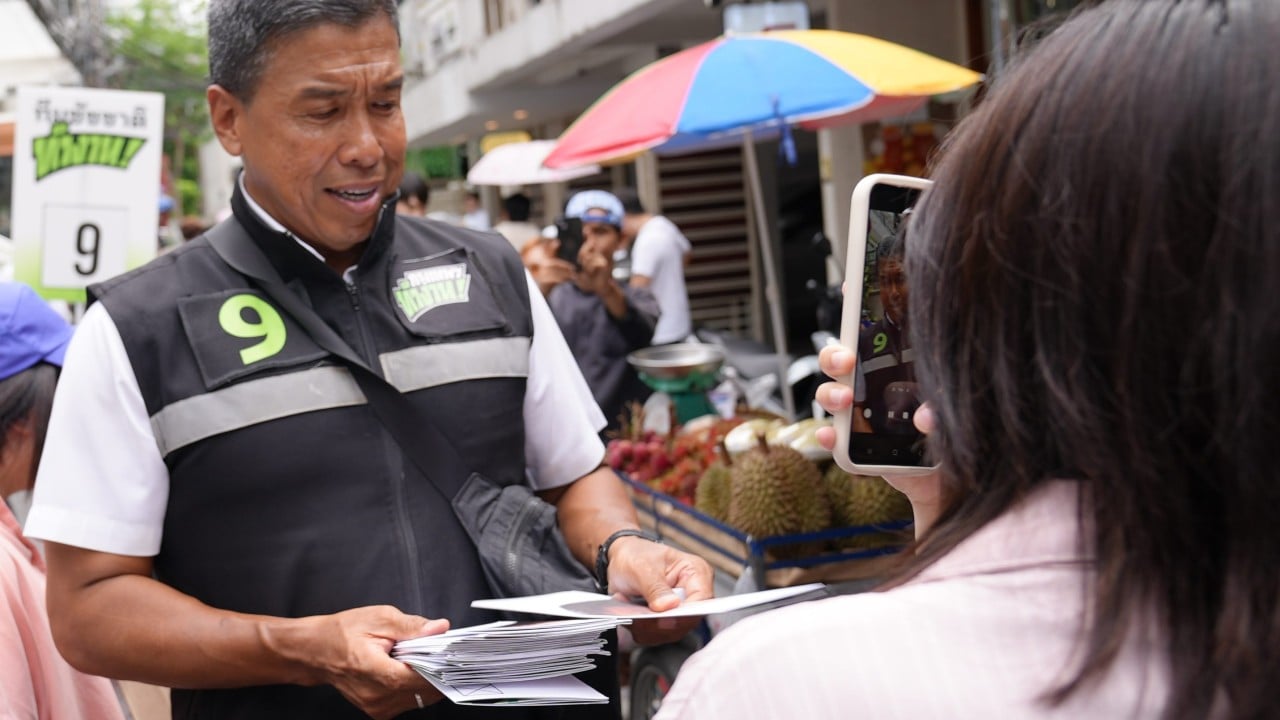
Bangkok goes to the polls on June 28 to elect its governor, and the result seems entirely pre-determined. Incumbent Chadchart Sittipunt, nicknamed the Hulk for his indefatigable, early-morning routine of jogging through municipal problems, leads the nearest challenger by more than fifty percentage points in the latest survey data. He has effectively decoupled the administration of Thailand's capital from the ideological polarization that paralyzes the national parliament.
Yet beneath this calm surface lies a deeper institutional crisis. By shrinking the role of governor from a political leader to a mere municipal manager, Chadchart has created a highly popular shield against national turbulence, but it has left the root causes of Bangkok's structural decay completely untouched.
The central paradox of modern Bangkok is that its governor is immensely popular precisely because he promises less than his predecessors. Following the 2014 military coup, Bangkok endured nearly nine years of an appointed military bureaucrat before Chadchart won a historic landslide victory in 2022 as an independent. His strategy since then has been a deliberate process of depoliticization. He treats the city administration not as an arena for systemic change, but as a corporate machine requiring minor, continuous adjustments.
This managerial framework works brilliantly for public relations. Social media channels overflow with real-time updates of Chadchart inspects broken pavements, clears clogged drainage grates, and stands knee-deep in flash floods alongside municipal workers. For a middle class exhausted by decades of street protests and military intervention, this hyper-fixation on the microscopic details of urban life is deeply comforting.
It creates the illusion of immediate progress. But the illusion breaks when the macro-level systemic issues return.
Consider the five most discussed topics among Bangkok residents this year: corruption, toxic PM2.5 air pollution, broken pavements, the rising cost of living, and chronic flooding. Chadchart's administration has made undeniable progress on the small things. His team has mapped thousands of localized issues, repaired kilometers of walkways, and improved the efficiency of district offices.
The structural nightmares, however, remain untouched. The air pollution that blankets the capital every winter is largely driven by agricultural burning in neighboring provinces and vehicular emissions from an unregulated transportation market. The governor of Bangkok has zero legal authority to penalize farmers in Central Thailand or rewrite national transport regulations. By framing the governorship as an independent, managerial office, Chadchart has surrendered the political leverage required to force the national government to act on cross-border environmental disasters.
The structural limits of this approach have become even more apparent in the final days of the campaign. Opposition figures have recently targeted the administration over a municipal gymnasium equipment procurement project that allegedly suffered from severe price inflation. Other critics have weaponized allegations that bureaucratic posts within the Bangkok Metropolitan Administration were being illicitly sold.
Chadchart's response has been typical of a corporate chief executive rather than a political heavy-weight: he promises internal investigations and technical compliance audits. This satisfies the demand for administrative transparency, but it ignores how entrenched corruption functions within the deeply layered Thai civil service.
The primary challenge to Chadchart's model does not come from old-school conservative factions, which have largely failed to field competitive alternatives. The true ideological challenge comes from the opposition People's Party, which swept all 33 parliamentary seats in Bangkok during the recent national elections. Their gubernatorial candidate, Chaiwat Sathawornwichit, is campaigning on structural urban resilience and systemic anti-corruption measures.
The People's Party argues that a governor cannot simply be an efficient manager of an inherently broken system. They assert that the capital requires a political figure willing to confront the centralized ministries that starve the city of its tax revenue. Under current laws, the Bangkok Metropolitan Administration collects only a fraction of the tax wealth generated within its borders, remaining heavily dependent on budget allocations from the national Ministry of Interior.
Voters find themselves executing a sophisticated balancing act. Young voters, in particular, appear to be splitting their political loyalties. They support the People's Party at the national level to demand structural constitutional reform, but choose Chadchart at the municipal level to secure immediate, functional improvements to their daily quality of life. They have separated their long-term ideological aspirations from their immediate need for a clean pavement.
This strategic pragmatism may keep the city running, but it guarantees that Bangkok will remain structurally vulnerable. When the votes are counted, Chadchart will almost certainly secure his second term, breaking the historic jinx that has unseated or disqualified previous incumbents.
He will return to his morning jogs and his real-time problem-solving apps. The deep, systemic crises of the capital will be waiting for him, completely unbothered by managerial efficiency.