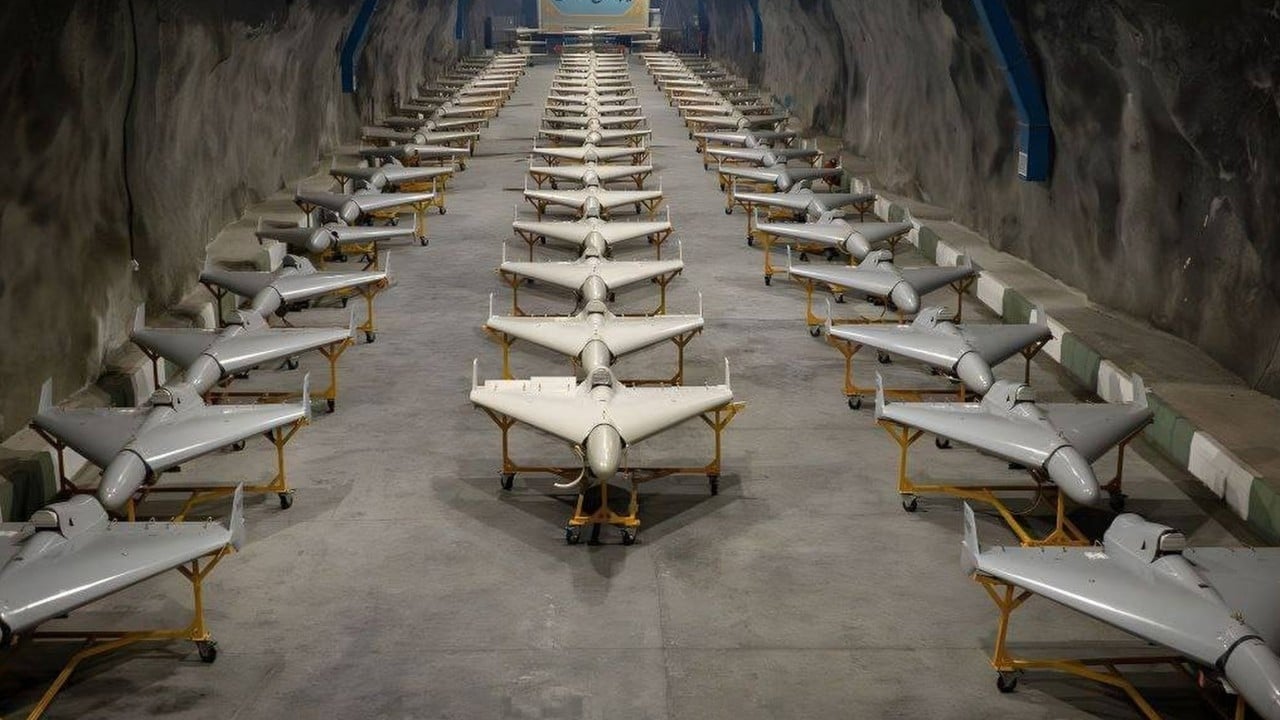
The United States Treasury Department has just fired a massive salvo in its "Economic Fury" campaign, blacklisting ten entities and individuals across China and Hong Kong for their role in Iran's expanding military-industrial machine. This is not just another round of diplomatic wrist-slapping. It is a calculated strike against a sophisticated, multi-layered procurement network that has successfully bypassed international surveillance to feed Tehran’s appetite for Shahed-series drones and ballistic missile components. Within the first hundred words of this development, the message is clear: the Biden-era surgical precision has been replaced by a broad-spectrum economic assault targeting the very intermediaries that allow Iran to project power across the Middle East.
For decades, the standard playbook for Iranian procurement involved shell companies in Dubai or Istanbul. That has changed. The focus has shifted east, deeply embedding itself into the dense, often opaque commercial fabric of mainland China and the financial plumbing of Hong Kong. By targeting firms like Yushita Shanghai International Trade Co Ltd and Hitex Insulation Ningbo Co Ltd, Washington is admitting that the front lines of the drone war in Ukraine and the missile skirmishes in the Middle East are being drawn in the industrial parks of Shanghai and Ningbo.
The Architecture of Evasion
The entities named in this latest sweep are not household names. They are the "connective tissue" of global trade. Consider HK Hesin Industry Co Ltd and Mustad Limited, both based in Hong Kong. On paper, these firms might appear to be standard trading houses, the kind that facilitate thousands of legitimate transactions daily. In reality, investigators allege they serve as critical nodes for the Islamic Revolutionary Guard Corps (IRGC), moving millions of dollars and specialized hardware through the world's most efficient free-port system.
The "how" is more important than the "who." These networks utilize a method known as tiered procurement. An Iranian-controlled front company in a third country—in this case, often linked to the Center for Progress and Development of Iran (CDPI)—places an order for seemingly dual-use goods. These are items that have a civilian application, like high-grade insulation or specific electric motors, but are essential for missile guidance and drone endurance.
- Hitex Insulation Ningbo Co Ltd is accused of providing materials directly utilized in ballistic missile flight tests.
- Yushita Shanghai allegedly functioned as a primary conduit for acquiring finished weaponry systems.
- Mustad Limited acted as the financial clearinghouse, laundering the paper trail to ensure the money appeared to originate from legitimate commercial activity.
This is a game of jurisdictional leapfrog. By the time a Western intelligence agency flags a suspicious shipment, the entity that ordered it has dissolved, and the goods have already been transshipped through a series of "teapot" refineries or small-scale logistics hubs.
The Timing of the Economic Fury
There is no such thing as a coincidence in geopolitical timing. This announcement comes just days before a scheduled presidential summit in Beijing. By dropping these sanctions now, Treasury Secretary Scott Bessent and the administration are effectively poisoning the well before negotiations even begin. It signals that the U.S. is no longer willing to compartmentalize trade relations from national security concerns regarding Iran.
The inclusion of Chang Guang Satellite Technology is particularly stinging. This isn't just about small motors and carbon fiber. The U.S. alleges this entity provided satellite imagery that enabled Iranian strikes against American forces. When a private or state-linked Chinese firm provides the "eyes" for Iranian "teeth," the distinction between a commercial partner and a military ally disappears.
Why Sanctions Often Fail to Bite
Critics of this "Economic Fury" approach point to a glaring reality: the resilience of the "Shadow Economy." While the U.S. can freeze assets held in American banks and prohibit U.S. citizens from doing business with these firms, many of these entities operate almost entirely within a yuan-denominated or crypto-facilitated ecosystem.
China has already begun fighting back with its own legislative tools. On May 2, China’s Ministry of Commerce issued a blocking ban against previous U.S. sanctions. This creates a "compliance trap" for global businesses. If a company follows U.S. law, it violates Chinese law, and vice versa. This legal warfare is designed to make the cost of enforcing U.S. sanctions prohibitively high for international banks.
Furthermore, the scale of Iran’s production is now industrialized to a point of relative self-sufficiency. Reports suggest Iran can manufacture up to 10,000 drones per month. You do not reach that volume by relying solely on smuggled Western parts. You reach it by building a seamless supply chain with a superpower that has the manufacturing capacity to ignore Washington’s threats.
The Hong Kong Vulnerability
For Hong Kong, this is a moment of existential friction. The city’s value to Beijing has always been its status as a trusted intermediary with the Western financial system. However, as more Hong Kong firms are swept into the net of IRGC procurement, that trust is evaporating.
We are seeing the emergence of a bifurcated global market. One side operates under the scrutiny of OFAC and the SWIFT system; the other operates in the shadows, moving through smaller Chinese banks that have no exposure to the U.S. dollar and therefore no fear of U.S. sanctions. Washington has notably hesitated to target these larger Chinese financial institutions. Until the U.S. is willing to risk a total systemic rupture by sanctioning a major Chinese bank, these nine or ten entities are merely replaceable parts in a much larger engine.
The strategy of "whack-a-mole" sanctions provides a headline-grabbing win for the administration, but it rarely stops the flow of goods. As soon as Yushita Shanghai is shuttered, a new entity with a different name and the same directors will likely open in a different province. The supply chain for the Shahed drone is not a chain at all; it is a web. You can cut a few strands, but the structure remains intact, vibrating with the next transaction.
The real test will not be the sanctions themselves, but whether the U.S. is prepared to escalate against the "teapot" refineries and the mid-tier banks that provide the liquidity for this entire operation. Without that escalation, these sanctions are an expensive form of theater, signaling intent while the hardware continues to move across the sea.