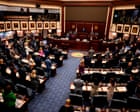
The House of Representatives just cleared a three-year extension of Section 702 of the Foreign Intelligence Surveillance Act (FISA), narrowly averting a midnight expiration that would have theoretically blinded the nation’s premier spy agencies. On paper, the 235-191 vote looks like a standard legislative scramble. In reality, it is a calculated surrender of constitutional protections, achieved through a bizarre legislative horse-trade involving digital currency and a flat refusal to address the "backdoor search" loophole that allows the FBI to sift through Americans' private data without a warrant.
By pushing this through, House leadership has ensured that the intelligence community can continue to vacuum up the emails, texts, and calls of foreign targets—a process that "incidentally" collects the communications of millions of Americans. While proponents argue this tool is indispensable for stopping terror plots and cyberattacks, the refusal to include a warrant requirement means the Fourth Amendment remains a secondary concern to administrative convenience.
The Mechanics of the Backdoor Loophole
To understand why this matters, one must look past the acronyms. Section 702 was designed to target non-citizens located outside the U.S. It is incredibly efficient. However, because Americans communicate with people overseas, their data is caught in the same net. Once that data is in a government database, the FBI and NSA can query it using an American’s name or email address.
This is the "backdoor search."
If the FBI wanted to read your emails during a standard criminal investigation, they would typically need to show a judge probable cause and get a warrant. But because the data was "lawfully" collected under Section 702, the government argues it can search that database without any judicial oversight. It is a legal sleight of hand that transforms foreign intelligence gathering into a domestic surveillance program.
The 2024 Reforming Intelligence and Securing America Act (RISAA) was supposed to fix this. It didn't. In fact, by March 2026, the FISA Court found that the intelligence community was still using "filtering" tools to perform queries on Americans' data while bypassing the very audit requirements RISAA established. The recent House bill doubles down on this failure, offering "civil liberties reviews" that amount to the government grading its own homework.
The CBDC Trade-Off and the Senate Wall
The legislative path to this vote was anything but clean. Speaker Mike Johnson faced a revolt from his right flank, with privacy hawks demanding a warrant requirement. To buy their silence, or at least their begrudging cooperation, leadership attached a bill that prevents the Federal Reserve from creating a central bank digital currency (CBDC).
It was a cynical play. By linking a surveillance extension to a ban on digital dollars—a move intended to protect "financial privacy"—leadership created a legislative Frankenstein. This maneuver might have moved the bill through the House, but it has created a massive target in the Senate. Senate Majority Leader John Thune has already signaled that the CBDC ban is a non-starter. This leaves the surveillance law hanging by a thread as the Thursday deadline looms.
If the Senate strips the CBDC language and sends a "clean" bill back to the House, the fragile coalition that passed it will likely collapse.
Why a Warrant Requirement is the Red Line
The intelligence community claims that requiring a warrant would "blind" them. They argue that the speed of modern threats—terrorism, fentanyl trafficking, and state-sponsored hacking—doesn't allow for the "sluggish" pace of the court system.
This argument is historically hollow. The U.S. legal system has long provided for "emergency authorizations" where agents can act first and get the warrant later in truly time-sensitive scenarios. The real opposition to a warrant requirement isn't about speed; it's about the burden of proof. It is much easier to search a database on a whim or a "vague lead" than it is to convince a judge that an American has actually committed a crime.
Consider the documented abuses. Over the last few years, the FBI has been caught using FISA data to query:
- Members of Congress.
- 19,000 donors to a congressional campaign.
- Protesters involved in civil unrest.
- A local political party.
None of these people were foreign terrorists. They were Americans exercising their rights, and their private communications were accessed because Section 702 lacks the friction of a warrant.
The Illusion of Reform
The current bill includes criminal penalties for "improper queries" and requires attorney-level approval for certain searches. These sound like safeguards. But in the windowless rooms of the intelligence community, "improper" is a subjective term defined by internal guidelines that are rarely shared with the public.
Furthermore, the bill fails to close the "data broker loophole." Even if FISA were perfectly reformed, the government can still bypass the Fourth Amendment by simply buying your location data, web browsing history, and chatbot records from private companies. This is the reality of modern surveillance: if the law blocks the front door, the government just buys a key to the side door.
The House has voted to maintain a status quo that treats the privacy of American citizens as an incidental casualty of national security. As the bill moves to the Senate, the debate will likely be framed as a choice between safety and "unnecessary" bureaucracy. But the real choice is whether the government should be allowed to use a foreign spy tool to police its own people.
The clock is ticking toward the Thursday midnight deadline. If the Senate doesn't blink, or if the House refuses a clean extension, the program may lapse. But don't expect a sudden return to privacy. The history of American surveillance suggests that even when laws expire, the infrastructure remains, waiting for the next crisis to justify its revival.
The government doesn't need more tools; it needs more boundaries.
Privacy and surveillance legislation overview
This video provides an essential breakdown of the legislative timeline and the specific privacy concerns raised by lawmakers regarding the Section 702 extension.