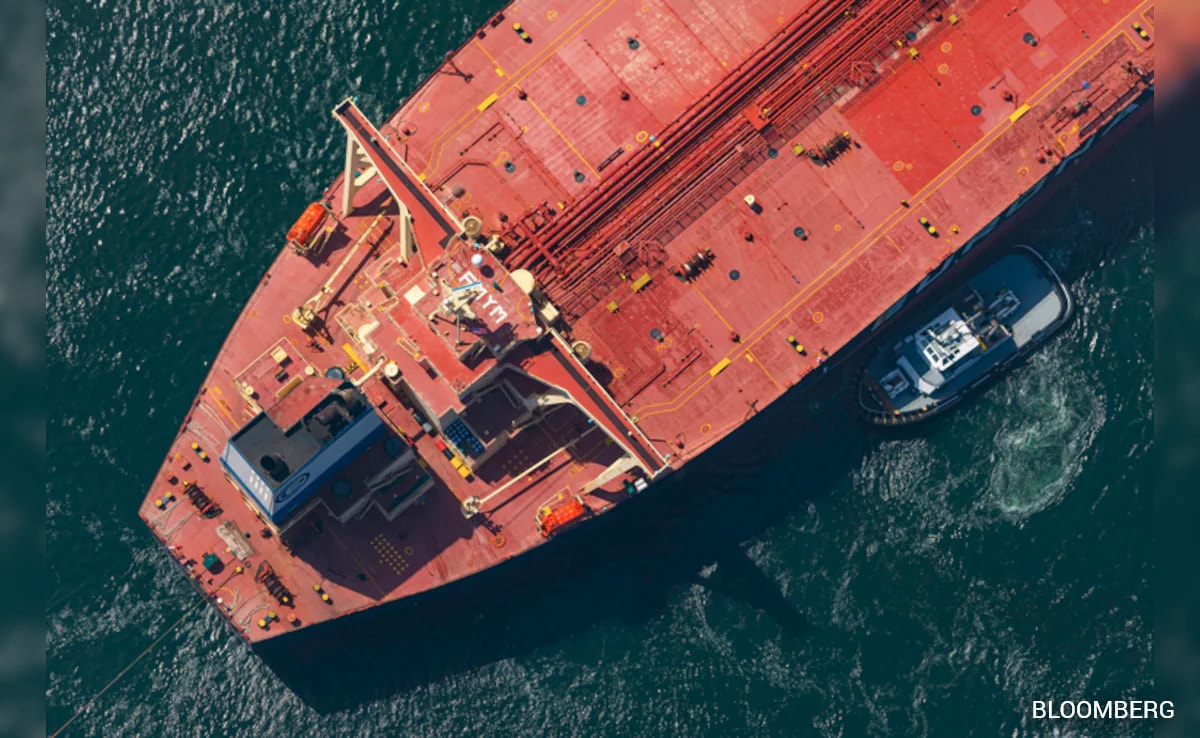
Donald Trump is moving to extend a rare 60-day waiver of the Jones Act to keep American-made fuel moving as global markets buckle under the weight of the war in Iran. By allowing foreign-flagged tankers to haul crude and gasoline between American ports, the administration is attempting to bypass a century-old bottleneck that has historically made it cheaper to ship Texas oil to Europe than to New York. While the White House claims this move has already surged domestic tanker capacity by 70%, the reality on the ground is a gritty tug-of-war between immediate economic relief and the long-term survival of the American maritime industry.
The Invisible Chokehold on Domestic Energy
The 1920 Jones Act is a protectionist relic that dictates any cargo moved between two U.S. ports must be carried on ships that are U.S.-built, U.S.-owned, and U.S.-crewed. In times of peace, it is a quiet tax on every gallon of gas. In times of war, it is a structural crisis. Recently making waves in related news: Why Your Take Home Pay Is Shrinking Even When You Get a Raise.
As the Strait of Hormuz remains effectively shuttered, the world is staring at a 16-million-barrel-a-day deficit. Brent crude has rocketed nearly 36% in two months, dragging U.S. pump prices to an average of $4.74 per gallon. The administration’s calculation is simple: the U.S. has the oil, but it doesn't have the ships to move it. Out of a global fleet of nearly 7,500 tankers, only about 54 are Jones Act compliant. By suspending the rules, the White House has effectively invited 40 foreign tankers into domestic waters, moving over 9 million barrels of crude that otherwise would have been stranded or exported while American refineries starved.
Why the Gulf Coast to Northeast Route Matters
Refineries in the Northeast often find themselves in a bizarre logistical trap. Because there aren't enough American tankers to bring oil up from the Gulf of Mexico, these facilities frequently import crude from West Africa or the North Sea. It is a geographical absurdity fueled by regulation. More insights into this topic are explored by Harvard Business Review.
The temporary waiver has allowed the administration to tap into the Strategic Petroleum Reserve (SPR) more aggressively. Without foreign tankers, the planned drawdown of 172 million barrels would hit a logistical wall. There simply aren't enough American hulls to carry that much volume to the coastal markets that need it most.
The Political Gamble of National Defense
Using the "National Defense" loophole to bypass maritime law is a high-stakes play. Labor unions and domestic shipbuilders are already screaming foul, arguing that the waiver guts the very industry it was meant to protect. They contend that the "savings" at the pump are a mirage.
Industry data suggests that shipping costs only account for about one cent of the price of a gallon of gasoline. From their perspective, the waiver isn't a cure for inflation; it's a gift to foreign shipping conglomerates that don't pay U.S. taxes or employ U.S. workers. This creates a rift within the Republican base, pitting "Energy Dominance" advocates against "America First" protectionists.
The Cost of Building American
To understand why the domestic fleet is so small, you have to look at the price of entry. A medium-range tanker built in a U.S. shipyard costs roughly $190 million more than one built in South Korea or Japan. Annual operating costs for a U.S.-flagged vessel run up to $10 million higher than their international counterparts.
These aren't just numbers on a spreadsheet. They represent a structural disadvantage that has left the U.S. with zero oceangoing dry bulk carriers—the workhorses needed to move fertilizer—and only one vessel capable of moving Liquefied Natural Gas (LNG) to Puerto Rico. When the administration waives the Act, it isn't just "easing prices." It is acknowledging that the domestic industry is currently incapable of meeting the nation's emergency needs.
Tracking the Flow of Nine Million Barrels
Since the initial waiver on March 18, the flow of energy has shifted. Foreign tankers are now frequenting routes between Texas, Florida, and California. In Alaska, the waiver has been a lifeline, with foreign vessels delivering roughly half of the state's monthly jet fuel demand.
These are tangible wins for a White House desperate to show action before the November midterms. However, the relief is "at the margin." While the waiver might shave a nickel off a gallon in specific import-reliant regions like New England, it cannot cancel out the massive spike in global crude prices.
The High Stakes of the May Expiration
As the 60-day window nears its end in May, the oil industry is demanding a decision. Refiners book their shipments weeks in advance. If the waiver isn't extended, the logistical bridge currently supporting the SPR drawdown will collapse, potentially sending prices back into a vertical climb.
The White House is currently reviewing whether to double down. Extending the waiver would signal a pivot toward a more permanent liberalization of domestic shipping, a move that would delight free-market think tanks but alienate the maritime unions that are essential to the industrial base.
The administration has found a temporary fix for a permanent problem. By bypassing the Jones Act, they have proved that more ships lead to more movement and fewer supply distortions. But as long as the war in Iran continues to dictate the global price of a barrel, the "relief" provided by foreign tankers will remain a small bandage on a very deep wound.
Stop looking for a total collapse in fuel prices because of a shipping waiver. Instead, watch the tanker counts in the Gulf. That is where the real battle for American energy independence is being fought, one foreign hull at a time.