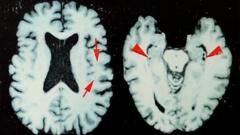
Recent population-based research published in The BMJ establishes that at least twenty-four percent of former National Football League players who died between 2016 and 2021 suffered from chronic traumatic encephalopathy, commonly known as CTE. This baseline figure represents a hard mathematical floor, while the absolute ceiling reaches nearly ninety-eight percent. For years, public discourse relied on convenience samples and sensationalized headlines about eighty or ninety percent infection rates among donated brains. Those earlier numbers invited swift dismissal from league executives and skeptical team owners who argued that selection bias skewed the math. Families only donated tissue when athletes displayed severe cognitive decline, meaning the data captured the worst extremities of the sport. The new methodology flips the script entirely by tracking a fully enumerated cohort of every man who appeared in a professional game since 1949 and cross-referencing death certificates. Even under the most conservative statistical adjustments imaginable, one in four is an indictment.
The Anatomy of a Statistical Floor
Epidemiology is an unromantic science. It relies on cold denominators and brutal accounting. When researchers from Boston University and Harvard Medical School set out to clean up decades of messy data, they built a strict tracking roster of 1,712 former players who passed away within a defined multi-year window. Out of that total population, nearly twenty percent had their brain tissue examined post-mortem. More than ninety percent of those examined brains showed definitive pathological signs of the neurodegenerative disease.
To calculate the true baseline, the research team applied a rigorous sensitivity analysis. They assumed that out of all the players who died, every single person whose brain was not examined was completely healthy and free of the disease. That conservative assumption generated the floor of 24.5 percent for the 2016 through 2021 period.
The general population baseline sits comfortably below one percent. A former professional football player therefore faces a risk profile that bears no resemblance to normal human aging.
Beyond the Concussion Narrative
The sports entertainment complex spent decades convincing the public that brain trauma is an acute event problem. A quarterback gets spun around, hits the turf, wobbles off the field, passes a sideline cognitive test, and returns under protocol. League safety committees poured millions into concussion spotters and stricter rules against helmet-to-helmet contact.
Yet the pathology of CTE does not care about cinematic, high-profile collisions. It responds to accumulation.
Every single snap on the offensive line involves a sub-concussive blow equivalent to a minor car crash. Multiply those impacts across hundreds of practices, thousands of blocking assignments, and a multi-year career, and the brain tissue undergoes repeated shear stress. Misfolded tau proteins begin to clump together, slowly strangling neural pathways long after the cleats are hung up.
Focusing exclusively on diagnosed concussions is a convenient shield. It allows multi-billion-dollar institutions to treat brain damage as an unfortunate workplace accident rather than an inherent feature of the business model.
The Disconnect Between Pathology and Phenotype
Public health discussions often treat a disease diagnosis as a narrative sentence. If you have the pathology, you must have the clinical symptoms. The reality uncovered by recent data is far more confounding and tragic.
Among the brain donors in the study who met clinical criteria for dementia, a significant portion did not even have neurodegenerative disease listed anywhere on their official death certificates. Medical examiners missed it. Families lived through the behavioral fallout—rage, depression, memory loss, executive dysfunction—without an accurate medical label.
Furthermore, the data shows that while advanced Stage IV CTE strongly correlates with clinical dementia, earlier stages do not always map cleanly to a neat behavioral profile. Two athletes can carry similar microscopic protein tangles into the grave while experiencing entirely different living nightmares. One might retain functional independence while suffering from severe mood dysregulation, while another loses cognitive coherence entirely.
The Economics of Denial
Why does the shift from a speculative ninety percent to a rock-solid twenty-five percent minimum change the conversation? Because it removes every remaining bolt from the defense attorney's chair.
When the numbers were based solely on voluntary donations, league apologists could always point to the selection bias. They could claim the sample was tainted by self-selection. They could pretend that the average player walked away unscathed, enjoying a healthy retirement playing golf and working media broadcasting gigs.
A population-based floor of twenty-five percent strips away the deniability. It means that if four men walk off a championship roster from a specific era, statistics dictate that at least one of them will carry a ruined brain to his final resting place.
The business model of America's most lucrative sport relies on absolute physical supremacy. It is a gladiator exhibition engineered for maximum velocity and brutal impact. Fans buy tickets for the collisions. Networks pay billions for the violence.
Until the structural incentives of the game change from the youth level up to the professional ranks, the industry will continue to manufacture a predictable crop of neurological tragedy, neatly hidden behind a veil of statistics and administrative denial.