The rhetoric echoing out of Plaza de Casa Rosada is rarely subtle, but the latest diplomatic offensive targeting the Falkland Islands carries a sharper edge than usual. Buenos Aires has elevated its campaign to reclaim sovereignty over the South Atlantic archipelago, framing the territory not as a distant historical grievance, but as an urgent matter of national reclamation. Across the Atlantic, British political machinery has responded with characteristic lethargy, treating a mounting geopolitical friction point as a distant tremor while domestic economic anxieties swallow the airwaves.
For anyone tracking South American geopolitics for more than a week, this is a familiar script. An Argentine administration facing severe fiscal contraction, rampant inflation, and collapsing public approval ratings invariably looks south toward the Malvinas to marshal a fractured populace. The strategy is historical muscle memory. Yet, dismissing this current posturing as mere domestic theater misses a structural shift in how Buenos Aires is attempting to pressure London. For an alternative perspective, consider: this related article.
The strategy no longer relies solely on fiery rhetoric at the United Nations General Assembly. Instead, the current government is deploying a calculated war of economic attrition, diplomatic isolation, and logistical squeeze tactics designed to make the continued British administration of the islands increasingly difficult and expensive to sustain.
Understanding this escalation requires looking past the bluster of tabloid headlines and examining the hard logistics of power in the South Atlantic. The Falklands are an isolated community of roughly three thousand five hundred residents sitting three hundred miles off the Patagonian coast, thousands of miles away from the logistical umbrella of the British mainland. That geography has always dictated the terms of engagement. Similar insight on this matter has been provided by TIME.
When Argentina renewed its vows to recover the islands, the immediate reaction in Westminster was a collective shrug. Downing Street pointed to the 2013 sovereignty referendum, where over ninety-nine percent of islanders voted to remain a British Overseas Territory, as an absolute legal and moral closure. In international law, self-determination is a heavy shield.
International law, however, is rarely enforced by gavels; it is enforced by leverage.
Buenos Aires understands it cannot win a military rematch. The modernization gap between the Argentine military and British defense capabilities remains vast, a reality compounded by ongoing economic constraints in South America. But modern sovereignty battles are rarely fought with amphibious landings anymore. They are fought in commercial ports, maritime zoning regulations, corporate boardrooms, and multilateral trade forums.
The economic pressure points are real, and they are multiplying.
Consider the fishing industry, the literal lifeblood of the Falklands economy. Revenue from commercial fishing licenses accounts for a massive portion of the islands' local GDP, funding public services, infrastructure development, and healthcare. Buenos Aires has systematically lobbied regional bodies, shipping registries, and neighboring South American ports to complicate refueling, logistical support, and cargo transshipment for vessels operating in disputed South Atlantic waters.
If regional ports refuse to service ships associated with the Falklands trade footprint, the cost of exporting seafood to European markets skyrockets. Suddenly, a self-sustaining economy faces an invisible tax imposed by geographic proximity and diplomatic hostility.
Critics of the current British foreign policy establishment argue that Westminster has fallen into a dangerous complacency. Decades of defense cuts have hollowed out the global projection capabilities of the Royal Navy. While a dedicated garrison remains stationed at Mount Pleasant, complete with Typhoon fighters and naval assets, the broader strategic bandwidth of the United Kingdom is severely constrained by commitments in Europe and the Middle East.
When a nation stretches its military thin, peripheral territories become vulnerable not necessarily to direct conquest, but to slow, grinding diplomatic erosion.
The political blame game inside London has predictably turned partisan. Opposition figures and conservative commentators have rushed to accuse the ruling Labour Party of projecting weakness on the world stage. They point to recent shifts in diplomatic tone regarding other territorial disputes, such as the Chagos Islands agreement, as a sign that the current administration is willing to bargain away overseas sovereignty to appease international critics or court multilateral favor.
Whether that accusation is fair or politically motivated depends on your perspective, but it taps into a genuine anxiety within defense circles. Once a government signals a willingness to negotiate historical colonial footprints, every other territorial claim suddenly feels up for grabs in the global court of public opinion.
Yet, reducing the entire crisis to a domestic political football in London ignores the agency and resolve of the islanders themselves.
The people living in Port Stanley are not temporary administrators or transient military contractors. Many families have roots stretching back generations. Their identity is fiercely independent, distinct from both mainland Britain and Argentina. They do not view themselves as a political bargaining chip; they view the islands as their ancestral home.
When Argentine officials claim the islands are an occupied territory awaiting liberation, they erase the human reality of a distinct society that wants nothing to do with Buenos Aires. That erasure is not just a diplomatic talking point; it is the fundamental moral flaw in the Argentine sovereignty narrative. Self-determination is not an optional clause in international charters; it is the bedrock of modern democratic legitimacy.
At the same time, maintaining a fortress mentality indefinitely carries a heavy fiscal and diplomatic price. The geopolitical environment around Antarctica and the South Atlantic is shifting rapidly. Mineral rights, deep-sea fishing reserves, and strategic shipping lanes are drawing the attention of global superpowers, including nations that have no historical stake in nineteenth-century imperial disputes.
As other global actors increase their presence in the southern hemisphere, the Falklands question ceases to be a bilateral annoyance between London and Buenos Aires and becomes a complex node in a broader geopolitical chess match.
The immediate future points toward an intensification of bureaucratic warfare. Expect more diplomatic notes of protest, increased friction over airspace rights, targeted restrictions on charter flights connecting the islands to the South American mainland, and legal challenges against oil and gas exploration in surrounding waters.
Buenos Aires does not need to fire a shot to make life on the islands difficult. They only need to convince international corporations that doing business in the Falklands carries an unacceptable level of regulatory and political risk.
Westminster must decide whether it views the South Atlantic as a core strategic interest or an inconvenient historical obligation. Treating it as the latter is a luxury that fading global powers can no longer afford. The rhetoric in Plaza de Casa Rosada will not fade anytime soon, and as long as domestic pressures in Argentina demand an external dragon to slay, the islands will remain squarely in the crosshairs.
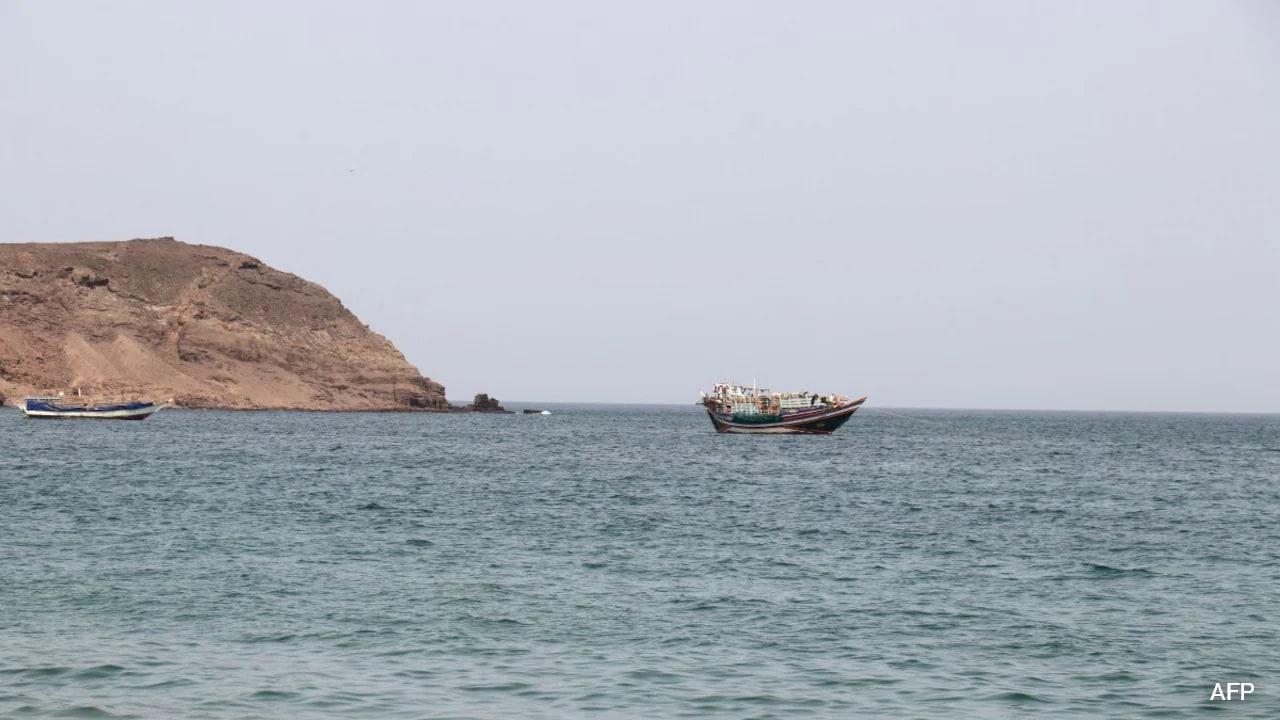
The ships in Port Stanley harbor remain anchored, and the white and blue flag flies over the mainland coast. But the invisible lines of economic and diplomatic siege are drawing tighter by the month, and the silence from London speaks volumes.