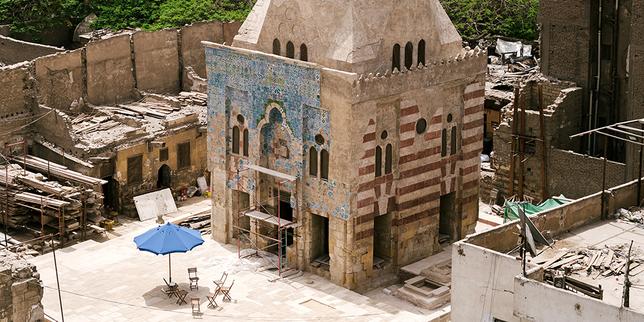
The recent reopening of the Sultan Qaytbay mosque-mausoleum in Cairo serves as a stark reminder of the fragile state of Islamic heritage in a city under constant pressure to modernize. Officials stood before the restored Mamluk structure last month, celebrating a two-year project that polished stone and fortified a dome dating back to 1474. Yet, while the official press releases tout the brilliance of the stonework, they frequently elide the deeper struggle: how does a metropolis preserve its soul when the primary motivation for such expenditure remains tied to the optics of tourism and state prestige?
Restoration is rarely just about chemistry or architecture. It is an act of historical framing. When conservation firms like Archinos Architecture work on sites as sensitive as the Qaytbay complex, they are doing more than repairing masonry. They are choosing which version of the past is worth saving. The narrative provided by the Ministry of Tourism and Antiquities focuses heavily on the aesthetic triumph of these projects, projecting an image of efficiency and cultural stewardship. However, the reality of life in historic Cairo—the bustling, often dilapidated streets surrounding these monuments—suggests a disconnect between the polished dome and the lived reality of the community.
Consider a hypothetical scenario where a neighborhood surrounding a medieval shrine is cleared of its traditional artisan workshops to provide a clean, buffer-zone experience for visitors. Proponents might argue this protects the physical structure from pollution and overcrowding. Critics would counter that the removal of these practitioners—the very people whose ancestors might have worshipped or worked near these sites—strips the location of its functional, spiritual, and social continuity. History preserved behind velvet ropes is a carcass. History maintained as a living part of the neighborhood is a pulse.
The Sultan Qaytbay restoration, funded in part by international grants like the US Ambassadors Fund for Cultural Preservation, highlights the reliance on external capital to maintain local assets. This influx of money brings technical expertise and necessary resources, but it also dictates a timeline and a goal-oriented approach that often clashes with the slow, organic process of community maintenance. State mandates for quick openings and high-visibility ribbon-cutting ceremonies can sometimes force corners to be cut, leaving long-term structural upkeep in a state of permanent deficit.
There is a recurring tension between the monument as a museum piece and the monument as a functioning space of faith. When a mausoleum is turned into a sanitized attraction, the original purpose—often Sufi practice or communal congregation—becomes secondary to the arrival of the tour bus. The danger lies in a process of gentrification of the past, where the heritage is curated for the international gaze rather than the local dweller.
The technical achievements at sites like the Imam Al-Shafi'i mausoleum, which underwent massive rehabilitation in previous years, show that the state possesses the capability to stabilize even the most complex domes. Yet, these projects are often isolated islands of perfection in a sea of neglect. One must ask if the focus on these high-profile, state-sanctioned monuments ignores the thousands of smaller, non-monumental buildings that define the architectural fabric of Cairo. These smaller sites are crumbling precisely because they do not have the clout to attract the interest of international embassies or ministerial photo ops.
True preservation requires a shift away from the obsession with the "masterpiece." If the goal is genuinely to save history, the attention must pivot toward the preservation of the urban ecosystem. This means investing in infrastructure that prevents the rising groundwater from rotting foundations from within, rather than merely re-plastering the outer walls for a few seasons of shine. It involves creating economic incentives for locals to maintain their own historic properties, turning residents into partners in heritage rather than subjects to be managed.
The temptation to frame every restoration as a triumph of modern engineering is high, but the weariness of the stones tells a different story. Every coat of new mortar is a temporary measure against the inevitable. When the scaffolding comes down, the real work begins—the daily, unglamorous task of cleaning, monitoring, and respecting the space as it exists in the 21st century.
Whether these mausoleums remain vital sites of cultural identity or become little more than static props depends entirely on whether the curators are willing to let the city breathe around them. A monument that is loved and used by its neighbors will always have a better chance at survival than one that is protected by guards but abandoned by the people. The policy-makers in Cairo must decide if they are preserving a city for the tourists or for the people who wake up in its shadow every single morning. The next decade will not be defined by the buildings that were restored, but by those that were allowed to thrive in their original, chaotic, and beautiful context.