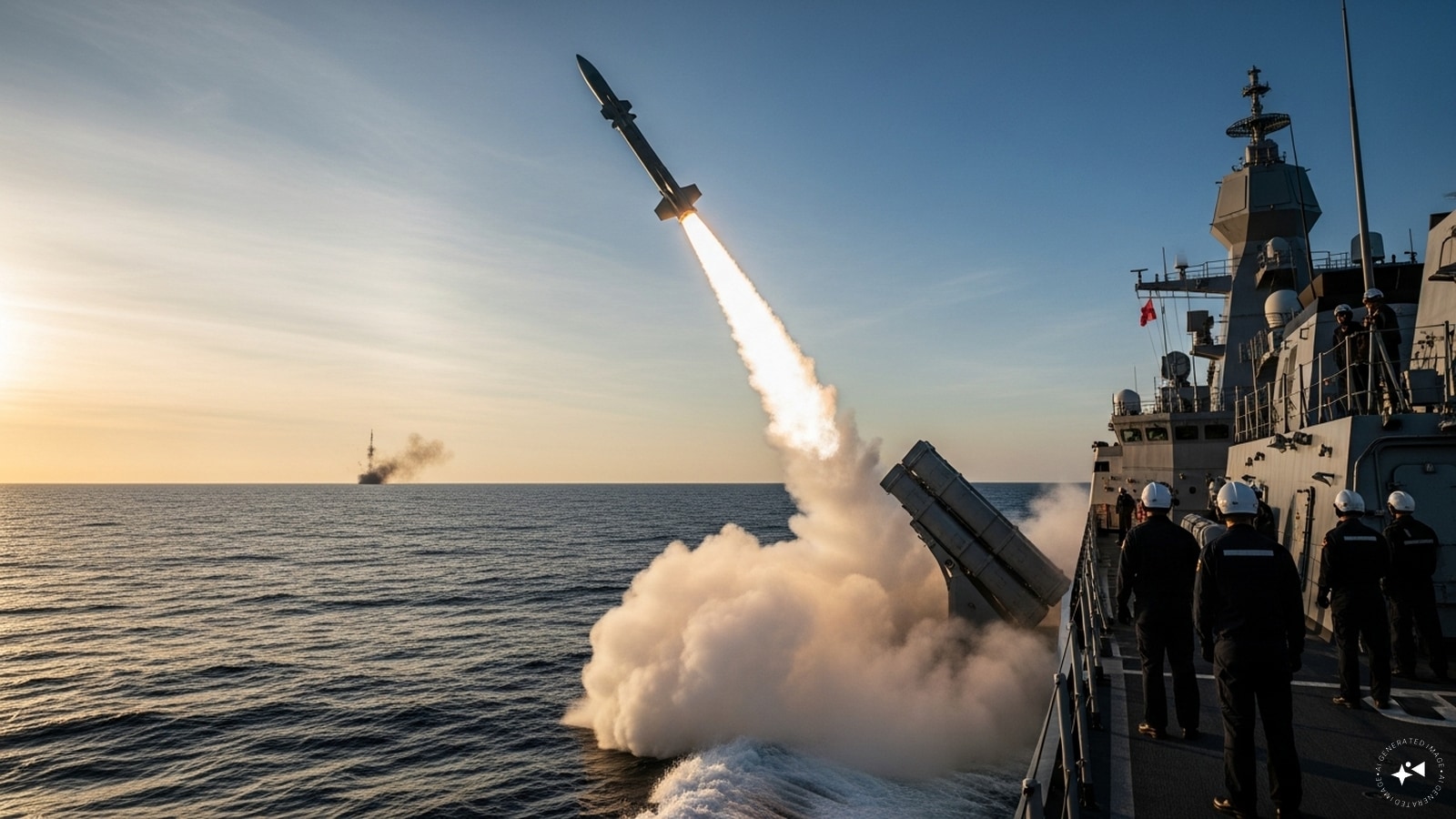
Russia has just unleashed its most extensive aerial assault on Ukrainian urban centers in months, a sophisticated multi-vector barrage designed to overwhelm air defenses and shatter the country’s recovering energy grid. This was not a random act of aggression but a synchronized operation using dozens of Kh-101 cruise missiles, Kinzhal aeroballistic projectiles, and Iranian-designed Shahed drones. While the immediate focus remains on the tragic human toll and the fires lighting up the skylines of Kyiv, Kharkiv, and Lviv, the deeper reality is a strategic pivot by the Kremlin. They are testing the structural integrity of Ukraine’s defense architecture during a period of perceived Western hesitation.
The scale of the attack reveals a significant accumulation of precision munitions. Despite years of international sanctions intended to cripple the Russian defense industry, the volume of this strike proves that Moscow has not only maintained but expanded its production of long-range weaponry. By firing from multiple directions—the Black Sea, the Caspian region, and from Tu-95MS strategic bombers—Russia forced Ukrainian operators to make split-second decisions on which targets to prioritize. This is the grim math of modern attrition.
The Engineering of a Mass Casualty Event
To understand how Russia bypassed modern defense systems, we must look at the flight paths. This wasn't a simple straight-line flight from point A to point B. The Kh-101 missiles utilized low-altitude terrain-following radar to hide in the "clutter" of the landscape, popping up only at the final moment to strike civilian infrastructure.
The strategy is clear.
By mixing slow-moving drones with hypersonic missiles, Russia creates a "saturation effect." Drones are sent in first to force Ukraine to expend expensive interceptor missiles or reveal the locations of mobile air defense units. Once those positions are mapped or the launchers are empty, the faster, more destructive missiles follow. It is a cynical, high-stakes shell game played with millions of lives.
The timing also coincides with a drop in temperatures across Eastern Europe. Striking power plants and thermal substations right now is a deliberate attempt to freeze the population into submission. It is a weaponization of the environment. Unlike the strikes of two years ago, these attacks are targeting specific nodes in the grid that are the hardest to replace, focusing on high-voltage transformers that have a manufacturing lead time of nearly a year.
The Sanctions Gap and the Components of War
There is a glaring contradiction in the wreckage found in Ukrainian streets. When technical teams dissect the remains of these "Russian" missiles, they find a graveyard of Western microelectronics. High-end chips from companies based in the United States and the European Union continue to find their way into the Russian supply chain through third-party intermediaries in Central Asia and the Middle East.
This is the failure of global export controls.
While politicians give speeches about standing with Ukraine, the hardware powering the missiles is often sourced from the very countries claiming to support the defense. Russia has built a shadow procurement network that operates faster than the bureaucracies trying to stop it. They use front companies that exist for three months, buy up thousands of "dual-use" components, and vanish before an auditor can even flag the transaction.
The sophistication of the Kh-101's internal guidance system has actually improved since the start of the full-scale invasion. It now features an on-board camera system called Otblesk-U, which uses digital map matching to identify targets. This technology requires processing power that Russia cannot produce domestically. Every strike on a Kyiv apartment block is an indictment of a global financial system that prioritizes liquidity over security.
The Limits of the Patriot and IRIS-T Shield
Ukraine’s air defense is currently a patchwork of Soviet-era S-300s and cutting-edge Western systems like the Patriot and IRIS-T. While these systems are highly effective—often boasting interception rates above 80 percent—they are facing a crisis of scale. A single Patriot interceptor can cost upwards of $4 million. A Russian drone might cost $20,000.
The math of the defender is inherently disadvantaged.
Russia is betting that it can out-produce the West’s willingness to pay. This latest barrage was a stress test for the remaining stockpiles of interceptors. If Ukraine is forced to use its best missiles against cheap drones to protect its cities, it leaves its frontline troops exposed to Russian tactical aviation. It is a strategic dilemma that has no easy answer without a massive increase in Western industrial output.
The Psychological Front and the Message to the West
Beyond the physical destruction, this barrage serves a political purpose. It is a signal to the North Atlantic Council and the White House. By striking deeply into western Ukraine, near the Polish border, Moscow is demonstrating that no part of the country is a safe haven. It is an attempt to discourage the return of refugees and to signal to foreign investors that any reconstruction effort is premature.
There is also the matter of "red lines."
Each time Russia successfully hits a major city without a significant retaliatory response from the West—such as the provision of even longer-range strike capabilities or a lifting of restrictions on hitting Russian airfields—the Kremlin feels emboldened. They view restraint as weakness. The veteran analyst sees this as a recurring pattern where the delay in providing advanced hardware leads directly to an escalation in Russian brutality.
The argument that providing more aid would escalate the conflict is increasingly difficult to defend when the escalation is already happening in the form of fire and steel over Kyiv. Russia has transitioned to a total war economy, with nearly 40 percent of its national budget now dedicated to the military. They are all-in.
The Resilience of the Ukrainian Grid
Despite the intensity of the fire, the Ukrainian energy sector has become the most battle-hardened utility workforce on the planet. They have developed "island" modes for their grid, allowing them to isolate damaged sections to prevent a total national blackout. They are burying substations underground and surrounding them with "gabions"—giant sand-filled cages—to protect against drone fragments.
But engineering can only do so much against a 1,000-pound warhead.
The current strategy of "repair and wait" is unsustainable. For every transformer Ukraine fixes, Russia has another missile ready to destroy it. The only permanent solution is to eliminate the threat at the source—the airfields and launch platforms inside Russian territory. Until that shift in policy occurs, we are merely watching a slow-motion demolition of a modern nation.
The Reality of the New Attrition
This latest attack confirms that we have entered a new, more dangerous phase of the conflict. The hope of a quick resolution has evaporated, replaced by a grueling contest of industrial capacity and political will. Russia is not running out of missiles. They are not retreating. They are doubling down on a strategy of urban terror, banking on the idea that the West will eventually tire of the cost.
The "why" behind this specific timing is linked to the political cycles in Washington and Brussels. Moscow senses a vacuum. They see the debates over funding and the splintering of consensus. This barrage is a physical manifestation of that political opportunism. It is designed to make the war feel "unwinnable" to an outside observer, even as Ukraine continues to hold its ground on the battlefield.
We are witnessing the most significant challenge to the international order since the middle of the last century. If a state can use its industrial base to systematically destroy the civilian infrastructure of its neighbor with impunity, the rules of global security are effectively dead. This isn't just about Ukraine; it's about whether the concept of sovereignty has any remaining value in the face of mass-produced violence.
The smoke clearing over the Dnipro River today is a warning. The missiles used were made recently, the tactics were refined, and the intent was genocidal. The response, or lack thereof, will dictate the security of the continent for the next fifty years. Stop looking at the maps and start looking at the factories. That is where this war will be won or lost.