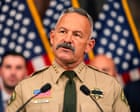
A sheriff in California just did something that should make your skin crawl. He walked into a government office and seized thousands of signed referendum petitions. He didn't just look at them. He took them. It’s the kind of move you expect in a failing state where the police serve as a political wing of the ruling class.
If you haven't been following the chaos in Shasta County, here's the deal. Sheriff Michael Johnson sent deputies to the elections office to confiscate roughly 4,000 signatures meant to trigger a referendum. This wasn't a standard investigation. It was a direct intervention in a democratic process that's already hanging by a thread. When a man with a badge and a gun decides which votes or signatures are "valid" before they're even counted, the system is broken.
The Breakdown of Trust in Local Elections
What's happening in Shasta County isn't an isolated incident of "vigilance." It’s a blueprint for how local officials can weaponize their power to stall movements they don't like. The signatures in question were collected by residents who want to overturn a specific county ordinance. Instead of letting the Registrar of Voters do their job—which is to verify those signatures—the Sheriff jumped the fence.
The justification? Claims of "fraudulent activity" during the signature collection.
Let's be real. Fraud is a serious charge. But there's a reason we have a separation of powers. Usually, the registrar checks the names, finds the discrepancies, and then refers suspicious cases to the DA or the police. By seizing the physical documents before the registrar could even finish the count, the Sheriff effectively killed the deadline for the referendum. You can't verify what you don't have. It's a logistical assassination of a civic movement.
Why the Criminalization of Petitions Matters
I've seen plenty of messy local politics, but this is different. It's a jurisdictional overreach that sets a dangerous precedent. If a sheriff can seize ballots or petitions based on an allegation, what stops them from doing it during a tight primary? What stops them from "investigating" a precinct that's leaning the wrong way?
The American Civil Liberties Union (ACLU) and various voting rights groups are already screaming about this, and they're right. They argue that this move creates a "chilling effect." That's a fancy way of saying people will be too scared to sign anything if they think a deputy is going to come knocking on their door to ask why they supported a referendum.
Democracy is messy. People sometimes sign petitions twice by mistake. Sometimes canvassers get aggressive. But we have civil processes to handle that. When you treat a stack of petitions like a kilo of cocaine, you’re telling the public that participating in government is a criminal risk.
The Specific Tactics Used in the Seizure
Deputies didn't just ask for copies. They took the originals. In any legal setting, the chain of custody is everything. By removing these documents from the controlled environment of the elections office, the Sheriff’s department has opened the door for claims of tampering—ironically, the very thing they claim to be preventing.
The Registrar of Voters, Joanna Francescut, was essentially sidelined in her own building. This creates a massive power vacuum. If the person hired to run elections doesn't have the final say over the security of the ballots, then who does? The guy with the handcuffs? That’s not how a republic functions.
The investigation apparently stems from reports that circulators were misrepresenting what the petition was about. Guess what? That happens in almost every petition drive in history. It’s often annoying and sometimes unethical, but it rarely warrants a police raid that halts the entire constitutional process of a referendum.
The Global Context of Local Power Grabs
We often worry about federal overreach. We talk about the DOJ or the FBI. But the most immediate threat to your rights usually lives five miles away in a county office. Local sheriffs in certain parts of the country have started adopting a "constitutional sheriff" philosophy. This is the idea that the sheriff is the supreme legal authority in their county, able to ignore state or federal laws they find "unconstitutional."
It's a shaky legal theory that’s gaining steam. In Shasta County, we see the practical application of this mindset. It looks like a law enforcement officer deciding that his "gut feeling" about fraud outweighs the statutory timeline for a public vote. It’s an ego trip disguised as public service.
How to Protect Your Local Vote
You might think this doesn't affect you because you don't live in Northern California. You're wrong. This is a trial balloon. If Johnson gets away with this without a massive legal rebuke, expect to see it in swing counties across the nation during the next major election cycle.
The solution isn't just complaining on the internet. It requires a few specific actions.
First, demand clear protocols between your Sheriff’s office and the Board of Elections. These two entities should rarely overlap. There should be a written "hands-off" policy until a formal referral of fraud is made by the election head.
Second, pay attention to who runs for Sheriff. We usually focus on the "tough on crime" rhetoric. We forget to ask them if they plan to stay out of the ballot box. A sheriff who thinks they're a judge, jury, and election referee is a liability to your freedom.
Third, support the independence of your local registrar. These are often thankless, mid-level bureaucratic jobs. They’re now becoming the front line of a very ugly war. When they get bullied by local law enforcement, they need the public and the legal system to back them up.
The situation in Shasta County is still developing, but the damage is done. The deadline passed. The referendum is stalled. The Sheriff won this round by simply taking the ball and going home. Don't let that become the new standard for how we handle disagreements in this country. Keep your eyes on the courthouse, and don't let the badge blind you to a blatant power grab.
If you’re concerned about the integrity of your local process, call your county supervisors. Ask them specifically what safeguards are in place to prevent law enforcement from seizing unverified election materials. Do it today. Waiting until an election is hijacked is too late.


