The collective hysteria surrounding American campaign spending is based on a foundational lie.
Every election cycle, mainstream commentators look at the multi-billion-dollar price tags of federal campaigns, wring their hands, and declare that American democracy has been auctioned off to the highest bidder. They trace this supposed rot back to the Supreme Court’s landmark rulings, painting a picture of a nation hijacked by corporate political action committees and shadowy billionaires.
This narrative is comfortable, simplistic, and entirely wrong.
The lazy consensus insists that capping campaign expenditures protects the little guy and cleans up politics. In reality, strict spending limits serve as a government-enforced protection racket for powerful incumbents. When you restrict the right of political outsiders to spend money getting their message out, you systematically lock out challengers, entrench the ruling political class, and hand absolute narrative control to a handful of corporate media conglomerates.
The Incumbent Protection Act by Another Name
To understand why spending caps are toxic to a functioning democracy, look at the brutal math of political challengers.
An incumbent member of Congress starts an election with massive, structural, taxpayer-funded advantages. They possess name recognition built over years of local news appearances. They have franking privileges, allowing them to send mail to constituents at the public expense. They have an army of legislative staffers whose daily work functions as a permanent campaign apparatus.
Imagine a scenario where a political outsider—say, a local business owner or a grassroots activist—decides to challenge a twenty-year incumbent. The incumbent is already known by 90% of the district. The challenger is known by 2%.
How does the challenger close that gap? They have to buy attention. They must purchase television ads, rent billboards, fund direct mailers, hire digital organizers, and crisscross the state. All of that requires capital. Lots of it.
Capping political expenditures does not level the playing field. It freezes the playing field exactly as it is.
If both the entrenched incumbent and the unknown challenger are legally restricted to spending a small, identical pool of money, the incumbent wins every single time. The challenger runs out of money before they can even introduce themselves to the electorate. I have spent years analyzing election data and advising campaign compliance operations, and the pattern is unyielding: the stricter the spending limits, the safer the politicians in power become.
Money Buys Megaphones, Not Minds
The core flaw of the anti-spending argument is the patronizing assumption that voters are brainless flesh-automata. The theory goes that if a billionaire pumps $100 million into TV commercials, the hypnotized populace will dutifully march to the ballot box and vote for that billionaire’s preferred puppet.
The data flatly contradicts this. Money buys a megaphone; it does not buy compliance.
History is a graveyard of wildly expensive campaigns launched by self-funded plutocrats and backed by massive independent expenditures that resulted in humiliating defeats.
- Michael Bloomberg (2020): Spent over $500 million of his own fortune in the Democratic presidential primary. He won American Samoa and dropped out.
- Jeb Bush (2016): Backed by a historic $100 million Right to Rise Super PAC. He secured a tiny handful of delegates before abandoning his campaign.
- Linda McMahon (2010, 2012): Spent roughly $100 million of her personal wrestling empire fortune on two Senate races in Connecticut. She lost both by decisive margins.
Voters reject well-funded candidates they do not like. Political spending can guarantee that a message is heard, but it cannot force the voter to agree with it. When a campaign is flooded with cash and still loses, it proves that the electorate is perfectly capable of filtering out the noise.
The Corporate Media Monopoly Loophole
If you successfully ban campaigns and independent groups from spending money to broadcast their political opinions, who fills the void?
The answer is the legacy media networks and dominant social platforms.
When a campaign cannot buy an advertisement to tell its story, the power to shape public opinion shifts entirely to news anchors, editors, and media executives. If a network decides to give 24/7 free coverage to one candidate while ignoring another, that is perfectly legal under the guise of "journalism."
Consider the inherent contradiction: a group of citizens forming an advocacy organization to run a television ad about a policy issue is viewed as a corrupting threat to democracy. Meanwhile, a massive multi-billion-dollar media conglomerate broadcasting biased political commentary across the nation for free is viewed as a vital public service.
Uncapped campaign spending democratizes the ability to scream over the mainstream press. It allows non-traditional candidates to bypass hostile media gatekeepers and communicate directly with citizens. Forcing campaigns to rely solely on "earned media" means surrendering the political process to corporations that own television stations and news websites.
Dismantling the Myth of Citizens United
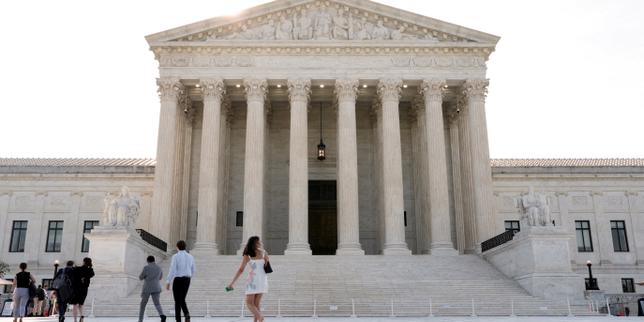
To debate this topic intelligently, we must discard the cartoonish myths surrounding the Supreme Court's actual rulings, specifically Citizens United v. FEC.
Popular mythology holds that five conservative justices sat in a room and decided that "corporations are people" and can write blank checks directly to politicians. This is a complete mischaracterization of the case.
The dispute began because a non-profit corporation produced a critical documentary about a presidential candidate and wanted to distribute it via video-on-demand services within 30 days of a primary election. Under the Bipartisan Campaign Reform Act, this was a federal crime.
During oral arguments, the government’s lawyer explicitly admitted that under their interpretation of the law, the government had the authority to ban corporations—including book publishers—from publishing political books during election windows.
The Supreme Court did not rule that corporations have human souls. It ruled that the government cannot ban political speech based on the corporate identity of the speaker. A corporation is simply an association of individuals pooling resources. If the government can ban a corporation from spending money to voice a political opinion, it can ban a labor union, an environmental non-profit, or a small business collective from doing the exact same thing.
The Flawed Questions Dominating the Debate
The public conversation around campaign finance is broken because people are asking the wrong questions. Here are the most common inquiries dismantled by reality.
Doesn't limiting campaign donations protect the integrity of the vote?
No. Limiting direct donations to candidates simply forced money out of the transparent, heavily regulated campaign ecosystem and into independent expenditure groups and non-profit structures. When you plug a leaky pipe with an arbitrary cap, the water does not disappear; it bursts through the drywall. By capping direct contributions, reformers created the very "dark money" ecosystem they now complain about.
How can regular citizens compete with billionaires in politics?
They compete through numbers and organization. The most valuable currency in politics is not cash; it is votes and volunteer hours. A billionaire can buy a million commercials, but they still only get one vote. Grassroots movements that mobilize actual human beings to knock on doors and speak to neighbors regularly outperform campaigns that rely purely on expensive media blitzes.
The Price of Speech
Freedom is expensive, messy, and offensive. If you want a system where the government decides who has spent "too much" money criticizing a politician, you are advocating for state-sanctioned censorship wrapped in the banner of good intentions.
Every restriction placed on political spending acts as an insurance policy for the people already in power. The moment you make it illegal to spend money spreading an alternative political message, you hand a permanent monopoly to the incumbent politician and the media elite.
If you want to disrupt a corrupt political establishment, you do not pass laws making it harder for challengers to raise and spend capital. You do the exact opposite. You let the money flow openly, demand total transparency via instant digital disclosure, and trust the voters to decide which messages are worth buying into. Turn off the megaphone restrictions, and let the establishment defend itself on equal terms.