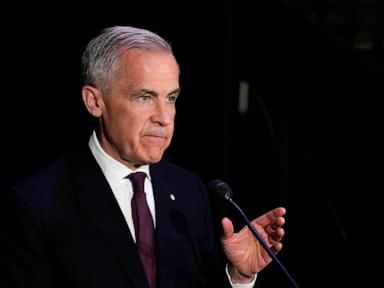
Canada isn't just playing defense against trade threats anymore. Prime Minister Mark Carney just dropped a $25 billion (roughly $18 billion USD) hammer on the table with the announcement of the Canada Strong Fund. It's the country's first-ever national sovereign wealth fund, and it signals a radical shift in how this country plans to survive an era of global volatility and "51st state" rhetoric from south of the border.
The timing isn't an accident. With U.S. President Donald Trump ramping up tariff threats and questioning Canadian sovereignty, Carney is trying to decouple our economic fate from our largest trading partner. If you've been watching the news, you know the vibe is tense. This fund is Carney's answer to the "What now?" question that's been hanging over Ottawa since he took office in 2025.
The Canada Strong Fund is more than a savings account
Most people hear "sovereign wealth fund" and think of Norway or Saudi Arabia—nations sitting on piles of oil cash they don't know how to spend. Canada is in a different spot. We don't have a massive budget surplus right now. In fact, critics like Pierre Poilievre are already calling this a "sovereign debt fund" because the initial $25 billion has to come from somewhere.
But Carney's logic is simple: if we don't invest in ourselves, nobody else will. The fund is designed as an arm's-length Crown corporation. It’s meant to invest in:
- Critical minerals like nickel, graphite, and tungsten (the stuff that runs EVs).
- Energy corridors including LNG and hydro development.
- Large-scale infrastructure like new ports and transport hubs.
- Agriculture and tech sectors that can scale globally.
This isn't about the government just handing out grants. It’s about "asset recycling." The fund takes an equity stake in a project, waits for it to become profitable, and then reinvests those returns into the next big thing. It’s a commercial play, not a charity.
Why you can actually buy into this thing
The most interesting part of the announcement at the Canada Science and Technology Museum wasn't the big numbers—it was the "retail investment product" mention. Carney wants regular Canadians to be able to put their own money into the fund, almost like a "nation-building bond."
If you’ve got a bit of extra cash in your TFSA or RRSP, the government wants you to put it toward a new lithium mine in the North or a port in BC. It’s a smart political move. By giving citizens a direct stake, Carney makes it much harder for a future government to scrap the fund. You're not just a taxpayer; you're a shareholder in Canada Inc.
Critics say we are broke and borrowing to gamble
Let’s be real for a second. The elephant in the room is the price tag. When Carney's government took over, they were looking at a deficit nearing $80 billion. Poilievre has a point when he asks how you can have a "wealth" fund when you're in the red.
Carney’s counter-argument relies on the Spring Economic Update. He’s betting that recent spikes in oil prices—driven by the ongoing conflict between the U.S., Iran, and Israel—have padded the federal coffers enough to make this $25 billion feasible. He's also banking on the idea that the cost of doing nothing is higher. If Canada stays a "branch plant" economy for the U.S., we’re at the mercy of whoever is in the White House.
What this means for the private sector
If you’re a business owner or an investor, the Canada Strong Fund is a signal that the government is willing to take on the "first-loss" risk. These massive industrial projects—think $5 billion mines or $10 billion energy grids—often scare off private capital because they take a decade to pay off.
The Fund steps in to provide the patient capital that banks won't touch. It doesn't replace the Canada Infrastructure Bank or the BDC; instead, it acts as a co-investor. If the government is willing to put $500 million into a project, suddenly the big pension funds (like CPPIB or CDPQ) feel a lot more comfortable moving their money from Wall Street back to Bay Street.
Getting skin in the game
Don't wait for the official launch to understand how this impacts your portfolio. The government will be consulting on the retail design over the next few months. Watch for the Spring Economic Update details to see exactly how the "asset recycling" model will work.
If you’re looking for immediate moves, keep a close eye on the companies involved in the 15 projects already referred to the Major Projects Office. These are the frontrunners for the first wave of funding. We’re talking about nuclear, LNG, and transportation infrastructure. This is where the "nation-building" starts. Keep your eyes on the critical minerals sector—Carney has made it clear that's the backbone of his independence strategy.