The mainstream media is currently obsessed with a convenient fiction. The narrative is simple: the UK government, terrified by a few stern words from the incoming Trump administration, has suddenly grown a spine and "shelved" the deal to hand the Chagos Islands to Mauritius. It makes for a great headline. It fits the tired trope of British subservience to Washington. It is also fundamentally wrong.
The collapse of the Chagos deal isn't a victory for Trumpian diplomacy, nor is it a sudden reclaiming of British imperial pride. It is a desperate, late-stage realization that the UK was about to commit one of the most incompetent geopolitical unforced errors in modern history. The "Trump factor" is a convenient smokescreen—a political exit ramp for a Labour government that realized they were selling the house and paying the buyer to take the keys.
The Myth of the Strategic Handover
The "lazy consensus" among diplomats for the last year was that returning the British Indian Ocean Territory (BIOT) to Mauritius was a necessary move to secure the long-term future of the Diego Garcia military base. We were told this was "lawfare" defense. The International Court of Justice (ICJ) and the UN General Assembly had voiced their disapproval of British administration, and the UK was supposedly becoming an international pariah.
I have spent years watching bureaucrats prioritize "optics" over hard assets. This deal was the peak of that delusion. The proposed treaty didn't just hand over the islands; it saw the UK agreeing to pay an indexed annual rent for 99 years to use its own strategic asset.
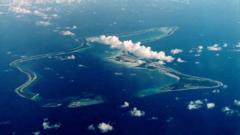
Let’s look at the actual geography. The Chagos archipelago consists of 58 islands. Diego Garcia is the only one that matters for global security. The deal offered to "protect" Diego Garcia by ceding the rest. This ignores the reality of modern maritime surveillance. If you hand over the outer islands to a nation like Mauritius—which has increasingly deep financial and infrastructural ties to China—you aren't securing a base. You are inviting a permanent, hostile "research" fleet to park 20 miles away from your most sensitive B-52 hangars.
Why the Trump Opposition is a Red Herring
The press wants you to believe that a few tweets or briefings from the Mar-a-Lago transition team killed the deal. This gives the US far too much credit and the UK far too little blame.
The deal was dead the moment the fine print leaked. The "Trump opposition" provided the political cover needed for the Starmer government to back away from a PR disaster. If the UK had actually believed this deal secured British interests, they would have pushed it through before the inauguration. They didn't because they realized they had been outmaneuvered by Port Louis and Beijing.
Mauritius is not a neutral actor in this. They are a state that has mastered the art of using post-colonial grievances to extract massive financial concessions. The UK was about to pay for the privilege of losing its territorial integrity. The "Trump threat" simply highlighted the absurdity of the UK paying rent to a third party while the US provides the actual security umbrella.
The Sovereignty Trap
People often ask: "Doesn't the ICJ ruling mean the UK has to leave?"
The answer is a brutal, honest "No." International law, in this context, is a suggestion backed by zero enforcement mechanisms. The UK’s "illegal occupation" is only a problem if the UK lacks the stomach to maintain its position. The moment the UK entered negotiations, it signaled that its sovereignty was for sale. That was the mistake.
In geopolitics, you don't get points for being nice. You get points for being indispensable. Diego Garcia is indispensable to the US. By entertaining the handover, the UK made itself look like a weak link in the Five Eyes alliance. The pushback from the US wasn't just about Trump; it was about the Pentagon realizing that London could no longer be trusted to guard the gate.
The Financial Incompetence Nobody Talks About
Let's talk about the money. Most articles ignore the "Trust Fund" aspect of the deal. The UK wasn't just giving away land; it was committing to a massive, multi-decade reparations package disguised as "resettlement support."
I’ve seen governments waste money on failed IT projects and bloated rail lines, but paying a foreign power to take over your strategic territory while you continue to provide the defense and the funding is a special kind of madness. It is the geopolitical equivalent of paying your landlord to let you fix his roof.
The "shelving" of this deal saves the British taxpayer billions in the long run. Not just in direct payments, but in the avoided cost of the inevitable security breaches that would have followed Chinese "investment" in the outer Chagos islands.
The Security Risk is Not Theoretical
The competitor pieces mention "security concerns" as a footnote. They should be the lead.
Imagine a scenario where the handover is completed. Within five years, Mauritius signs a "Belt and Road" maritime agreement. Suddenly, a Chinese-funded "oceanic research station" appears on Peros Banhos, just a short boat ride from Diego Garcia. This isn't a conspiracy theory; it’s the standard operating procedure for Chinese expansion in the Indian and Pacific Oceans. Look at the Solomon Islands. Look at Djibouti.
The UK negotiators were so blinded by the desire to "tidy up" a colonial legacy that they forgot they were operating in a theatre of Great Power competition. The US military didn't just oppose the deal because of Trump’s "America First" rhetoric; they opposed it because it created a massive hole in the net of Indian Ocean surveillance.
The Wrong Questions
The media keeps asking: "Will the deal be revived?" or "How will this affect UK-Mauritius relations?"
These are the wrong questions. The real question is: "Why was the UK trying to get rid of its most valuable strategic asset in the first place?"
The answer lies in a specific type of middle-management thinking that has infected the Foreign, Commonwealth & Development Office (FCDO). It’s a mindset that prioritizes avoiding Twitter criticism and UN General Assembly rebukes over maintaining hard power. They wanted the "problem" to go away. They didn't care if the "solution" was a catastrophe for the next fifty years.
The Reality of De-escalation
The deal hasn't been shelved because of a sudden burst of patriotism. It has been shelved because the UK government finally looked at the bill—and the security briefings—and realized they were being played.
The Trump administration's vocal opposition was a gift. It allowed the UK to walk away from a terrible contract while blaming someone else for the breach. It’s the ultimate "it’s not you, it’s my dad" break-up strategy.
British sovereignty over Chagos isn't a relic of the past; it is a necessity of the present. If the UK cannot hold onto a group of uninhabited islands that are vital to global security, it has no business claiming to be a global power.
The deal is dead. Good riddance.
Stop treating this as a diplomatic failure. It is a narrow escape from a self-inflicted wound. The UK didn't lose a deal; it regained its senses. If that requires playing the "Trump card" to save face, then so be it. The islands remain British, the base remains secure, and the check remains unwritten.
The only people mourning this deal are the bureaucrats who spent years drafting it and the Mauritian officials who were expecting a massive payday. For everyone else, the shelving of the Chagos treaty is the first sign of strategic literacy we’ve seen from London in a decade.
Hold the line. No more rent. No more apologies.



