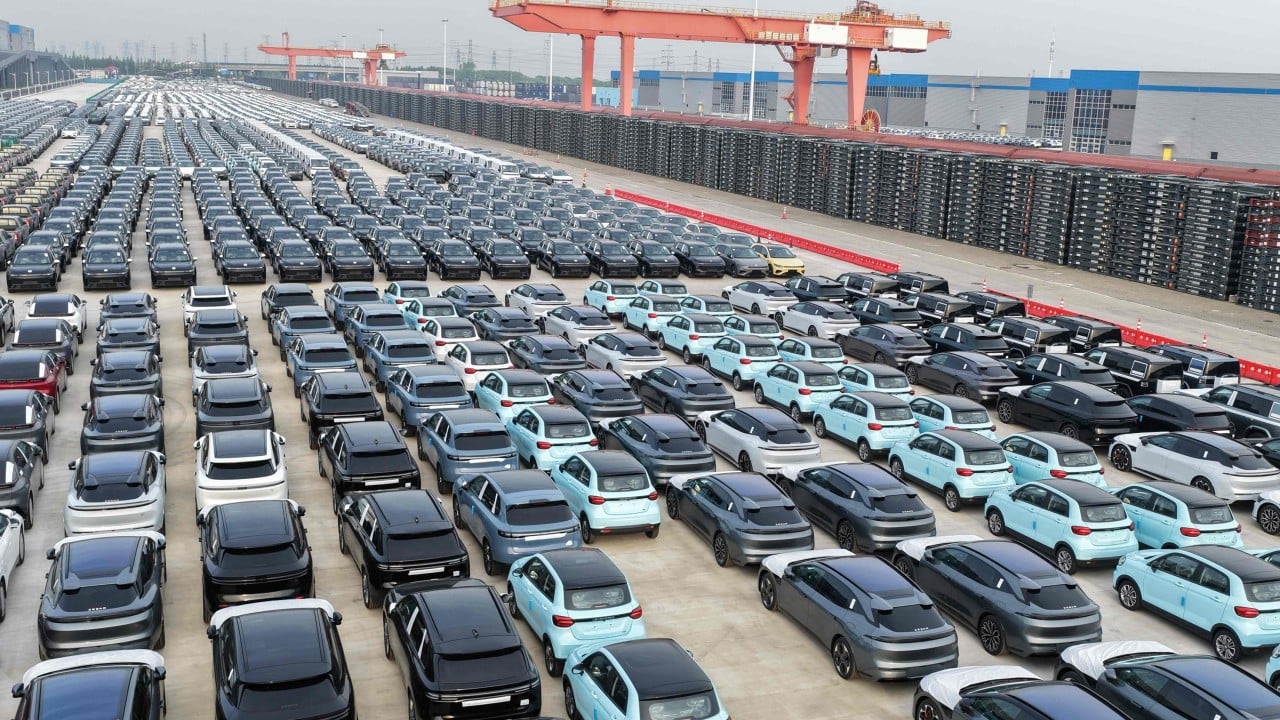
Every automotive executive in Stuttgart and Munich is supposedly shaking in their bespoke leather boots.
The narrative, blasted across every mainstream business outlet, goes like this: high-end Chinese electric vehicle brands like Zeekr, Nio, and BYD’s Yangwang are marching into Europe with superior battery technology, dazzling software, and lower price tags, ready to dethrone the legacy luxury marques. Zeekr executives proudly declare they have Europe's premium segment in their crosshairs. Wall Street analysts nod along, warning that BMW, Mercedes-Benz, and Audi are facing their Kodak moment. For a deeper dive into similar topics, we suggest: this related article.
It is a seductive story. It is also completely wrong.
This lazy consensus mistakes digital gimmicks for luxury heritage and manufacturing subsidies for sustainable market entry. The premise that a brand can clone a Mercedes S-Class, slap on an iPad-style dashboard, price it twenty percent lower, and steal the continental elite's market share ignores how true luxury actually operates. I have watched legacy carmakers blow hundreds of millions trying to pivot their identities, and I have watched upstarts burn through billions trying to buy prestige. You cannot buy it, and you certainly cannot discount your way into it. To get more context on this topic, comprehensive coverage is available at Engadget.
The Chinese EV invasion of the European luxury market is not a threat. It is a highly publicized, incredibly expensive strategic blunder. Here is why the premise of the entire debate is fundamentally flawed.
The Luxury Flaw: Software is Not Prestige
The core argument for the Chinese EV takeover relies heavily on tech superiority. Look at the rotating screens! Marvel at the in-car karaoke systems and the AI-driven digital assistants!
This is the wrong metric.
In the premium segment, tech is a commodity, not a differentiator. True luxury is rooted in scarcity, heritage, and engineering depth. When a consumer spends over eighty thousand euros on a vehicle, they are not buying a rolling smartphone; they are purchasing a status symbol backed by a century of cultural weight.
Legacy marques understand a fundamental truth that the tech-first newcomers miss: digital features age like milk. A software stack that feels revolutionary today will feel sluggish and obsolete in four years. Conversely, mechanical excellence, tactile material quality, and the prestige of a recognized emblem age like wine.
By tying their value proposition to rapid-cycle consumer electronics, new entrants are trapping themselves in a vicious depreciation cycle. They are building disposable luxury. If your main selling point is an advanced driver-assistance system or a massive central screen, you are vulnerable to the next competitor who sources a slightly faster chip from Qualcomm. That is a race to the bottom, the absolute antithesis of premium positioning.
The Margin Trap: You Can’t Subsidy Your Way to Status
Let us talk about the economics. The cost advantage of Chinese manufacturing is undeniable, driven by vertical integration in battery supply chains and massive state backing. But you cannot use a low-cost playbook to win a high-status game.
In the volume market—where drivers just want a reliable hatchback to get to work—price dominance works. In the luxury market, price is a signal of exclusivity. If a brand relies on aggressive pricing or heavy discounting to undercut local European rivals, it destroys its own premium aspirations before the first shipment clears the port.
[Mass Market Strategy] -> Low Margins + High Volume -> Driven by Price
[True Luxury Strategy] -> High Margins + Low Volume -> Driven by Exclusivity
[The Failed EV Pivot] -> High Cost + Low Price -> Driven by Desperation
Furthermore, the operational reality of setting up a premium network in Europe is a financial meat grinder. High-end European buyers do not buy luxury cars online from a warehouse. They expect glass-fronted flagship showrooms in expensive city centers, flawless concierge servicing, and ironclad residual values. Building that infrastructure from scratch eats up the manufacturing cost advantages instantly.
When you factor in the European Union’s shifting regulatory posture, including anti-subsidy tariffs designed specifically to level the playing field, the mathematical mirage evaporates. The low-cost margin cushion disappears, leaving the newcomers with high overhead costs, zero brand equity, and a consumer base that views them as high-end experiments rather than structural investments.
The Residual Value Nightmare
Ask any fleet manager or luxury leasing executive what keeps them up at night, and they will give you a two-word answer: residual values.
A vehicle’s true cost is not its sticker price; it is the difference between what you buy it for and what it is worth three years later. This is where the contrarian reality hits the hardest.
European legacy brands have spent decades carefully managing the secondary market to protect their residual values. They control supply, manage lease returns, and maintain extensive certified pre-owned programs.
New Chinese entrants have no secondary market track record. Compounding this, their strategy of frequent, incremental hardware updates—treating cars like smartphones—annihilates the resale value of older models. Who wants to buy a two-year-old premium EV when the manufacturer just released a version with a twice-as-fast processor and a completely redesigned battery pack for the same price?
The moment a vehicle's residual value plunges, the monthly lease payments for new buyers skyrocket. Since the vast majority of luxury cars in Europe are leased through corporate structures or private financing, the Chinese EV brands quickly become economically unviable compared to a Porsche or an Audi that holds its value.
Dismantling the "People Also Ask" Delusions
The public discourse surrounding this topic is filled with flawed questions based on terrible assumptions. Let us dismantle the most common ones with brutal honesty.
- Will Chinese EVs replace German luxury cars by 2030? No. They might capture a slice of the entry-level premium market from buyers who prioritize gadgets over build quality, but the core luxury profit pools will remain firmly in European hands.
- Aren't European carmakers too slow to innovate? This confuses speed with stability. German manufacturers are deliberately slow because they test components to endure decades of Autobahn speeds, not just a few years of urban commuting. Their slower cadence is a feature of engineering integrity, not a bug of laziness.
- Can software updates bridge the brand gap? An over-the-air update can fix a glitchy navigation system. It cannot manufacture a legacy, it cannot create an emotional connection, and it cannot convince a neighbor that you have arrived.
The Reality Check
To be absolutely fair, this contrarian view has a glaring vulnerability: if European legacy marques completely lose their minds and abandon their core identity—if they stop focusing on precision engineering, over-index on cheap digital gimmicks, and let their build quality slide—they will open the gates to their own destruction. We are seeing early, worrying signs of this as European designers try to copy the flashy interiors of Asian tech firms. If Stuttgart tries to beat Shanghai at the smartphone game, Stuttgart will lose.
But if the European establishment holds the line on mechanical excellence, tactical luxury, and deliberate exclusivity, the incoming wave of high-end challengers will break against the rocks of European consumer conservatism.
Stop looking at the flashing screens and the aggressive press releases. Look at the balance sheets, the lease structures, and the cultural psychology of the European continent.
The legacy marques are not under siege. They are watching a group of wealthy tech companies bring knives to a gunfight, entirely convinced that because their blades are shiny, they have already won.