Stop mourning the Exclusion Zone.
For four decades, the narrative around Chornobyl has been stuck in a loop of grey-scale mourning and disaster tourism. Every year, journalists descend on Pripyat to photograph a rusting Ferris wheel and a stray dog, peddling the same tired myth: that Chornobyl is a scar on the planet, a "dead zone" that serves only as a warning against human hubris.
They are looking at the most important site on Earth and seeing a graveyard. I see a laboratory.
If you think Chornobyl is a cautionary tale about nuclear power, you’ve been sold a cheap bill of goods. Chornobyl isn't a story about physics; it’s a story about the failure of Soviet bureaucracy and the unexpected resilience of biological systems. Forty years later, the "Zone" has evolved into something the sentimentalists refuse to acknowledge: the world’s most successful rewilding experiment and a masterclass in how life thrives when humans finally get out of the way.
The Myth of the Wasteland
The standard article on Chornobyl 40 years later will tell you about the "Red Forest" and the lingering isotopes of Cesium-137. They’ll use words like "unfit for human habitation" to imply that the land is fundamentally broken.
This is fundamentally wrong.
By the late 1990s, populations of large mammals—wolves, elk, boar, and deer—had already begun to skyrocket. Without the daily grind of human agriculture, hunting, and industrial noise, the Zone became a sanctuary. Today, the density of wolves in the Exclusion Zone is seven times higher than in nearby uncontaminated nature reserves.
We’ve been taught that radiation is an absolute eraser of life. In reality, the absence of human "management" is a far more potent stimulant for biodiversity than a few millisieverts of radiation. The irony is delicious: the worst nuclear disaster in history did less damage to the local ecosystem than a modern housing development or a monoculture farm.
Radiation is Not the Villain You Think
The public treats radiation like a magical curse. Science treats it as a selective pressure.
Biologists like Timothy Mousseau and Anders Møller have spent decades documenting the effects of Chornobyl on local fauna. Yes, they’ve found increased rates of cataracts and smaller brain sizes in certain bird populations. Yes, there are genetic mutations. But here is the nuance the mainstream media ignores: Life adapts.
Evolution is happening in real-time within the 30-kilometer zone. We are seeing Eastern tree frogs (Hyla orientalis) that have developed darker, almost black skin to protect themselves from UV and ionizing radiation. This isn't "mutant" horror; it’s rapid adaptive melanism. We are watching the Earth rewrite its own code to survive the mess we left behind.
When people ask "When will it be safe to return?" they are asking the wrong question. It’s already safe for the lynx. It’s already safe for the Przewalski's horse. The question isn't whether the land is "ruined," but why we are so terrified of an environment where nature has reclaimed its throne.
The Sarcophagus Fetish
The "New Safe Confinement" (NSC) is a $2 billion engineering marvel designed to last 100 years. It’s a shiny silver dome that the industry points to as proof of "control."
I’ve seen how we throw money at symbols to hide our insecurities. The NSC is essentially a high-tech rug designed to sweep a mess under. While engineers celebrate the structure, the real story is happening in the soil.
The scientific community’s obsession with containment ignores the fact that the vast majority of the radioactive material is already being sequestered by the forest itself. Fungi in the zone—specifically radiotrophic fungi like Cladosporium sphaerospermum—don't just survive radiation; they use it. They utilize melanin to convert gamma radiation into chemical energy.
We are building steel domes while the fungi are building a new energy paradigm. If we were smart, we’d stop trying to "clean" Chornobyl and start studying how to bio-engineer organisms that can eat our industrial waste.
The Disaster Tourism Lie
If you want to understand why Chornobyl reporting is so stagnant, look at the tourists.
Before the recent geopolitical shifts, Pripyat was becoming a Disneyland for nihilists. People pay hundreds of dollars to walk through the "ghost city," taking the same selfie with a discarded gas mask that some guide probably moved there five minutes earlier for "atmosphere."
This performative grief is an insult to the actual data. By treating the Zone as a museum of tragedy, we freeze it in 1986. We ignore the vibrant, pulsing, non-human world that has moved on.
People ask: "How could people ever live there again?"
The answer: They already do. The Samosely—the self-settlers who returned shortly after the accident—lived long, albeit difficult, lives on the land. Their health outcomes compared to their peers who were relocated to high-stress, urban environments in Kyiv suggest that the psychological trauma of forced relocation was often more lethal than the radiation itself.
The Nuclear Paradox
Let's address the elephant in the room. Chornobyl is used as a blunt instrument to kill nuclear energy debates.
The logic is: "Chornobyl happened, therefore nuclear is dangerous."
The counter-logic: "Chornobyl happened, and it took a direct hit from the most incompetent management system in history, yet the death toll—while tragic—is dwarfed by the annual deaths from coal-fired power plant emissions."
If we look at Chornobyl 40 years later and see only a reason to stop nuclear progress, we are choosing a slow death by carbon over a manageable risk of localized failure. We are prioritizing our fear of the "invisible killer" over the visible reality of a collapsing climate.
The data is clear. In terms of deaths per terawatt-hour, nuclear remains the safest energy source we have. Chornobyl was a 1970s RBMK reactor with no containment building and a positive void coefficient. Comparing a modern SMR (Small Modular Reactor) to Chornobyl is like comparing a SpaceX Falcon 9 to a steam engine and claiming neither should fly because the boiler might explode.
Stop Trying to "Fix" It
The ultimate contrarian truth about Chornobyl is that we shouldn't want it to "recover."
Recovery, in human terms, means paving it over. It means building roads, shopping malls, and apartments. It means driving out the wolves and the bears to make room for Starbucks and parking lots.
Chornobyl is currently the most valuable piece of land in Europe because it is the only place where we can study a world without us. It is a glimpse into the post-Anthropocene.
Every dollar spent on trying to "remediate" the soil for human agriculture is a dollar wasted. We should be expanding the zone, not shrinking it. We should be turning it into a permanent international research station for evolutionary biology and radiotrophic energy.
The Brutal Reality of 40 Years
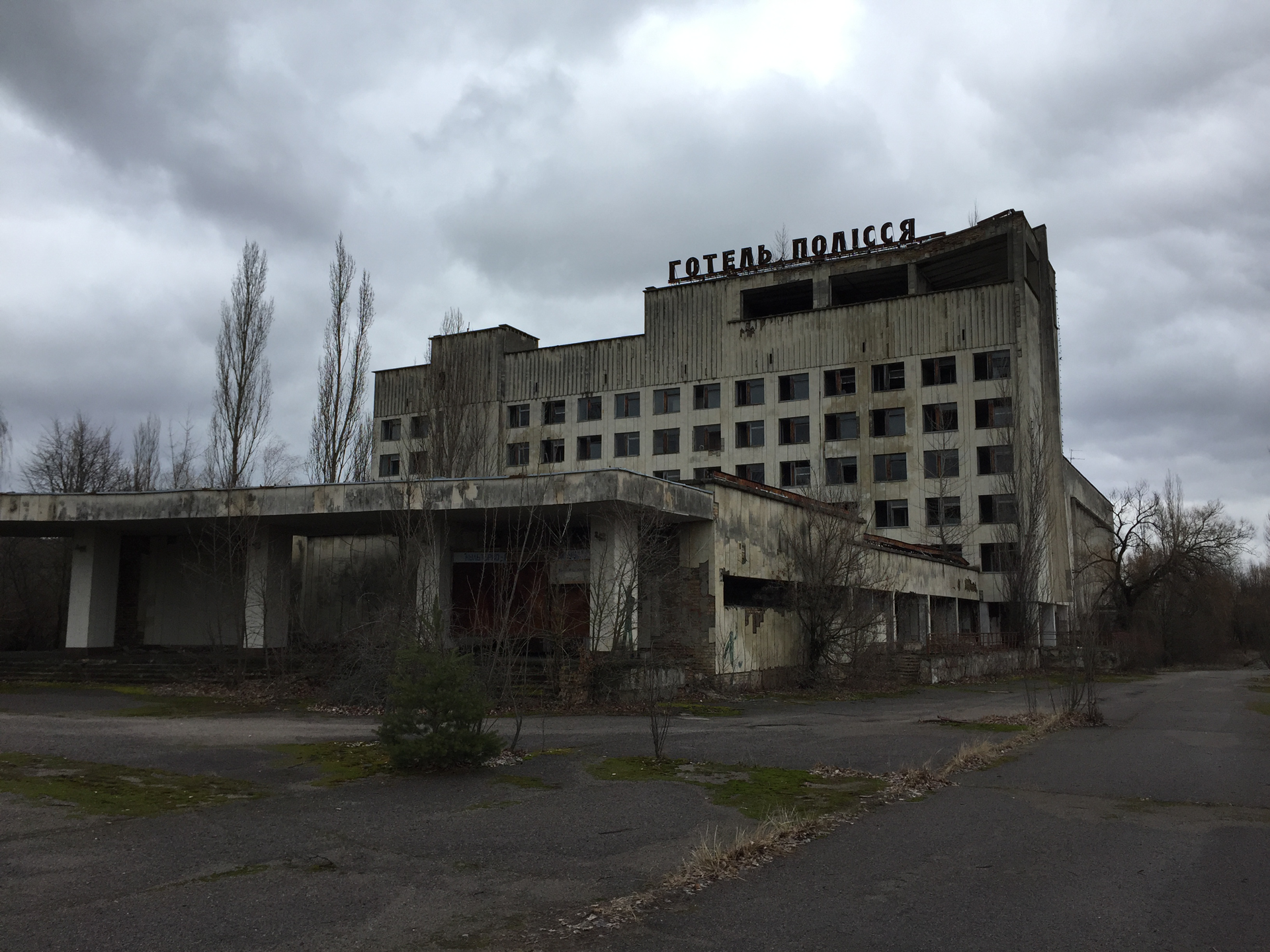
Forty years later, the buildings are collapsing. The concrete is cracking. The Soviet slogans are fading into the brickwork.
And that is exactly what should be happening.
The true legacy of Chornobyl isn't the radiation. It's the demonstration that human structures are temporary, but biological life is persistent. We spent decades trying to "solve" the Chornobyl problem, but nature solved it by simply ignoring our definitions of safety and thriving in the gaps we left behind.
If you go to Chornobyl today looking for a ghost story, you’re a tourist. If you go looking for the future of life on a damaged planet, you’re a pioneer.
The Zone isn't waiting for us to come back. It has moved on. We’re the ones stuck in 1986.
Stop looking for a tragedy in the trees. Start looking for the blueprints of how we survive the next century.
Get out of the way. Let the wolves lead.


